

The Honda Civic Si and Hyundai Elantra N represent two different approaches to the Sport Compact formula. The Si has been a staple of Honda’s lineup for decades, offering accessible performance with a focus on driver engagement and daily usability. The Elantra N, on the other hand, arrived more recently with a bold promise: serious track capability at an affordable price, backed by Hyundai’s aggressive warranty.
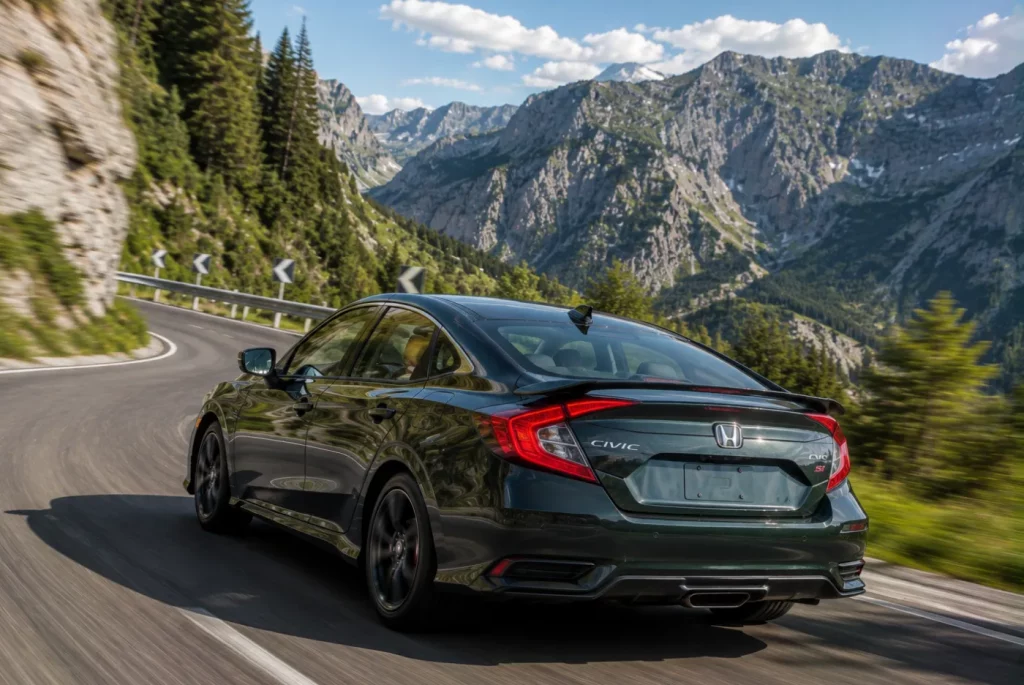
Both cars have turbocharged engines, front-wheel drive, and available manual transmissions. Both are practical sedans that can carry four people and their luggage. But the way they deliver performance could not be more different. One prioritizes engagement and efficiency; the other prioritizes outright speed and aggression.
This isn’t a comparison about which car is objectively better. It’s a comparison about which car makes more sense for your driving style, your budget, and your priorities.
The Civic Si is the more balanced daily driver — better fuel economy (31 mpg combined vs 24 mpg), superior transmission feel, and a more refined interior with daily comfort. The Elantra N is the more powerful performer — 276 hp and 289 lb-ft of torque, quicker acceleration (5.7 sec 0-60 vs 6.6 sec), and sharper handling AT the limit. The Si is the better all-rounder; the Elantra N is the better track weapon. Choose based on whether you prioritize daily drivability or outright performance.
Clarifying the Nomenclature: N vs N-Line
Before diving into the comparison, it’s essential to clear up a common point of confusion. Hyundai offers two different Elantra performance variants: the Elantra N-Line and the Elantra N. They are not the same car.
The Elantra N-Line is a sporty appearance package with a turbocharged 1.6-liter engine producing 201 horsepower. It’s a competitor to the Civic Si on price and positioning, but it’s not the full performance car. The Elantra N is the real deal — a 2.0-liter turbocharged engine producing 276 horsepower and 289 lb-ft of torque, with a track-focused chassis, electronic limited-slip differential, and adaptive suspension. This comparison is strictly between the Civic Si and the Elantra N.
The Price Gap — Where the Si Wins
The Civic Si is priced lower than the Elantra N. The 2025 Civic Si starts at approximately $30,250, while the Elantra N starts at around $32,500 .
However, the Si’s lower price doesn’t tell the full story. The Elantra N offers significantly more performance for the money, with a 276-horsepower 2.0-liter turbo engine compared to the Si’s 200-horsepower 1.5-liter. The question isn’t which car is cheaper — it’s whether the extra cost of the Elantra N (or the Si’s value proposition) aligns with your priorities.
| Specification | 2025 Civic Si | 2025 Elantra N |
|---|---|---|
| Starting Price (MSRP) | ~$30,250 | ~$32,500 |
| Engine | 1.5L turbo I4 | 2.0L turbo I4 |
| Horsepower | 200 hp @ 6,000 rpm | 276 hp @ 5,500 rpm |
| Torque | 192 lb-ft @ 1,800 rpm | 289 lb-ft @ 2,100 rpm |
| Transmission | 6-speed manual only | 6-speed manual / 8-speed DCT |
| 0-60 mph | ~6.6 seconds | ~5.7 seconds |
| Quarter Mile | ~15.4 sec @ 92 mph | ~14.3 sec @ 100 mph |
| EPA Fuel Economy (city/hwy/comb) | 27/37/31 mpg | ~21/29/24 mpg |
| 5-Year Ownership Cost | $0.49/mile | $0.51/mile |
Performance — The Elantra N’s Advantage
The Elantra N is significantly faster than the Civic Si. Its 2.0-liter turbocharged engine produces 276 horsepower and 289 lb-ft of torque, compared to the Si’s 200 horsepower and 192 lb-ft. This power advantage translates into a substantial performance gap.
The Elantra N reaches 60 mph in 5.7 seconds, nearly a full second quicker than the Civic Si’s 6.6-second time. In the quarter mile, the Elantra N runs 14.3 seconds at 100 mph, while the Si runs 15.4 seconds at 92 mph. The Elantra N’s extra 76 horsepower is clearly felt in all driving situations.
The Si’s smaller 1.5-liter engine is more fuel-efficient, but it can’t match the Elantra N’s straight-line performance. As MotorTrend notes, the Elantra N “smokes” both the Civic Si and the VW Jetta GLI in acceleration.
- 200 HP / 192 lb-ft
- 0-60: 6.6 seconds
- 31 mpg combined
- 6-speed manual only
- Excellent transmission feel
- Lower ownership cost
- 276 hp / 289 lb-ft
- 0-60: 5.7 seconds
- ~24 mpg combined
- 6MT or 8-speed DCT
- Sharp handling at the limit
- Higher running costs
Handling — A Closer Fight Than the Power Gap Suggests
Despite the power difference, the Civic Si holds its own in handling tests. With the optional high-performance tires, the Si out-brakes the Elantra N by 6 feet from 60 mph — stopping in 102 feet compared to the Elantra N’s 108 feet. The Si’s max lateral grip is 0.94 g, just 0.02 g less than the Elantra N’s 0.96 g.
The Si’s chassis dynamics are impressive. MotorTrend notes that the Civic Si delivers “most of the handling prowess of the Elantra N in a somewhat nimbler package that beats them both for fuel efficiency”. The Si’s independent Multi-link Rear Suspension provides excellent wheel control and cornering capability.
The Elantra N, however, has the advantage at the limit. It runs the figure-eight course nearly a second quicker than the Si, demonstrating its superior performance capability in handling tests.
Transmission — The Si’s Manual Mastery
The Civic Si’s six-speed manual transmission is one of its strongest selling points. The short throws, precise engagement, and rev-match downshifting create a connected driving experience that enthusiasts love. The billet-aluminum shift knob and mechanical action of the shifter are highlights of the Si’s driving experience.
The Elantra N offers both a six-speed manual and an eight-speed DCT automatic. The manual is good, but it doesn’t match the Si’s mechanical perfection. The DCT, however, is faster and offers launch control, making the Elantra N more versatile for different driving scenarios.
For die-hard manual enthusiasts, the Si is the better choice. For drivers who want the option of an automatic, the Elantra N has a clear advantage.
Fuel Economy — The Si Wins Easily
The Civic Si is significantly more fuel-efficient than the Elantra N. The Si achieves 27 mpg city, 37 mpg highway, and 31 mpg combined . The Elantra N achieves approximately 21 mpg city and 29 mpg highway — roughly 6-8 mpg less across the board.
Over 15,000 miles per year, the Si will use approximately 484 gallons of fuel, while the Elantra N will use approximately 625 gallons. At $3.80 per gallon, the Si costs roughly $1,839 per year in fuel, while the Elantra N costs $2,375 — a difference of about $536 per year.
Warranty and Ownership Costs
Hyundai’s warranty is a significant advantage for the Elantra N. It comes with a 5-year/60,000-mile basic warranty and an outstanding 10-year/100,000-mile powertrain warranty. The Civic Si’s warranty is the standard 3-year/36,000-mile basic and 5-year/60,000-mile powertrain coverage.
However, Edmunds’ True Cost to Own estimates the Civic Si at $0.49 per mile over five years, compared to the Elantra N’s $0.51 per mile. The Si’s lower depreciation and better fuel economy offset its shorter warranty, making it cheaper to own over the long term. The Civic Si costs approximately $12,000 less to own over five years than some competitors.
Resale Value — The Civic’s Secret Weapon
This is where the Civic Si makes its financial case. The Civic Si holds its value significantly better than the Elantra N. Over five years, the Civic Si loses approximately 27.9% of its value, while the Elantra N loses roughly 40.9% — a difference of 13 percentage points.
On a $30,000 car, that’s roughly a $4,000 advantage for the Civic Si at resale. Combined with the Si’s better fuel economy, this makes the Civic the cheaper car to own despite the Elantra N’s lower purchase price.
| Metric | Honda Civic Si | Hyundai Elantra N |
|---|---|---|
| 5-year depreciation | ~27.9% | ~40.9% |
| Powertrain warranty | 5 yr / 60,000 mi | 10 yr / 100,000 mi |
| 5-year ownership cost | $0.49/mile | $0.51/mile |
Interior and Daily Comfort — The Si’s Refinement
The Civic Si has a more refined interior. The Si’s signature Sport seats balance form and function with red stitching and supportive bolstering. The honeycomb-patterned dash strip adds a stylish touch, and the interior materials feel more premium than the Elantra’s cabin.
The Si also offers better daily comfort. Consumer Guide gives the Si the nod for “superior ride control, transmission feel, and interior ergonomics”. The Si’s seats feel supportive on longer drives, and the cabin is quieter at highway speeds.
The Elantra N’s interior is more focused on performance, with sportier seats and a more aggressive design. But it sacrifices some daily comfort for its track-ready character.
Technology — Both Are Well-Equipped
The Civic Si comes with a 9-inch touchscreen, a 10.2-inch digital instrument cluster, and a 12-speaker Bose premium audio system. Wireless Apple CarPlay and Android Auto are standard, and Google built-in and Alexa built-in enhance the infotainment experience. The Si also earned the IIHS Top Safety Pick+ award.
The Elantra N offers a 10.25-inch digital instrument cluster and a 10.25-inch infotainment screen on higher trims, with a Bose premium audio system. Both cars are well-equipped, but the Civic Si’s interface is more intuitive and user-friendly.
Which Car Is Right for You?
Buy the Honda Civic Si if:
- You want a manual transmission and prioritize engagement
- Fuel economy matters to you
- You want lower long-term ownership costs
- You value a refined interior and daily comfort
- You want a car that’s fun to drive without sacrificing practicality
Buy the Hyundai Elantra N if:
- Outright performance and acceleration are your top priorities
- You want the option of a DCT automatic
- You plan to track or autocross your car
- You value the 10-year/100,000-mile powertrain warranty
- You’re willing to accept lower fuel economy for more power
Final Verdict
The Hyundai Elantra N is the more powerful car. With 276 horsepower and 289 lb-ft of torque, it’s significantly quicker than the Civic Si in every straight-line metric. It offers better handling at the limit and is more suited for track use. The Elantra N is the better track weapon.
The Honda Civic Si is the better daily driver. It’s more fuel-efficient, has a more refined interior, and offers a superior manual transmission experience. It handles well enough to be fun on back roads while still being comfortable for daily commuting. The Si is the better all-rounder.
The Civic Si also has lower long-term ownership costs and stronger resale value. If you’re buying a car to keep for a few years and sell, the Si is the smarter financial choice. If you’re buying a car for weekend track days and don’t mind the fuel costs, the Elantra N is the more exciting option.
As MotorTrend concludes, both cars are about “feeling quick or sporty” rather than winning races. The Si delivers that feeling with better efficiency and daily comfort. The Elantra N delivers it with more power and aggression. Choose based on what matters more to you: daily usability or outright performance.
FAQ — Civic Si vs Elantra N
Which is faster, the Civic Si or the Elantra N?
The Elantra N is significantly faster. It reaches 60 mph in 5.7 seconds and runs the quarter mile in 14.3 seconds at 100 mph. The Civic Si takes 6.6 seconds to 60 mph and runs the quarter mile in 15.4 seconds at 92 mph.
Which car has better fuel economy?
The Civic Si has significantly better fuel economy at 27/37/31 mpg, compared to the Elantra N’s approximately 21/29/24 mpg. The Si is 6-8 mpg more efficient across the board.
Does the Elantra N have a manual transmission?
Yes — the Elantra N is available with both a six-speed manual transmission and an eight-speed DCT automatic. The Civic Si is manual-only.
Which car has better handling?
The Civic Si is more balanced and nimble, with impressive handling that nearly matches the Elantra N’s grip (0.94 g vs 0.96 g). The Elantra N is sharper at the limit and runs the figure-eight course nearly a second quicker.
Which car is better for daily driving?
The Civic Si is better for daily driving. Consumer Guide gives the Si the nod for “superior ride control, transmission feel, and interior ergonomics”. The Si is more comfortable and refined for everyday use.
Which car is cheaper to own?
The Civic Si is cheaper to own. Edmunds estimates the Si’s five-year cost at $0.49 per mile, compared to the Elantra N’s $0.51 per mile. The Si’s lower depreciation and better fuel economy offset its shorter warranty.
Does the Civic Si have a better transmission?
The Civic Si’s manual transmission is widely regarded as superior — short throws, precise engagement, and satisfying mechanical feel. The Elantra N’s manual is good but not as polished. The DCT option on the Elantra N is faster and offers launch control.
Which car has a better warranty?
The Elantra N has a better warranty — 5-year/60,000-mile basic and 10-year/100,000-mile powertrain. The Civic Si offers 3-year/36,000-mile basic and 5-year/60,000-mile powertrain coverage.
Should I buy a Civic Si or Elantra N?
Buy the Civic Si if you want a balanced daily driver with superior fuel economy, transmission feel, and long-term value. Buy the Elantra N if you want more power, sharper handling, and the option of an automatic transmission. The Si is the better all-rounder; the Elantra N is the better track weapon.
Which car is more reliable?
Both cars have good reputations. The Civic Si has a longer track record of reliability, while the Elantra N benefits from Hyundai’s extensive warranty coverage. Both are solid choices for long-term ownership.