

The FK8 Civic Type R represents Honda’s last honest attempt at a naturally-aspirated feel in a turbo package. The K20C1 makes its rated 306 horsepower without the inflated dyno numbers plaguing modern hot hatches, but buying used means navigating specific maintenance landmines that’ll cost you thousands if ignored.
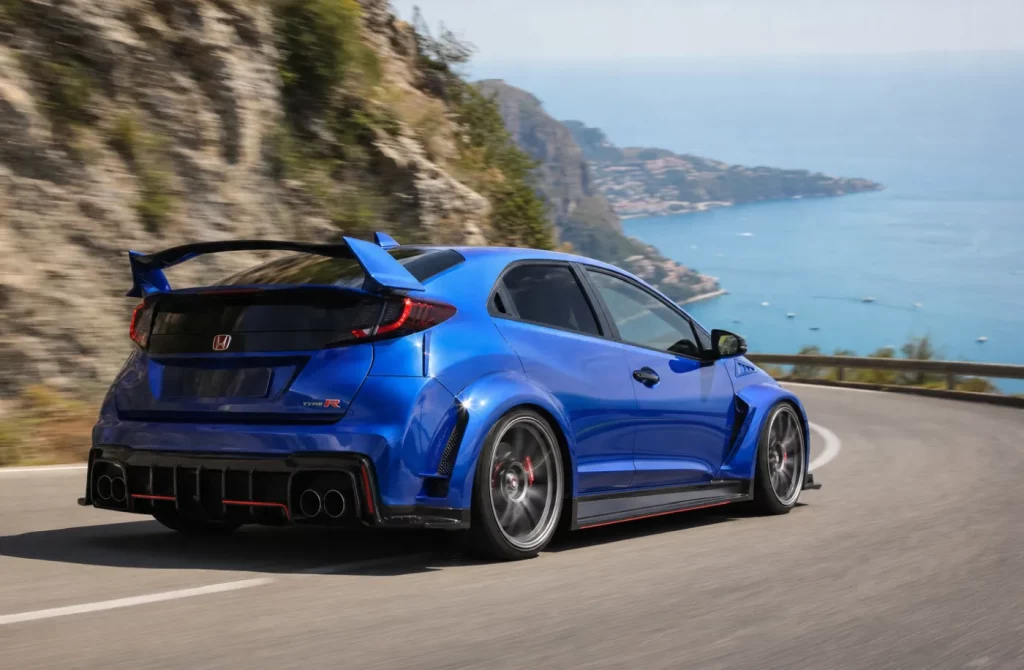
This guide covers the common problems, heat soak issues, and everything you need to know before buying a used FK8 Type R. If you’re shopping for a 2017-2021 Type R, understanding these weak points is essential — it’s the difference between owning a future classic and a money pit.
The FK8 Civic Type R is a future classic, but it has specific weak points: heat soak is the biggest enemy (oil temps climb fast on track), the A/C compressor clutch fails around 40,000 miles, 2nd gear can grind under hard shifts, and fuel dilution is a real concern on the K20C1. The 2020+ facelift cars got a larger radiator and improved brake rotors. Pre-purchase inspection is non-negotiable — check cooling system health, A/C operation, gearbox feel, and ECU history for tunes. Budget $800+ for A/C repairs and $2,000+ for cooling upgrades if you plan to track the car.
FK8 Type R: What You’re Actually Buying
The FK8 Civic Type R (2017-2021) was the first Type R officially sold in North America. It’s powered by the 2.0-liter K20C1 turbocharged engine producing 306 horsepower and 295 lb-ft of torque (316 hp in European/Japanese spec). The car features a 6-speed manual transmission with rev-matching, a helical limited-slip differential, adaptive dampers, and Brembo brakes.
The FK8 was built around one thing: numbers. Before it even hit showrooms, Honda was boasting of its Nürburgring lap time — 7:43.8. For a hot hatch, that was frankly unbelievable.
The chassis was entirely reimagined from the previous FK2, creating something much more cosseting and friendly than the often harsh-riding predecessor. Standard trim was impressive too, featuring carbon fiber side skirts, a rear diffuser, and a distinctive triple-exit exhaust designed to reduce boom on the motorway.
| Specification | FK8 Civic Type R |
|---|---|
| Engine | K20C1 2.0L turbo I4 |
| Horsepower (US) | 306 hp |
| Torque | 295 lb-ft |
| Transmission | 6-speed manual |
| LSD | Helical |
| Curb weight | ~3,117 lb |
| Redline | 7,000 rpm |
The Facelift Changes (2020+): What to Know
For the 2020 model year, the FK8 received a mid-life refresh. The upgrades were subtle but significant:
- Larger radiator: Allowed for a 13% bigger front grille, which in turn dictated a redesign of the splitter
- Two-piece brake rotors: Track-spec rotors that took 15mm of travel out of the brake pedal for better feel
- Re-tuned adaptive damping: Refined wheel control through aggressive cornering
- New gear knob: More tactile teardrop design, like in a DC2 Integra or EP3
- Boost Blue paint: New color option
There were also two special versions. The Type R Sport Line featured a much smaller rear spoiler, downsized 19-inch wheels, and black seats. The Type R Limited Edition (only 20 in the UK) came in yellow with forged BBS wheels, Michelin Cup 2 tires, and weight reduction (stereo, air-con, and sound deadening removed).
The facelift cars are generally considered the better buy due to the improved cooling and brakes, but pre-facelift cars are still supremely capable machines. The fresh upgrades to the facelift may be subtle, but they count for a lot. Arguably the best hot hatch on the market became even better.
The K20C1 Engine: What It Is, What It Isn’t
The K20C1 is fundamentally different from Honda’s previous turbo attempts. It revs to 7,000 rpm and maintains that aggressive Honda character despite the Turbocharger. Unlike the L15B7 in the regular Civic Si, this engine was built from the ground up for boost.
Stock power delivery is linear and predictable. With a Hondata FlashPro tune, you’re looking at 350+ horsepower on the stock turbo. Add bolt-ons like a cold air intake and you’re pushing 400hp safely — numbers that required built internals in previous Honda generations.
The K20C1 is Honda’s most honest turbo engine, but it has specific maintenance needs that used buyers must understand.
Heat Soak — The FK8’s Biggest Enemy
Heat soak is the single biggest issue affecting the FK8, especially for track day enthusiasts. The car pulls like a beast for the first few laps, then bogs down once the ECU pulls timing due to rising temperatures.
Oil temperatures can climb dangerously fast on track. One owner reported oil temps near 115°C (239°F) in stop-and-go traffic alone, while the Coolant gauge barely moved — that delta is where turbo bearings suffer most.
Why It Happens: The factory intercooler and cooling system are adequate for street driving but struggle under sustained track use. The intercooler can’t breathe in heavy traffic or during aggressive sessions, and oil temps skyrocket.
The Fix: For owners planning to track their FK8, cooling upgrades are non-negotiable.
- Upgraded radiator: PWR is top-tier with a 42mm core that fits without hacking up the fan shroud. The cooling efficiency is significantly higher than cheaper mass-produced options because the tube-and-fin design is much more advanced. Koyorad is another legendary option known for quality AT a lower price.
- Oil cooler: GReddy wins because of the ducting — most kits just hang a core in the breeze, but Greddy includes a shroud that forces air through the core, keeping oil temps stable even in 90-degree weather.
- Intercooler upgrade: CSF radiators and HKS oil cooler kits are also proven options.
- Hondata FlashPro: Adjusting fan trigger temps helps while in the pits or on a cool-down lap. Getting fans spinning earlier helps manage heat.
Budget approximately $2,200 for a proper radiator and oil cooler setup.
Practical tip: Don’t turn off the engine immediately after a hard run or a long crawl in traffic. Let it idle for 60-90 seconds. This allows the turbo shaft to slow down and the oil to carry heat away from the center housing before flow stops.
As one owner noted: “Laguna Seca is notoriously brutal because those uphill sections keep the engine under high load for so long that the stock heat management just gives up”.
What Actually Breaks — Common FK8 Problems
The FK8 is a reliable car overall, but it has several well-documented weak points.
1. A/C Compressor Clutch — Fails Around 40,000 Miles: This is one of the most common failures on the FK8. The clutch disengages randomly, leaving you with no A/C during summer driving. Repair cost is $800+ at Honda dealers. Check that the A/C cycles properly during your test drive — any hesitation means you’re looking at this repair soon.
2. Second-Gear Grind: A known issue where 2nd gear can grind under hard shifts, particularly when cold. This indicates potential synchro wear and is more common on cars that have been tracked or driven aggressively.
3. Fuel Dilution: Direct injection causes fuel to wash past the rings into the oil. Check the dipstick for fuel smell — if it’s present, the engine is eating itself. Oil changes every 5,000 miles are mandatory, not suggested. This isn’t covered under warranty because Honda considers it “normal operation”.
4. Wing Stay Cracking: Track-driven cars develop cracks in the rear wing mounting points. Honda covers this under warranty if you’re lucky and can prove it’s a manufacturing defect, not abuse. Aftermarket wings require different mounting solutions entirely.
5. Brake Rotor Cracking: The aggressive brakes can cause Rotor cracking under sustained track use. The 2020+ facelift cars got improved two-piece rotors to address this.
6. Premature Seat Bolster Wear: The aggressive bolsters on the Type R seats can wear quickly, especially with frequent entry and exit. Check for torn or excessively worn bolsters on the driver’s seat.
7. Sensitive Alignment: The FK8 is sensitive to alignment, and improper settings can cause uneven tire wear or handling issues.
8. Infotainment System Crashes: Some owners report the infotainment system freezing or crashing. This is more of an annoyance than a mechanical failure.
- A/C compressor clutch — fails ~40,000 miles
- 2nd gear grind — synchro wear
- Fuel dilution — check dipstick for fuel smell
- Wing stay cracking — track-driven cars
- Brake rotor cracking — aggressive track use
- Seat bolster wear — frequent entry/exit
- Radiator (PWR, Koyorad, CSF)
- Oil cooler (GReddy, HKS)
- Intercooler (CSF, PRL)
- Hondata FlashPro — fan temp adjustment
- Quality tires (Michelin PS4S, Cup 2)
Pre-Purchase Inspection Checklist
Before buying any used FK8, run through this checklist. Used FK8 prices hover around $45,000+ for clean examples, making inspection critical.
Engine & Cooling:
- Cold start: Listen for any unusual noises, rattles, or hesitation
- Oil level and smell: Pull the dipstick and smell for fuel contamination. Clean oil should smell like oil, not gasoline. Fuel dilution indicates poor maintenance or excessive short trips — walk away if present
- Coolant level: Check for proper level and any signs of contamination
- Heat soak test: Drive the car hard and monitor oil temps. If the car pulls timing or feels sluggish after hard driving, cooling system may be inadequate
A/C Function:
- Run the A/C for 10+ minutes. The compressor should cycle smoothly without clicking or hesitation. Any irregular cycling means the clutch is failing
- Factor $800 into your offer if symptoms are present
Transmission & Clutch:
- Test 1st-to-2nd shift under hard acceleration — feel for grinding
- Test all other gears for smooth engagement
- Clutch chatter test — engage from a stop and feel for shuddering
- Rev-matching function — should work smoothly
Brakes & Suspension:
- Check rotor condition — look for cracking or excessive wear
- Test brakes for consistent feel and stopping power
- Adaptive dampers — test Sport and Comfort modes for noticeable difference
Wheels & Tires:
- Factory 20-inch wheels are $600+ each to replace. Look for curb rash, especially on the inner barrel
- Check tire wear for evenness — uneven wear indicates alignment issues
Modification History:
- Hondata FlashPro tunes are common and generally safe when done properly
- Avoid cars with turbo upgrades, built internals, or methanol injection — these indicate the car was pushed beyond safe limits
- Check ECU history for flash count — a high count suggests previous tuning
Interior:
- Check seat bolsters for excessive wear
- Test infotainment for freezing or crashing
- Check all buttons and switches for proper operation
Oil Change Intervals — The Most Important Maintenance Item
Forget the manual’s optimistic intervals for ideal conditions. Stop-and-go traffic, frequent short trips, and high ambient temperatures fall under Honda’s definition of “Severe Service.” This leads to fuel dilution (gas washing into the crankcase) and sludge buildup.
Recommendation: Cut the interval in half. Aim for every 5,000 km (3,100 miles) or 6 months, whichever comes first.
Oil Type: Stick strictly to 0W-20 full synthetic meeting Honda HTS-07 specs for daily driving. The Variable Timing Control (VTC) system relies on specific hydraulic pressure curves that thicker oils might not provide instantly during cold starts.
However, if you are tracking the car frequently in humid summers or doing aggressive canyon runs where oil temps consistently exceed 110°C, some owners consider switching to 0W-30. A slightly higher viscosity maintains a stronger lubricating film under extreme heat, reducing shear stress. The trade-off is marginal increases in internal friction and potentially slower VTC response in cool weather. This isn’t a one-size-fits-all rule — monitor your actual oil temperature data before making the switch.
Changing oil frequently with the correct spec is cheaper than replacing a VTC actuator or dealing with premature Timing Chain Stretch.
Heat Management: The Idle Cool-Down Rule
In heavy traffic, your intercooler can’t breathe, and oil temps skyrocket even if the water temp looks normal.
The Rule: Don’t turn off the engine immediately after a hard run or a long crawl in traffic. Let it idle for 60-90 seconds. This allows the turbo shaft to slow down and the oil to carry heat away from the center housing before flow stops. It might feel weird sitting there while others beep, but your turbo will thank you later.
If you are stationary for more than 5 minutes with high temps, find a safe spot to pull over and let the electric fans do their job, or maintain a very slow creep (5-10 km/h) to generate slight ram-air effect without spiking exhaust gas temperatures.
Track-Ready Cooling Upgrades
If you plan to track your FK8, cooling upgrades are mandatory.
Recommended Cooling Upgrades:
- PWR FK8 Civic Type R Aluminum Radiator (PWR6326): Top-tier, 42mm core that fits without hacking up the fan shroud. Significantly higher cooling efficiency than cheaper mass-produced options
- GReddy FK8 Oil Cooler Kit: Includes a shroud that forces air through the core, keeping oil temps stable even in 90-degree weather
- CSF High-Performance Radiator: Proven option for track use
- HKS Oil Cooler Kit: Another reliable option
- Hondata FlashPro: Adjust fan trigger temps to get fans spinning earlier
Brake Dust & Humidity — A Corrosion Risk
In humid climates, combined with the aggressive compound of the FK8 brake pads, Calipers fight a losing battle against corrosion if neglected.
Recommendation: Wash your wheels every two weeks. Brake dust is metallic and corrosive; when mixed with moisture, it eats into clear coats and can seize caliper pistons over time. A good pH-neutral car shampoo and a dedicated wheel brush work wonders. Catching surface rust early saves you from buying new calipers down the road.
Scams & Red Flags — What to Watch For
In a supply-constrained market, desperation makes people blind. Do not trust the seller’s word, even if they swear on everything.
Red Flags:
- Missing service history: A full, stamped service history from an authorized dealer or reputable specialist is essential
- “No accidents” with cleared codes: Run an OBDII scan to detect cleared crash codes that a visual inspection might miss completely
- Seller refuses independent inspection: Non-negotiable — always get a third-party professional inspection
- Suspiciously loud exhaust on a “stock” claim: Likely modified and reverted
- Clutch chatter: If the clutch shudders violently when engaging from a stop, budget for a replacement
Final Thought
The FK8 Civic Type R is a future classic. It’s one of the greatest modern hot hatches ever built, delivering astonishing performance coupled with a sublime chassis. But it has specific weak points: heat soak is the biggest enemy, the A/C compressor clutch fails around 40,000 miles, 2nd gear can grind under hard shifts, and fuel dilution is a real concern on the K20C1.
Pre-purchase inspection is non-negotiable — check cooling system health, A/C operation, gearbox feel, and ECU history for tunes. Budget $800+ for A/C repairs and $2,000+ for cooling upgrades if you plan to track the car.
The 2020+ facelift cars are generally considered the better buy due to the improved cooling and brakes, but pre-facelift cars are still supremely capable machines. The fresh upgrades to the facelift may be subtle, but they count for a lot. Arguably the best hot hatch on the market became even better.
FAQ — FK8 Civic Type R Buying Guide
Is the FK8 Type R reliable?
The FK8 is generally reliable, but it has specific weak points. The A/C compressor clutch fails around 40,000 miles ($800+ repair), 2nd gear can grind under hard shifts, and fuel dilution is a concern on the K20C1. Regular maintenance (especially oil changes every 5,000 miles) is critical.
Does the FK8 Type R have heat soak problems?
Yes — heat soak is the FK8’s biggest enemy, especially for track day enthusiasts. The car pulls great for the first few laps, then bogs down once the ECU pulls timing due to rising temperatures. Cooling upgrades (radiator, oil cooler, intercooler) are necessary for serious track use.
What year FK8 Type R is best to buy?
The 2020+ facelift cars are generally the better buy. They have a larger radiator (13% bigger grille), improved two-piece brake rotors, re-tuned adaptive damping, and a more tactile gear knob. Pre-facelift cars are still excellent, but the facelift addressed several weaknesses.
How much power can the K20C1 handle?
With a Hondata FlashPro tune and bolt-ons, the K20C1 can safely make 350-400 horsepower on the stock turbo and internals. The engine was built from the ground up for boost and has significant headroom.
What are the most common FK8 problems?
A/C compressor clutch failure (~40,000 miles), 2nd gear grind, fuel dilution (check dipstick for fuel smell), wing stay cracking on track-driven cars, brake rotor cracking, premature seat bolster wear, and sensitive alignment.
How often should I change oil in an FK8 Type R?
For severe service (stop-and-go traffic, short trips, hot climates), change oil every 5,000 km (3,100 miles) or 6 months. Use 0W-20 full synthetic meeting Honda HTS-07 specs. Consider 0W-30 if tracking the car and oil temps consistently exceed 110°C.
What should I check before buying a used FK8?
Pull the dipstick and smell for fuel (fuel dilution). Run A/C for 10+ minutes to test compressor clutch. Test 2nd gear under hard acceleration for grinding. Check ECU flash count for tuning history. Look for seat bolster wear, rotor cracking, and wheel curb rash. Get a pre-purchase inspection from a third party.
Does the FK8 hold its value?
Yes — FK8 Type Rs hold their value exceptionally well. Clean examples with low mileage and full dealer history command premium prices. The car is a future classic.
Is the FK8 Type R good for daily driving?
The FK8 is surprisingly livable as a daily driver. The adaptive dampers provide a comfortable ride in Comfort mode, and the hatchback body offers practical cargo space. However, the 20-inch wheels and low-profile tires can be harsh on bad roads, and fuel economy is not great.
What cooling upgrades are recommended for track use?
PWR radiator (42mm core), GReddy oil cooler kit (with ducting), CSF intercooler, and Hondata FlashPro for fan trigger temp adjustment. Budget approximately $2,200 for a proper setup.