

The Honda Civic Si and Civic Type R have followed parallel paths for thirty years, but they started from very different places. The Si was always the affordable performance trim — a coupe or sedan with a stiffer suspension, a more aggressive engine, and a manual transmission. The Type R was a homologation special — lighter, more powerful, and built with racing intent.
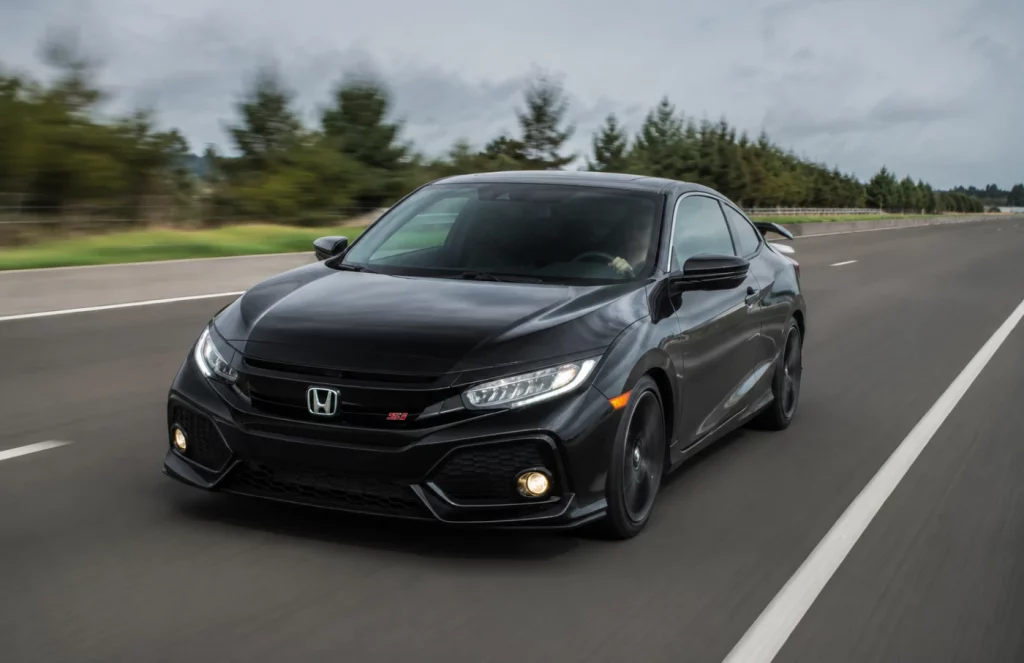
Over four generations of the Si and six generations of the Type R, the two cars have converged. The current Si (11th generation) and Type R (FL5) share the same platform, the same transmission type, and the same front-wheel-drive layout. But the engineering paths they took to get here are radically different, and understanding how each generation evolved tells you which one to buy and why.
This article covers the Si and Type R together, generation by generation, with the engine change as the organizing thread: from the high-revving naturally aspirated B-Series and K-series to the torquey L15 and K20 turbo engines of the modern cars.
The B-Series Era: Where Both Lineages Started
The EM1 Civic Si (1999–2000) — B16A2
The sixth-generation Civic Si (EM1) was the first Si officially sold in the United States since the 1980s. It used the B16A2 engine — a 1.6-liter DOHC VTEC four-cylinder producing 160 horsepower at 7,600 rpm and 111 lb-ft of torque at 7,000 rpm. The engine redlined at 8,000 rpm and made its peak power just below the fuel cut. The car weighed 2,401 pounds and had a double-wishbone front suspension, which was the Honda standard at the time.
The EM1 was not fast by modern standards — 0–60 mph in approximately 7.0 seconds, quarter-mile in the low 15-second range. What it offered was engagement. The B16A2 required the driver to keep the engine above 6,000 rpm to access VTEC engagement, and the power delivery was peaky and dramatic. The car had no traction control, no stability control, and no power steering assistance that could be described as light. It was raw, light, and required the driver to work. Source: Grassroots Motorsports, “1999-2000 Honda Civic Si Buyer’s Guide” (June 2019); ClassicVS, 1999 Civic Si EM1 specs.
The EK9 Civic Type R (1997–2000) — B16B
At the same time the Si was sold in the United States, Honda sold the EK9 Civic Type R in Japan. The EK9 used a destroked version of the B16, the B16B, which displaced the same 1.6 liters but produced 185 horsepower at 8,200 rpm — 25 more than the Si’s B16A2. The difference came from higher-compression pistons (10.8:1 vs. 10.2:1), a more aggressive cam profile, ported cylinder head, and a hand-polished intake manifold.
The EK9 also received a helical limited-slip differential, a closer-ratio five-speed transmission, stiffer springs and dampers, and a chassis that was seam-welded and reinforced at 20 points. It weighed 2,090 pounds — 311 pounds less than the Si. The power-to-weight ratio was significantly better, and the chassis rigidity made the suspension work more effectively. The EK9 set the template for every Type R that followed: a track-focused version of the Civic, not a trim level.
The B-series era established the fundamental difference between Si and Type R. The Si was a sporty street car. The Type R was a competition car adapted for road use. Source: Honda-Tech, “Complete History of the Honda Civic Type R, from EK9 to FK8” (February 2019).
The First K-Series Generation: A Divergence in Philosophy
The EP3 Civic Si (2002–2005) — K20A3
The seventh-generation Civic Si (EP3) was a controversial car. It used the K20A3 engine — a 2.0-liter DOHC i-VTEC four-cylinder producing 160 horsepower at 6,500 rpm and 132 lb-ft of torque at 4,000 rpm. The output was the same as the outgoing B16A2, but the displacement was 25 percent larger. The engine was designed for torque, not top-end power. The VTEC engagement on the K20A3 was on the intake cam only, and the power delivery was flat compared to the B16’s dramatic VTEC crossover.
The EP3 was built on the seventh-generation Civic platform, which replaced the double-wishbone front suspension with a MacPherson Strut design — a cost and space-saving decision that reduced front-end grip and steering feel. The EP3 Si was available only as a three-door hatchback in the United States, and it was heavier than the EM1 at 2,744 pounds. The handling was criticized as vague, and the interior was considered cheap.
The aftermarket never fully embraced the EP3 Si. The K20A3 was widely regarded as the weakest Si engine of the modern era, and the platform’s suspension geometry limited its track potential. The EP3 is the least sought-after Si on the used market today, with prices reflecting its reputation. Source: MotorTrend, “Honda Civic Si: History, Generations, Specifications” (July 2020).
The EP3 Civic Type R (2001–2005) — K20A
The EP3 Type R was a different car entirely. It used the K20A engine producing 212 horsepower at 8,000 rpm in the Japanese version and 197 horsepower at 7,400 rpm in the European version. The K20A had stronger connecting rods, higher-compression pistons (11.5:1), a fully counterbalanced crankshaft, and a VTEC system that engaged on both intake and exhaust cams. It shared none of the K20A3’s parts beyond the block casting.
The EP3 Type R weighed 2,513 pounds — 231 pounds less than the EP3 Si. It received a Helical LSD, a close-ratio six-speed transmission (the first six-speed in a Civic), stiffer springs, and larger brakes. The car was significantly faster than the Si in every measure, with a 0–60 time of approximately 6.5 seconds and a quarter-mile in the mid-14-second range.
The EP3 generation established that the Si and Type R were diverging. The Si was becoming a value-oriented performance package. The Type R remained a focused performance machine, and the gap in engine technology, chassis tuning, and weight reduction widened. Source: Honda-Tech, “Complete History of the Honda Civic Type R”; CarBuzz, “Honda Civic Type R Generations” (May 2025).
The Peak of Naturally Aspirated Performance
The FA5 Civic Si (2006–2011) — K20Z3
Honda corrected course with the eighth-generation Civic Si. The FA5 sedan and FG2 coupe used the K20Z3 engine producing 197 horsepower at 7,800 rpm and 139 lb-ft of torque at 6,100 rpm. The engine revved to 8,000 rpm, and the VTEC engagement at approximately 5,400 rpm produced the dramatic power surge that B-series owners loved. The K20Z3 was one of Honda’s best naturally aspirated engines — responsive, reliable, and willing to rev.
The FA5 received a helical LSD, a six-speed manual, and a significantly stiffer chassis than the EP3 — Honda claimed an 80 percent increase in torsional rigidity. The suspension returned to a more performance-oriented tuning with a quicker steering ratio. The car weighed 2,877 pounds (sedan) — heavier than the EM1 by nearly 500 pounds, but the engine output and chassis capability more than compensated.
The FA5/FG2 generation is widely regarded as the best naturally aspirated Si ever sold in the United States. It was the last Si with a double-wishbone rear suspension, the last with an 8,000-rpm redline, and the last with a truly characterful naturally aspirated engine. Car and Dog testers consistently rated it above the Mazdaspeed 3 and Volkswagen GTI for driving engagement. Source: MotorTrend, “Honda Civic Si: History, Generations, Specifications” (July 2020); Honda Newsroom, “Civic Si Timeline and Milestones” (November 2021).
The FD2 Civic Type R (2007–2010) and FN2 Civic Type R (2007–2010) — K20A
The eighth-generation Type R was sold in two forms. The FD2 was a four-door sedan sold in Japan using a revised K20A producing 225 horsepower at 8,000 rpm. The FN2 was a three-door hatchback sold in Europe using the same engine with 198 horsepower (European emission calibration). Both used a six-speed manual, a helical LSD, and the same fundamental chassis as the standard eighth-generation Civic.
The FD2 Type R was the most focused naturally aspirated Type R Honda ever built. It featured a hand-assembled engine with polished ports, a balanced Crankshaft, and sodium-filled exhaust valves. The car weighed only 2,757 pounds — lighter than the FA5 Si despite having more power — and it lapped the Nürburgring in 8:22, a remarkable time for a naturally aspirated front-wheel-drive sedan. The FD2 remains the most sought-after Type R among collectors in Japan.
The FN2 was heavier (2,834 pounds) and softer, with a torsion-beam rear axle instead of the double-wishbone rear suspension used on the standard Civic and the FD2. The torsion beam was a cost-saving measure that reduced handling capability, and the FN2 is considered the weakest Type R of the modern era — analogous to the EP3 Si in the Si lineage.
The K24 Generation: Torque Before Redline
The FB6 Civic Si (2012–2015) — K24Z7
The ninth-generation Civic Si was a response to criticism that the K20Z3 was peaky and lacked low-end torque for daily driving. Honda replaced the 2.0-liter K20 with the 2.4-liter K24Z7, producing 201 horsepower at 7,000 rpm and 170 lb-ft of torque at 4,400 rpm. The displacement increase of 20 percent reduced the peak horsepower gain (only 4 hp over the K20Z3) but added 31 lb-ft of torque at a much lower rpm.
The K24Z7 was not a high-revving engine. It redlined at 7,000 rpm compared to the K20Z3’s 8,000 rpm. The VTEC engagement was on the intake cam only, and the power delivery was broad and flat rather than dramatic. The car was faster in real-world driving — the extra torque made it quicker from a roll and easier to drive without constant gear changes — but it lost the character that made the K20Z3 special.
The FB6 chassis received a quicker steering ratio (13.7:1 vs. the FA5’s 15.4:1) and stiffer spring rates, but the suspension geometry was carried over from the eighth-generation car with minor revisions. The FB6 weighed approximately 2,900 pounds — slightly heavier than the FA5. The car was well-reviewed but never achieved the enthusiast following of the FA5. It is the most affordable modern Si on the used market, with clean examples available for $12,000–$16,000 as of 2025–2026.
The 2014–2015 model years received a facelift that improved the interior quality and added a limited-slip differential to the sedan (the coupe had it from 2012). The facelift also added Honda’s LaneWatch camera system and revised the front and rear bumpers. Source: MotorTrend, “Honda Civic Si: History, Generations, Specifications” (July 2020).
The Turbo Revolution
The FK2 Civic Type R (2015–2017) — K20C1
Honda broke with tradition in 2015 by introducing the first turbocharged Type R. The FK2 used the K20C1 engine — a 2.0-liter turbocharged four-cylinder producing 306 horsepower at 6,500 rpm and 295 lb-ft of torque at 2,500 rpm. The engine was a clean-sheet design with a cast-iron cylinder liner, forged connecting rods, a low-inertia twin-scroll Turbocharger, and an electric wastegate actuator.
The FK2 was the first front-wheel-drive car to lap the Nürburgring Nordschleife in under 8 minutes, with a time of 7:50. It used a six-speed manual, a helical LSD, and adaptive dampers. The car was criticized for its styling (aggressive and polarizing) and its torque steer under hard acceleration, but the performance was undeniable. The FK2 was sold only in Europe and Japan — it was never officially imported to the United States.
The FC1/FK8 Civic Si (2017–2021) — L15B7
The 10th-generation Civic Si returned the nameplate to a turbocharged engine for the first time. The L15B7 1.5-liter turbocharged four-cylinder produced 205 horsepower at 5,700 rpm and 192 lb-ft of torque from 2,100 to 5,000 rpm. The torque peak arrived 4,000 rpm earlier than the K20Z3’s peak, which made the Si dramatically easier to drive in daily conditions. The power delivery was no longer VTEC-dependent — it was torque-dependent.
The FC1/FK8 Si received a helical LSD, a six-speed manual with rev-matching (the first Si to offer it), and adaptive dampers on the sedan. The coupe had fixed-rate dampers. The chassis was more rigid, and the dual-pinion electric power steering was significantly better than the EP3’s or FB6’s systems. The car weighed approximately 2,900 pounds.
The Si lost the high-revving character that defined the B-series and K20 generations, but it gained real-world usability. The 0–60 time improved to approximately 6.6 seconds — not dramatically faster than the FA5, but the mid-range torque made it feel quicker. Owners on CivicX.com broadly accepted the tradeoff, with the majority of forum users rating the 10th-gen Si as the best daily driver Si ever built. Source: Honda Newsroom, “Civic Si Timeline and Milestones” (November 2021).
The FK8 Civic Type R (2017–2021) — K20C1
The FK8 Type R was the first Type R officially sold in the United States. It used a revised version of the K20C1 engine producing 306 horsepower and 295 lb-ft of torque — the same output as the FK2 but with a broader torque curve. The car lapped the Nürburgring in 7:43.8, a 6-second improvement over the FK2, and set front-wheel-drive lap records at multiple tracks worldwide.
The FK8 received a helical LSD, a six-speed manual with automatic rev-matching, adaptive dampers with +R mode, and a dual-axis front suspension that virtually eliminated torque steer. The brake system used four-piston Brembo Calipers with 13.8-inch two-piece rotors. The car weighed approximately 3,117 pounds — significantly heavier than any previous Type R, but the chassis, brakes, and cooling system were designed to handle the weight.
The FK8 was Car and Driver’s 10Best winner for multiple years and was widely praised as the most capable front-wheel-drive car ever built. The primary criticism was the styling — the FK8’s aggressive aero, triple exhaust outlets, and angular bodywork divided opinion sharply. The performance, however, was universally respected. Source: Honda Newsroom, “Type R Timeline and Milestones” (May 2022); CarBuzz, “Honda Civic Type R Generations.”
The Mature Generation
The FE1/FL1 Civic Si (2022–Present) — L15CA
The 11th-generation Civic Si returned the nameplate to a more restrained design language. The L15CA engine produced 200 horsepower — 5 less than the 10th-gen Si — but the torque rating remained at 192 lb-ft. The reduction was attributed to a more restrictive exhaust system required for tighter emissions standards, not a change in the engine’s capability. The Si retained the helical LSD and six-speed manual, but Honda removed the rev-matching system from the 11th-gen Si, drawing criticism from buyers who had grown accustomed to it.
The chassis was more rigid than the 10th-gen Si — Honda claims an 8 percent increase in torsional rigidity and 13 percent increase in bending rigidity. The steering system was revised with a quicker ratio and improved feedback. The car weighed approximately 2,952 pounds — slightly heavier than the 10th-gen.
The interior quality was the biggest improvement. The 11th-gen Si’s cabin was genuinely premium, with metal trim, a 9-inch touchscreen, Bose audio, and sport seats that were comfortable for long drives. The exterior styling was mature and understated — a deliberate departure from the 10th-gen’s angular design.
The 11th-gen Si was praised as the best-balanced Si ever built for daily driving. It was less focused on peak performance than the 10th-gen but more cohesive as a complete car. Car and Driver rated it 10/10 and included it on the 10Best list. The criticism was that it was too refined — some owners felt the Si had lost its edge. Source: Honda Newsroom, “Civic Si Timeline and Milestones” (November 2021); Car and Driver, 2023 Honda Civic Si review.
The FL5 Civic Type R (2023–Present) — K20C1
The FL5 Type R returned the nameplate to a more restrained design. The K20C1 engine was updated to produce 315 horsepower and 310 lb-ft of torque — gains of 9 and 15 over the FK8. The engine received a larger turbocharger with a revised turbine wheel, a higher-flow intake, a less restrictive exhaust, and a more aggressive cam profile. The redline remained at 7,000 rpm.
The FL5 received a revised dual-axis front suspension with stiffer Bushings, a quicker steering ratio (11.9:1 vs. the FK8’s 12.2:1), and Michelin Pilot Sport 4S tires instead of the FK8’s Continental SportContact 6. The brake system was updated with 14.0-inch front rotors — 0.2 inches larger than the FK8. The car weighed approximately 3,188 pounds.
The FL5 lapped the Nürburgring in 7:44.9 — similar to the FK8 — but the lap was set in less favorable conditions, and Honda stated the car was capable of a faster time. The FL5’s real improvement was in daily usability. The adaptive dampers in Comfort mode were noticeably more compliant than the FK8’s, and the interior quality was significantly better. The styling was conservative by Type R standards — no prominent wings, no triple exhaust, no fake vents. Source: Honda Newsroom, “Type R Timeline and Milestones” (May 2022); CarBuzz, “Honda Civic Type R Generations.”
| Generation | Model | Engine | Output | Weight( lbs) | 0–60(sec) |
|---|---|---|---|---|---|
| 6th gen (1999–2000) | EM1 Si | B16A2 1.6L | 160 hp / 111 lb-ft | 2,401 | 7.0 |
| 6th gen (1997–2000) | EK9 Type R | B16B 1.6L | 185 hp / 118 lb-ft | 2,090 | 6.6 |
| 7th gen (2002–2005) | EP3 Si | K20A3 2.0L | 160 hp / 132 lb-ft | 2,744 | 7.4 |
| 7th gen (2001–2005) | EP3 Type R | K20A 2.0L | 212 hp / 145 lb-ft | 2,513 | 6.5 |
| 8th gen (2006–2011) | FA5/FG2 Si | K20Z3 2.0L | 197 hp / 139 lb-ft | 2,877 | 6.8 |
| 8th gen (2007–2010) | FD2 Type R | K20A 2.0L | 225 hp / 159 lb-ft | 2,757 | 6.4 |
| 9th gen (2012–2015) | FB6/FG4 Si | K24Z7 2.4L | 201 hp / 170 lb-ft | ~2,900 | 7.0 |
| 10th gen (2017–2021) | FC1 Si | L15B7 1.5T | 205 hp / 192 lb-ft | ~2,900 | 6.6 |
| 10th gen (2017–2021) | FK8 Type R | K20C1 2.0T | 306 hp / 295 lb-ft | 3,117 | 4.9 |
| 11th gen (2022–present) | FE1 Si | L15CA 1.5T | 200 hp / 192 lb-ft | 2,952 | 6.8 |
| 11th gen (2023–present) | FL5 Type R | K20C1 2.0T | 315 hp / 310 lb-ft | 3,188 | 4.9 |
0–60 times are manufacturer estimates or Car and Driver tested values where available. Weight is curb weight with fluids. Sources: Honda Newsroom, Car and Driver, MotorTrend, Grassroots Motorsports.
What the Evolution Tells You About Which to Buy
The Si and Type R have followed the same macro trend: more torque, more weight, more refinement, less character. Both cars are better than they have ever been in objective terms — faster, more comfortable, more reliable, more fuel-efficient. Both cars have lost some of the raw engagement that defined the early generations.
The difference is that the Si has converged toward being a genuinely premium compact car that happens to be fast, while the Type R has converged toward being a genuine sports car that happens to be practical. The Si’s evolution from the raw EM1 to the refined FE1 is a story of maturity and market adaptation. The Type R’s evolution from the track-focused EK9 to the dual-purpose FL5 is a story of capability expansion.
Which one to buy depends on which part of the evolution you value. The EM1 Si and EK9 Type R offer the most driver engagement. The K20Z3 Si and FD2 Type R offer the best naturally aspirated power delivery. The current turbo cars are faster and more livable but less memorable as driving experiences. The used market prices reflect this hierarchy — the raw cars cost more than the refined ones in most cases.
Quick-Reference Checklist
☐ EM1 Si (1999–2000): B16A2, 160 hp, 2,401 lbs, double-wishbone, no LSD. The rawest Si sold in the US. Prices rising as collector interest increases. $8,000–$15,000 for clean examples.
☐ EK9 Type R (1997–2000): B16B, 185 hp, 2,090 lbs. The original Type R. Not sold in the US. Gray-market imports available at $25,000–$40,000.
☐ EP3 Si (2002–2005): K20A3, 160 hp, 2,744 lbs. The weakest Si engine. Torsion-beam rear. Avoid unless you want the hatchback body style and plan a K20A or K24 swap. $5,000–$9,000.
☐ FA5/FG2 Si (2006–2011): K20Z3, 197 hp, 8,000 rpm redline. The best naturally aspirated Si. Helical LSD, double-wishbone rear. Still affordable at $8,000–$14,000.
☐ FB6/FG4 Si (2012–2015): K24Z7, 201 hp, 170 lb-ft. More torque, less character. Affordable entry point at $12,000–$16,000. Facelift models (2014–2015) are preferable.
☐ FC1 Si (2017–2021): L15B7, 205 hp, turbocharged. Best daily-driver Si before the 11th gen. Responds well to tuning. $22,000–$28,000.
☐ FE1 Si (2022–present): L15CA, 200 hp. The most refined Si. Premium interior, mature styling, but softer edge than any previous Si. $29,000–$32,000 new.
☐ FK8 Type R (2017–2021): K20C1, 306 hp, 3,117 lbs. The first Type R sold in the US. Aggressive styling, track-capable, polarized opinions. $38,000–$45,000 used.
☐ FL5 Type R (2023–present): K20C1, 315 hp, 3,188 lbs. More refined, more mature, less dramatic. Adaptive dampers in Comfort mode are daily-drivable. $47,000–$50,000 new.
☐ The Si and Type R were closest in philosophy during the 8th generation (FA5 vs FD2 — both naturally aspirated K-Series, both LSD-equipped, both focused). The gap widened with turbocharging.
☐ The 9th-gen Si (K24) is the most undervalued Si on the used market. The engine is robust, the torque is useful, and the price is low. The FB6 is the best value-per-dollar Si available in 2026.
☐ The EP3 Si and FN2 Type R are the weakest values in both lineages. The EP3 Si is underpowered, and the FN2 Type R uses a torsion-beam rear suspension. Buy an FA5 or an FK8 instead.