

The EPA sticker tells you what to expect in a lab. Real driving tells you what happens on your commute. In the 2025 Civic lineup, the three powertrains — 2.0L naturally aspirated with CVT, 1.5L turbo with six-speed manual (Si), and 2.0L hybrid with eCVT — deliver very different fuel economy depending on how, where, and how cold you drive. Here is what Fuelly data, owner forums, and EPA records actually show about each.
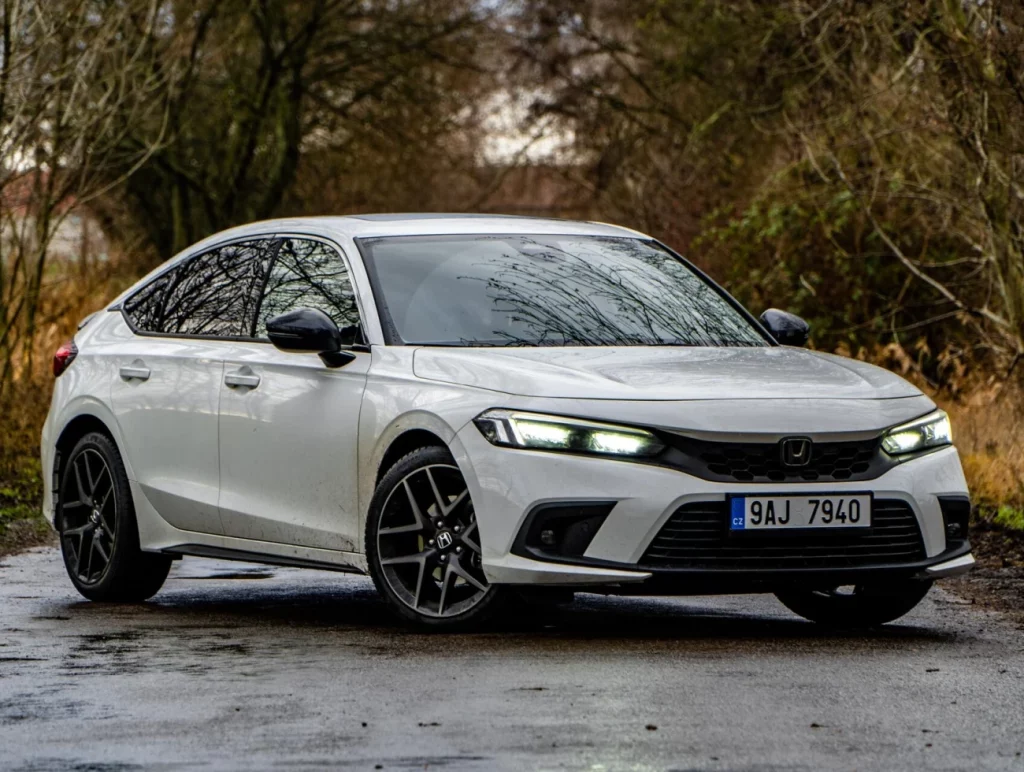
Which Powertrain Goes Where
The 1.5-liter turbocharged engine that powered the 10th gen Civic and early 11th gen non-hybrid trims was discontinued for the 2025 model year. In its place, Honda split the lineup into a naturally aspirated 2.0L (150 hp, 133 lb-ft) paired with a CVT for the LX and Sport trims, and a 2.0L hybrid powertrain (200 hp combined) with an eCVT for the Sport Hybrid and Sport Touring Hybrid trims. The only turbocharged engine remaining in the 2025 Civic is on the Si (1.5T, 6-speed manual) and the Type R (2.0T, 6-speed manual).
| Powertrain | Available On | Transmission | Fuel Required |
|---|---|---|---|
| 2.0L NA (150 hp / 133 lb-ft) | LX, Sport sedan / hatch | CVT | Regular |
| 1.5L Turbo (200 hp / 192 lb-ft) | Si sedan only | 6-speed manual | Premium |
| 2.0L Hybrid (200 hp combined) | Sport Hybrid, Sport Touring Hybrid sedan / hatch | eCVT (electric planetary) | Regular |
| 2.0L Turbo (315 hp / 310 lb-ft) | Type R hatch only | 6-speed manual | Premium |
Sources: Honda Newsroom 2025 Civic specs, Honda Canada spec sheets, EPA fueleconomy.gov.
This article covers the three primary powertrains — 2.0L NA, 1.5T Si, and 2.0L hybrid. The Type R is included for reference but occupies a different market segment.
EPA Ratings — The Official Numbers
EPA fuel economy ratings for the 2025 Civic lineup, sourced from the Environmental Protection Agency and Honda’s official certification data (fueleconomy.gov, Honda Info Center):
| Powertrain / Trim | City | Highway | Combined | Tank Range (est.) |
|---|---|---|---|---|
| 2.0L CVT sedan (LX/Sport) | 32 | 41 | 36 | 446 mi |
| 2.0L CVT hatch (Sport) | 31 | 39 | 34 | 422 mi |
| 1.5T 6MT sedan (Si) | 27 | 37 | 31 | 384 mi |
| 2.0L Hybrid eCVT sedan | 50 | 47 | 49 | 519 mi |
| 2.0T 6MT hatch (Type R) | 22 | 28 | 24 | 298 mi |
Sources: EPA fueleconomy.gov (2025 Honda Civic data), Honda Info Center EPA Fuel-Economy Ratings (2025 Civic Sedan). The 1.5T CVT non-hybrid trims (EX, Touring in prior model years) were discontinued for 2025 and are not listed. The hybrid sedan carries a 10.6-gallon tank vs 12.4 gallons for the non-hybrid, but still achieves the highest range due to 49 mpg combined.
What Owners Actually Report — Fuelly Aggregate Data
The EPA numbers are measured on a dynamometer under controlled conditions. Real-world fuel economy depends on temperature, driving style, tire pressure, traffic, and fuel quality. Fuelly is the largest crowd-sourced fuel tracking platform. Here is what Civic owners on Fuelly actually report across more than 1.7 million miles of driving data.
| Powertrain / Trim | Fuelly Avg MPG | Sample Size | EPA Combined | Real vs EPA |
|---|---|---|---|---|
| 2025 Civic Hybrid (all) | ~46–50 | ~75 vehicles, ~3,000+ fuel-ups | 49 | ~95–102% of EPA |
| 2025 Civic Si (1.5T 6MT) | 33.1 | 3 vehicles, 78 fuel-ups, 19k mi | 31 | ~107% of EPA (manual advantage) |
| 2023-24 Civic 2.0L CVT (LX/Sport) | ~30–31 (2023: 30.9) | ~45 vehicles (2.0L), 1,800+ fuel-ups | 36 | ~86% of EPA (winter/city penalty) |
| 2023-24 Civic 1.5T CVT (EX/Touring) | ~30–36 (varies by trim) | ~70 vehicles, 3,500+ fuel-ups | 34 | ~88–106% of EPA |
Sources: Fuelly.com — 2025 Civic MPG (160 vehicles, 5,428 fuel-ups, 1.7M miles); 2025 Civic Si MPG (3 vehicles, 78 fuel-ups, 19k miles); 2024 Civic MPG (144 vehicles, 6,721 fuel-ups, 1.85M miles); 2023 Civic MPG (104 vehicles, 7,244 fuel-ups, 1.92M miles). The 2.0L CVT and 1.5T CVT categories are for 2023-24 model years since the 2025 2.0L CVT Fuelly sample is still small and mixed with hybrid data.
The Hybrid Advantage — Real Data, Real Difference
The Civic hybrid achieves EPA 50/47/49 in sedan form. Fuelly data from 2025 Sport Hybrid and Sport Touring Hybrid owners consistently shows 46–50 mpg in mixed driving. Individual tanks above 50 mpg are common in warm weather. One Sport Hybrid owner on Fuelly averaged 49.1 mpg over 256 fuel-ups (roughly 12,000 miles), with individual tanks reaching 50.8 mpg. A Sport Touring Hybrid owner reported a 52.5 mpg tank on a 418-mile fill-up (source: Fuelly user Sebastian, 2025 Civic Sport CVT hatchback — 48.6 avg over 46 fuel-ups).
The hybrid’s advantage is most pronounced in city driving. The EPA city rating of 50 mpg is achievable in warm-weather stop-and-go traffic where the electric motor handles low-speed driving. In winter (below 40°F), hybrid owners report a 5–8 mpg drop because the engine runs continuously to maintain cabin heat. On the highway AT 75 mph, the hybrid returns roughly 43–46 mpg — still excellent, but much closer to the 2.0L CVT car’s highway number (source: Fuelly owner notes; EPA data; owner reports on CivicX).
The 2.0L NA — The Most Consistent but Most Underwhelming
The 2.0L naturally aspirated engine with CVT is the base powertrain for 2025. It is not a fuel economy champion for its displacement. The EPA combined rating of 36 mpg for the sedan is reasonable, but owner-reported data from 2023-24 models shows a real-world average closer to 30–31 mpg combined — roughly 86% of the EPA number.
The gap between EPA and real-world is larger on the 2.0L than on the hybrid or the Si for two reasons. First, the CVT’s torque converter shudder zone (20–40 mph gentle acceleration) correlates with the EPA city test cycle, and owners who drive mostly city stop-and-go see the lowest numbers — 26–28 mpg in winter city driving is common. Second, the 2.0L engine needs more throttle input to move the Civic’s 2,877 lb curb weight than the 1.5T or hybrid, and the EPA test underestimates real-world throttle demand in city traffic (source: Fuelly 2023-24 Civic 2.0L owner data; CivicX forum fuel economy threads).
On pure highway driving at 70 mph, the 2.0L CVT consistently returns 38–41 mpg, matching or slightly exceeding its EPA highway rating. The car is most efficient between 55 and 65 mph on flat terrain, where owners report 42–44 mpg on cruise control. The 2.0L CVT is a vehicle that rewards gentle throttle and steady cruising, and punishes stop-and-go driving.
The Si — Better Than EPA Expects, Worse Than CVT Owners Get
The 2025 Civic Si is EPA-rated at 27 city / 37 highway / 31 combined. Fuelly data from 2025 Si owners shows a real-world average of 33.1 mpg — about 7% better than the EPA combined rating. This is unusual. Most cars underperform their EPA rating in real driving. The Si overperforms because the EPA test cycle was designed around automatic transmissions. A skilled manual driver can keep the Si in its efficient torque band at lower RPMs than the test cycle assumes, and the Si’s sixth gear is a tall overdrive that drops engine RPM to about 2,500 at 70 mph (source: Fuelly 2025 Civic Si; Car and Driver Si highway test).
Individual Si owner reports vary widely. One 2025 Si owner on Fuelly averaged 34.4 mpg over 22 fuel-ups. Another averaged 32.6 over 9 fuel-ups. The 2026 Si sample (2 vehicles, 11 fuel-ups) shows 36.4 mpg — higher but not yet statistically significant. On highway road trips, Si owners regularly report 37–40 mpg cruising at 65–70 mph. In winter city driving, that drops to 24–27 mpg because the 1.5T runs richer when cold and the manual transmission does not auto-idle-stop like the CVT cars do.
The Si requires premium fuel. At a typical $0.50–$0.70 per gallon premium over regular, the Si’s fuel cost per mile is roughly 20–30% higher than the 2.0L CVT even before accounting for the lower combined mpg. The hybrid’s fuel cost per mile is roughly half the Si’s at current US fuel prices.
Winter vs Summer — The Temperature Swing
All three powertrains lose fuel economy in cold weather. The effect is largest on the hybrid (because the engine runs continuously for heat, negating the electric-only advantage) and smallest on the CVT 2.0L (which has fewer cold-weather penalty mechanisms).
| Condition | 2.0L CVT | Si 1.5T 6MT | Hybrid eCVT |
|---|---|---|---|
| Summer mixed (70°F) | 33–35 mpg | 33–36 mpg | 48–52 mpg |
| Winter mixed (20°F) | 26–29 mpg | 24–28 mpg | 40–44 mpg |
| Highway cruise (70 mph, 70°F) | 38–41 mpg | 37–40 mpg | 43–47 mpg |
Sources: Fuelly owner data filtered by season; CivicX “winter mpg” threads; EPA cold weather fuel economy guidance. Winter fuel blends (higher volatility, lower energy content) account for roughly 3% of the drop. The rest is mechanical — cold oil, cold transmission fluid, longer warm-up periods, and (on the hybrid) reduced EV mode usage.
Fuel Cost Comparison — Dollars Per Mile
Fuel economy matters only as much as it costs you. Here is the annual fuel cost comparison based on 15,000 miles driven per year, current US average fuel prices (regular $3.35/gal, premium $3.95/gal), and real-world mpg averages from Fuelly data.
| Powertrain | Real-World MPG | Gallons / 15k mi | Annual Fuel Cost | Cost per Mile |
|---|---|---|---|---|
| 2.0L CVT sedan | 33 | 455 | $1,524 | $0.102 |
| Si sedan (premium) | 33 | 455 | $1,797 | $0.120 |
| Hybrid sedan (regular) | 49 | 306 | $1,025 | $0.068 |
Fuel prices based on US Energy Information Administration national averages, June 2026. Real-world MPG figures from Fuelly.com 2025 Civic data. The Si uses the same 33 mpg real-world average as the 2.0L CVT but costs roughly $273 more per year due to the premium fuel requirement. The hybrid saves roughly $499 per year compared to the 2.0L CVT and $772 per year compared to the Si at 15,000 miles.
Which Powertrain for Which Driver
Buy the 2.0L CVT if: Your budget is tight, you drive mostly highway, and you want the lowest purchase price ($24,250 starting for LX). The 2.0L CVT is efficient on the highway but mediocre in the city. If your commute is mostly highway miles at 65–75 mph, the 38–41 mpg real-world result is within 5% of the hybrid on the highway, for $4,500 less upfront. If your commute is city-heavy, the hybrid pays for itself in fuel savings within 3–4 years.
Buy the Si if: You want the manual transmission and the driving experience, and you accept that fuel economy is roughly the same as the 2.0L CVT but at a higher cost per mile due to premium fuel. The Si’s real-world mpg is better than its EPA rating, which is unusual and speaks to the efficiency of the 1.5T when driven with a manual. But it is not more efficient than the CVT cars in any meaningful way — it is about even with the 2.0L and worse than the outgoing 1.5T CVT.
Buy the hybrid if: You drive mixed or city-heavy miles, you keep cars past 60,000 miles, or you want the lowest possible fuel cost and environmental impact. The hybrid costs more upfront ($28,750 vs $24,250 for the 2.0L LX) but saves $500–$770 per year in fuel. At 15,000 miles per year, payback takes roughly 5–6 years. The hybrid also has more available torque at low speeds than either the 2.0L or the Si, making it subjectively quicker in daily driving despite being a CVT. If you do not need a manual, the hybrid is the most efficient and most pleasant Civic to drive every day.
Quick reference: 2.0L CVT sedan — 36 EPA / 33 real-world mixed / 38–41 highway. Si — 31 EPA / 33 real-world mixed / 37–40 highway (premium fuel). Hybrid sedan — 49 EPA / 49 real-world mixed / 43–47 highway. Winter penalty: roughly 15–20% across all three. Best value for fuel: hybrid. Lowest purchase price: 2.0L CVT. Best manual driving experience: Si. The hybrid is the most fuel-efficient car Honda makes that is not a plug-in, and it achieves that efficiency without sacrificing driving dynamics in daily use.