

The 10th generation Honda Civic (2016-2021) was a watershed moment for the model line. It introduced a completely new platform, a turbocharged engine option for the first time in the Civic’s non-Si lineup, and a trim walk that confused as many buyers as it helped. The EX-T sat in the middle of that walk — positioned above the EX, below the EX-L and Touring, and equipped with the same 1.5-liter turbo engine that powered the range-topping trims. For used buyers in 2026, it is the trim that appears most frequently in search results and dealer lots. This article covers what the 2016-2018 EX-T offered, what it lacked, how it changed across its production run, and whether it makes sense as a purchase today.
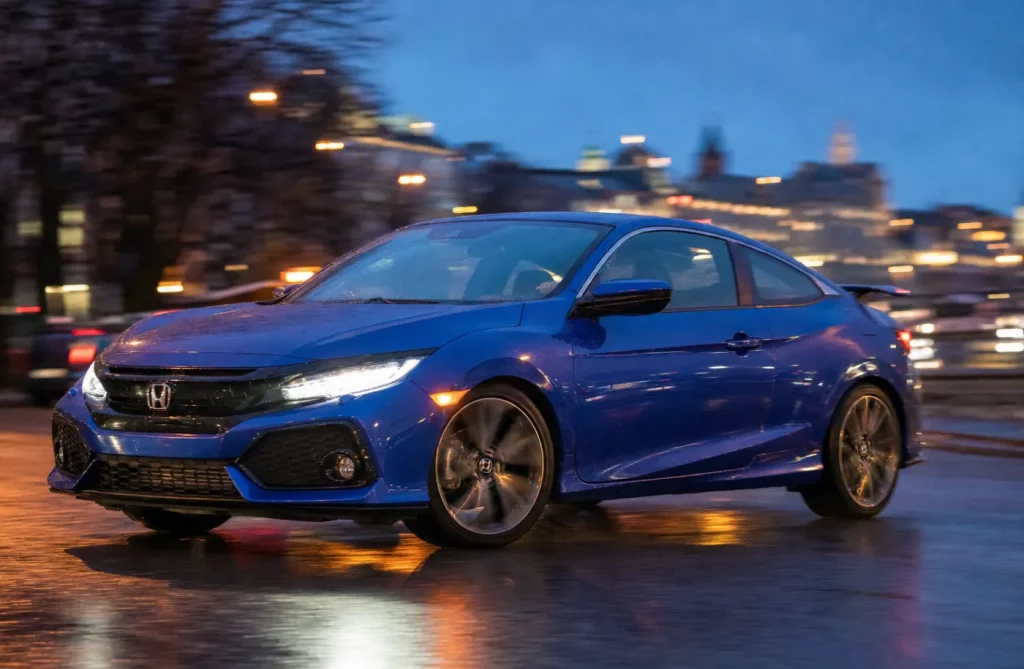
The most important rule of EX-T buying: The EX-T was only available from 2016-2018. It was the cheapest way to get the 1.5T turbo engine in the 10th generation Civic. The 2018 EX-T is the strongest model year due to the physical volume knob, standard Honda Sensing, and refined CVT calibration. Fuel dilution in the L15B7 engine is the top reliability concern — check oil level and smell on any used example.
Quick Answer — Is the EX-T Still Worth Buying in 2026?
| Model Year | Verdict | Best For | Main Concern |
|---|---|---|---|
| 2016 EX-T | Inspect carefully | Budget entry to 1.5T, early-production risk | Oil dilution, no volume knob, optional Honda Sensing, infotainment glitches |
| 2017 EX-T | Inspect carefully | Middle ground, better NVH than 2016 | Oil dilution, no volume knob, Honda Sensing still optional |
| 2018 EX-T | Best buy | Sweet spot — volume knob, standard Honda Sensing, refined CVT | Oil dilution still possible, check history |
The bottom line: The EX-T is the best way to get the 1.5T turbo engine in a 10th gen Civic without paying EX-L or Touring prices. The 2018 is the strongest choice. Fuel dilution is the only major concern — check the oil before you buy. A 2018 EX-T with the AC Condenser already replaced and CVT fluid changed is the safest used buy in this trim.
The EX-T in the 10th Gen Trim Hierarchy
Honda offered the 2016 Civic sedan in five trim levels: LX, EX, EX-T, EX-L, and Touring. The EX-T was eliminated from the lineup starting with the 2019 model year, when Honda simplified the trim structure and folded the turbo engine into the EX trim. For 2016-2018, the EX-T was the only way to get the 1.5-liter turbo engine without stepping up to the EX-L or Touring.
The hierarchy by MSRP for the 2016 sedan (including destination) was:
| Trim | 2016 MSRP | Engine | Transmission |
|---|---|---|---|
| LX | $19,455 | 2.0L K20C2 (158 hp, 138 lb-ft) | 6MT or CVT |
| EX | $21,355 | 2.0L K20C2 (158 hp, 138 lb-ft) | CVT only |
| EX-T | $22,655 | 1.5L L15B7 (174 hp, 162 lb-ft) | CVT only |
| EX-L | $23,955 | 1.5L L15B7 (174 hp, 162 lb-ft) | CVT only |
| Touring | $26,655 | 1.5L L15B7 (174 hp, 162 lb-ft) | CVT only |
Source: 2016 Honda Civic Sedan Specifications and Highlights (American Honda Motor Co., 2015).
The EX-T carried a $1,300 premium over the EX and added approximately $1,300 in content, the largest single upgrade in that engine being the difference between the 2.0-liter naturally aspirated K20C2 and the 1.5-liter turbocharged L15B7. The delta between the EX-T and the EX-L was also $1,300, and between the EX-T and Touring was $4,000.
What the EX-T Added Over the EX
The EX-T was not just an engine swap. Honda added specific features that aligned with the turbocharged powertrain and incremental convenience upgrades.
Powertrain and driving:
- 1.5L L15B7 turbocharged engine with direct injection and a single-scroll MHI TD03 Turbocharger at 16.5 psi boost
- 174 hp AT 6,000 rpm and 162 lb-ft from 1,700 to 5,500 rpm — 16 hp and 24 lb-ft over the 2.0L
- LL-CVT (Low-Load CVT) specific to the 1.5T, with different gear ratios from the M-CVT used on the 2.0L
- Turbo boost meter in the driver information interface
- Remote engine start (on CVT models — also available on EX with CVT)
Exterior:
- Fog lights (not available on EX)
- Body-colored decklid spoiler (not available on EX)
- Fin-type roof-mounted antenna (EX used integrated rear window antenna)
Interior and convenience:
- Heated front seats (not available on EX)
- Dual-zone automatic climate control (EX had single-zone automatic)
- 7-inch Display Audio with electrostatic touchscreen, Apple CarPlay and Android Auto connectivity
- 180-watt audio system with 8 speakers (EX had the same)
- SiriusXM and HD Radio (EX had Pandora and HondaLink only)
- SMS text message function
Driver assistance:
- Honda Sensing (forward collision warning, lane departure warning, collision mitigation braking, road departure mitigation, lane keeping assist, adaptive cruise control with low-speed follow) — available as an option on EX and EX-T
- Honda LaneWatch passenger-side camera (also on EX)
- Multi-angle rearview camera with dynamic guidelines (also on EX)
Source: 2016 Honda Civic Sedan Model Comparison and Model Specifications (American Honda Motor Co., 2015).
What the EX-T Lacked Compared to the EX-L and Touring
The EX-L and Touring trims added luxury-oriented features that the EX-T omitted. These are the features you do not get in an EX-T:
EX-L features the EX-T did not have:
- Leather-wrapped steering wheel and shift knob
- Automatic-dimming rearview mirror
- Driver’s seat with 8-way power adjustment (EX-T had manual height adjustment only)
- Front passenger seat with 4-way power adjustment (not available at all on EX-T)
- Heated outboard rear seats (EX-T had heated front seats only)
- Available Honda Satellite-Linked Navigation System (EX-T had no navigation option from the factory)
- Ambient LED pocket light still present, but EX-T did not get the full interior lighting package
Touring features the EX-T did not have (beyond what EX-L added):
- LED headlights with auto-on/off (low and high beam) — EX-T had projector-beam halogen headlights
- Rain-sensing windshield wipers (EX-T had variable intermittent)
- Chrome body-colored door handles (EX-T had body-colored handles without chrome)
- 450-watt premium audio system with 10 speakers including subwoofer — EX-T had 180-watt system with 8 speakers
- Honda Satellite-Linked Navigation System standard
- Honda HD Digital Traffic with Navigation
- Voice recognition with navigation
- Song By Voice with navigation
- 17-inch alloy wheels shared with EX-T, but Touring used a different design
- Larger 26.5 mm front stabilizer bar vs. 25.5 mm on EX-T
- 17 mm rear stabilizer bar vs. 16.5 mm on EX-T
Sources: 2016 Honda Civic Sedan Model Comparison and Model Specifications (American Honda Motor Co., 2015); Honda Civic Sedan Engineering specifications.
The EX-T was a content compromise. It gave buyers the turbo engine and the larger touchscreen infotainment system with CarPlay/Android Auto, but left out the leather, power seats, auto-dimming mirror, navigation, and LED headlights that were reserved for the top trims.
Changes Between 2016, 2017, and 2018 EX-T Models
The EX-T saw minor year-to-year changes across its three-year run. None were generation-defining, but they matter for used buyers comparing specific model years.
2016 (first year of 10th gen): The EX-T launched as part of the completely redesigned Civic sedan. Early 2016 models had some teething issues — the infotainment system was slow, the 7-inch screen lacked a physical volume knob (a common complaint), and the Honda Sensing suite was not standard on the EX-T. It was optional, which means some 2016 EX-T examples on the used market may not have Honda Sensing at all. Check the front grille for the Honda Sensing radar unit and confirm the presence of adaptive cruise control buttons on the steering wheel. The 2016 model also had the fewest noise-damping measures of the three years.
2017: Honda added acoustic glass and additional noise-damping materials to address cabin noise complaints from 2016 models. The infotainment system received a software update that improved responsiveness, though the hardware remained the same. Honda Sensing became slightly more common on EX-T models but was still not universal. The 2017 model year also saw the introduction of the Civic Si and the Type R, which did not affect the EX-T directly but broadened the Civic performance lineup.
2018: The most notable update for 2018 was the addition of a physical volume knob to the 7-inch infotainment display — a direct response to the criticism of the 2016-2017 touch slider volume control. This is the most commonly cited reason to favor a 2018 EX-T over earlier models. Honda also revised the CVT calibration for smoother low-speed operation. Honda Sensing became standard on the EX-T for the 2018 model year, meaning every 2018 EX-T has the full driver-assistance suite. The 2018 model carried a slight MSRP increase over the 2017.
For used buyers, the 2018 EX-T is the strongest choice of the three years due to the volume knob, standard Honda Sensing, and the refined CVT calibration. The 2017 is a reasonable middle ground. The 2016 is the most affordable but carries the most early-production risk and the least desirable infotainment interface.
Why the EX-T Dominates the Used Market for 10th Gen Civics
The EX-T’s prevalence on used lots in 2026 is a function of production volume, lease returns, and market positioning.
Honda produced the EX-T for three model years (2016-2018) before folding the turbo engine into the EX for 2019. During that run, the EX-T was the sweet spot in the lineup for buyers who wanted the turbo engine but did not want to pay EX-L or Touring pricing. It attracted a high volume of retail buyers and lease customers. Three-year leases on 2016 models ended in 2019, 2017 models in 2020, and 2018 models in 2021 — meaning the bulk of lease-return EX-Ts have been in the secondary market for 5-7 years and are now at the 2-3 owner stage with 50,000-90,000 miles.
The EX-T also occupies the price bracket that most used Civic buyers actually search for. In 2026, a 2016-2018 EX-T with 60,000-80,000 miles typically lists between $14,000 and $18,000 depending on condition, location, and the CPO status (Kelley Blue Book Fair Purchase Price data, 2026). This range places it in the mainstream used car budget — below the $20,000+ entry point for a new Civic LX and above the $10,000-$13,000 range for a high-mileage 9th generation Civic.
A comparison of what a used buyer gets at different price points in the 10th generation lineup:
| Trim | Typical Used Price (2026, ~60k mi) | Engine | Key Features Gained/Lost vs. EX-T |
|---|---|---|---|
| LX | $11,000-$14,000 | 2.0L NA | No turbo, halogen lights, 5-inch screen, no CarPlay, cloth seats, no heated seats, no moonroof, no smart entry |
| EX | $13,000-$16,000 | 2.0L NA | No turbo, 7-inch screen + CarPlay, moonroof, smart entry, but 2.0L engine and single-zone climate |
| EX-T | $14,000-$18,000 | 1.5L Turbo | Turbo engine, dual-zone climate, heated seats, fog lights, spoiler, boost gauge |
| EX-L | $16,000-$20,000 | 1.5L Turbo | Leather, power driver seat, auto-dimming mirror, navigation available, heated rear seats |
| Touring | $19,000-$23,000 | 1.5L Turbo | LED headlights, rain-sensing wipers, 450W Bose audio, full navigation, chrome handles |
Sources: Kelley Blue Book Fair Purchase Price estimates for 2016-2018 Civic trims, 2026 market data.
Known Problems Specific to the 2016-2018 EX-T (1.5T Powertrain)
The EX-T carries the same 1.5-liter turbo engine that has generated the most discussion around 10th generation Civic reliability. These issues are well-documented across NHTSA complaints, forum databases (CivicX, Reddit r/Civic), and class action filings.
Fuel dilution in engine oil (L15B7): This is the most widely reported issue with the 2016-2018 1.5T. In cold-climate driving, fuel can bypass the piston rings and mix with the engine oil, causing the oil level to rise above the full mark. Honda issued extended warranty coverage on affected vehicles (Service Bulletin 18-093, 2018; extended powertrain warranty to 6 years/unlimited miles for related repairs in some regions) and released software updates (Service Bulletin 19-046) to modify fuel injection timing and warm-up strategy. The issue affects cold-weather drivers disproportionately. Buyers in northern states should check whether the software update has been applied by verifying with a Honda dealer using the VIN. Symptoms include a gasoline smell from the oil dipstick, rising oil level, and rough idle after cold starts. In extreme cases, fuel dilution can accelerate Rod Bearing wear.
CVT reliability at higher mileage: The LL-CVT used in the 1.5T models is different from the M-CVT in the 2.0L models. It is generally durable but expensive to replace. Failures are documented starting around 90,000-120,000 miles in vehicles subjected to aggressive driving, towing (not recommended for the Civic), or neglected CVT fluid change intervals. Honda recommends CVT fluid changes every 30,000-40,000 miles under severe driving conditions (stop-and-go traffic, hilly terrain, frequent highway use). Replacement cost at a dealer is $3,800-$5,500. On a 2016 EX-T with 80,000 miles, a buyer should check whether CVT fluid has been changed at least once — the absence of that service record is a negotiation point.
Air conditioning condenser failure: A known issue across the 10th generation, the AC condenser can develop leaks at the seal joints, causing a loss of refrigerant and warm air from the vents. Honda issued a warranty extension (Service Bulletin 17-087, updated through 2020) covering the AC condenser for 10 years/unlimited miles on 2016-2018 Civics. Replacement cost is approximately $900-$1,500 at a dealer if outside the extension window. Buyers should verify whether the condenser has been replaced under this extension. The revised part number (80101-TBA-A11) supersedes the original.
Infotainment screen delamination and slow response (2016-2017): The 7-inch Display Audio unit in early 10th gen models is known for screen delamination (the touch layer separating from the LCD, creating rainbow bubbles or unresponsive touch zones) and slow boot times. The 2018 model improved this with a hardware revision and the addition of the physical volume knob. Replacement at a dealer costs $900-$1,800. Some owners have reported that Honda provided goodwill coverage for out-of-warranty failures.
Honda Sensing camera calibration issues: The forward-facing camera behind the rearview mirror can lose calibration after windshield replacement or due to heat cycling in the dashboard. Symptoms include error messages for FCW, LKAS, and ACC. Dealer recalibration costs $200-$400. This affects all 10th gen Civics with Honda Sensing, including all EX-T models with the option.
2016-2018 EX-T Used Buyer’s Checklist
| Check | What to Look For | Why It Matters |
|---|---|---|
| Engine oil level and smell | Remove dipstick — oil should not be above the full mark or smell like gasoline | Fuel dilution indicator — the single biggest mechanical risk on the L15B7 |
| Software update history | Ask dealer to verify VIN against Service Bulletin 19-046 (fuel injection/warm-up update) | Unaddressed cars have worse fuel dilution in cold weather |
| CVT fluid service | At least one documented fluid change by 60,000-80,000 miles | CVT replacement cost ($3,800+) exceeds car value at high mileage |
| AC condenser | Check if condenser was replaced under Service Bulletin 17-087 (10 yr extension) | Original condenser is likely to fail; replacement is $900-$1,500 |
| Infotainment screen | Check for delamination, dead touch zones, slow boot on 2016-2017 models | $900-$1,800 replacement if failed; 2018 is more reliable |
| Honda Sensing calibration | Test ACC, LKAS, FCW on test drive; check for warning lights | Calibration drift is common after windshield replacement |
| Recalls | Verify all open recalls completed (NHTSA VIN lookup) | 2016 Civics had multiple early recalls (parking brake cable, seat belt tensioner, fuel pump) |
| Moonroof drainage | Check headliner for water stains, moonroof drains for blockage | Clogged drains cause interior water damage on 10th gen Civics |
| Brake pad and rotor condition | Inspect for uneven wear or warping; 10th gen Civics are heavy on front brakes | Replacement cost is $300-$600 per axle at a shop |
| CVT operation | Test drive: smooth acceleration, no shudder, no delayed engagement from park to drive | Early signs of CVT wear; shudder at low speed can indicate belt slip |
How the EX-T Compares to Alternatives in the Same Price Range
A 2016-2018 Civic EX-T at $14,000-$18,000 competes with several other used options in the compact segment. The case for the EX-T rests on the turbo engine, the infotainment suite with CarPlay/Android Auto, and the 10th generation chassis.
2016-2018 Civic EX ($13,000-$16,000): Loses the turbo engine but gains a mechanically simpler 2.0L K20C2 that is immune to the fuel dilution issue. The EX still has the 7-inch display, CarPlay, moonroof, and Honda Sensing. The $1,000-$2,000 savings may appeal to buyers who do not need the extra torque and want to avoid the L15B7‘s known issues.
2017-2019 Honda Civic Si ($18,000-$22,000): The Si shares the same L15B7 engine block but with a larger turbo (MHI TD03 at 20 psi vs. 16.5 psi), mechanical limited-slip differential, Sport-tuned suspension, 6-speed manual only, and Si-specific exterior. It starts roughly $4,000 above the EX-T in the used market but offers significantly more performance content.
2014-2018 Mazda3 2.5L Grand Touring ($12,000-$16,000): The Mazda3 2.5L produces 184 HP and 185 lb-ft from a naturally aspirated engine — more torque than the EX-T’s 162 lb-ft and no direct-injection-only dilution risk. The handling is sharper, but the rear seat is noticeably tighter, the infotainment system lacks touchscreen functionality, and the Mazda3 does not offer heated rear seats or a volume knob on earlier models.
2017-2019 Toyota Corolla XSE ($13,000-$17,000): The Corolla XSE offers a 2.0L naturally aspirated engine with 168 hp, less than the EX-T, and carries a conventional automatic transmission rather than a CVT. The interior is not as modern as the Civic’s, and the Corolla lacks CarPlay/Android Auto until the 2019 model year. The Corolla’s reliability record is cleaner at high mileage, with no equivalent to the L15B7’s Oil dilution issue.
Quick-Reference Checklist
☐ The EX-T was only available from 2016-2018 — the turbo engine moved into the EX trim starting in 2019
☐ It was the cheapest way to get the 1.5L L15B7 turbo (174 hp, 162 lb-ft) in the 10th generation Civic
☐ The EX-T included fog lights, decklid spoiler, heated front seats, dual-zone climate, and the 7-inch Display Audio with CarPlay/Android Auto
☐ It did NOT include leather, power seats, auto-dimming mirror, navigation, or LED headlights — those required EX-L or Touring
☐ Honda Sensing was optional on 2016-2017 EX-T, became standard on 2018 — verify presence before buying
☐ The 2018 EX-T is the strongest model year due to the physical volume knob, standard Honda Sensing, and refined CVT calibration
☐ Fuel dilution in the L15B7 engine is the top reliability concern — check oil level and smell on any used example
☐ CVT fluid should be changed every 30,000-40,000 miles; confirm at least one change on cars over 60,000 miles
☐ AC condenser failure is covered by a 10-year/unlimited-mile warranty extension (SB 17-087) — verify replacement status
☐ 2016-2017 infotainment screens are prone to delamination and slow response — factor in potential $900-$1,800 replacement
☐ Typical used price range for a 2016-2018 EX-T (60k-80k miles) is $14,000-$18,000 depending on condition and CPO status
☐ The EX-T is the most prevalent 10th gen trim on the used market due to high production volume and lease returns
☐ A 2018 EX-T with the AC condenser already replaced and CVT fluid changed is the safest used buy in this trim
☐ The EX-T weighs 2,899 lbs (CVT with Honda Sensing) — 148 lbs more than a comparable EX due to the turbo engine and additional hardware
Sources: 2016 Honda Civic Sedan Specifications and Highlights (American Honda Motor Co., 2015); 2016 Honda Civic Sedan Model Comparison and Model Specifications (American Honda Motor Co., 2015); Kelley Blue Book Fair Purchase Price estimates for 2016-2018 Civic trims; Honda Service Bulletin 17-087; Honda Service Bulletin 18-093; Honda Service Bulletin 19-046; NHTSA recall data; CivicX forum owner reports; Empire Auto Protect (2026). Prices are approximate and may vary by region and market conditions.