

The Insurance Institute for Highway Safety (IIHS) has tested the Honda Civic across four generations under an increasingly demanding set of crashworthiness protocols. Unlike NHTSA, which updates its test protocol in large jumps, IIHS introduces new tests incrementally — the roof strength test in 2009, the small overlap front test in 2012, the passenger-side small overlap in 2017, and the updated side test in 2022. Each new test exposed structural weaknesses that Honda addressed in subsequent model-year revisions. This article tracks how the Civic’s IIHS crashworthiness scores changed by model year from the 8th generation through the 11th, covering moderate overlap front, small overlap front (driver and passenger), side impact, roof strength, and the structural improvements that drove the scores.
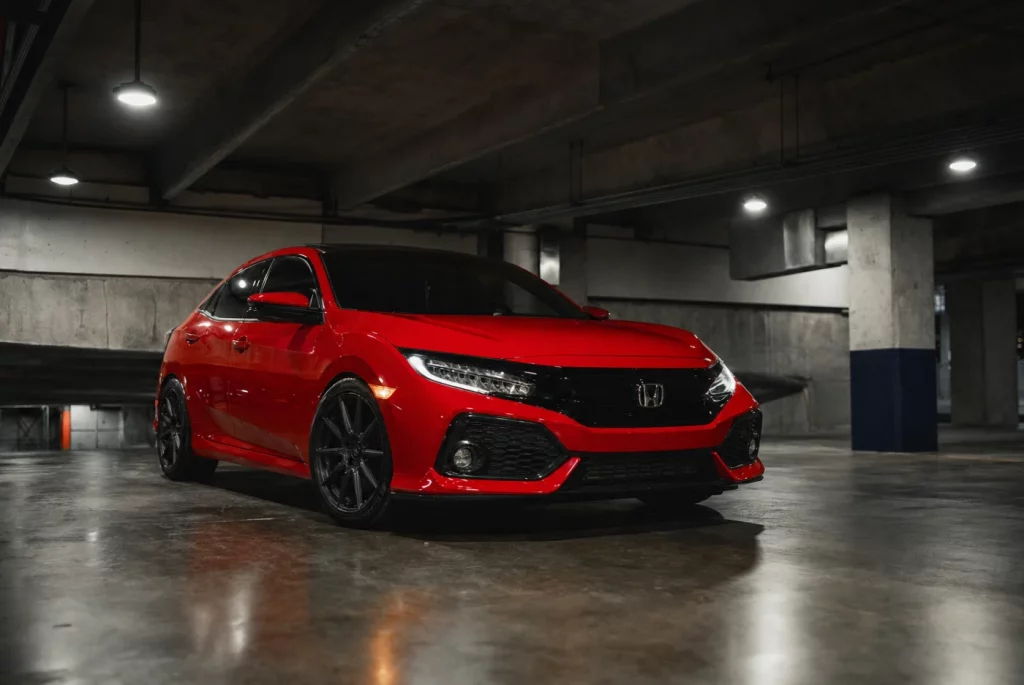
8th Generation (2006–2011) — Tested on the Original Protocol
The 8th generation Civic was tested by IIHS under the original moderate overlap front and side impact protocols. The small overlap front test did not exist yet. Roof strength testing began midway through this generation, but the 8th gen Civic was the first tested.
Moderate overlap front. The 2006 Civic LX 4-door scored Good overall with Good structure, Good head/neck, Good chest, and Good leg/foot protection. The rating applied to all 2006–2011 sedans. The coupe (tested 2009) also scored Good. The ACE body structure, introduced for the 8th generation, was effective in distributing frontal crash energy (IIHS, 2006–2011 Civic ratings).
Side impact. The 2006 Civic with standard front and rear head curtain airbags and front seat-mounted torso airbags scored Good overall. Structure was Acceptable — the 8th generation Civic’s door beams and B-Pillar were less robust than later generations, but the airbag coverage kept injury measures within Good range. The coupe followed the same pattern: Good overall, Acceptable structure (IIHS, 2006–2011 Civic ratings).
Roof strength. The 2010 Civic LX 4-door (representing the 2006–2011 generation) scored Good with a strength-to-weight ratio of 4.48, a peak force of 12,532 lbs, and a curb weight of 2,760 lbs (IIHS, 2010 Civic roof strength test). The Good rating threshold AT the time was 4.0 SWR, so the 8th gen Civic cleared it by a reasonable margin but well below the 10th and 11th generation scores.
Head restraints and seats. Good. The 8th gen Civic’s active head restraints (AHR) performed well in the rear impact dynamic test (IIHS).
Bottom line on the 8th generation. The 8th gen Civic was a strong performer for its era, earning Good across all four IIHS metrics that existed during its production run. But it was never tested in the small overlap front crash (introduced in 2012), which exposed significant structural weaknesses in other small cars from the same period. Buyers considering an 8th gen Civic should understand it lacks verified small overlap protection.
9th Generation (2012–2015) — The Small Overlap Turning Point
The 9th generation Civic tells a two-part story: the 2012 model (ground-up redesign, tested before the small overlap protocol) and the 2013–2015 models (re-engineered after IIHS published its early small overlap results).
2012 model year. The 2012 Civic LX 4-door was an all-new redesign with the first-generation ACE body structure. It earned Good in moderate overlap front, Good in side impact, and Good in roof strength with a 5.85 SWR, a significant improvement over the 8th generation’s 4.48. Peak force was 15,665 lbs at a curb weight of 2,678 lbs (IIHS, 2012 Civic ratings). The 2012 Civic was NOT tested for small overlap front — the test was announced in mid-2012 and Honda had not engineered the 2012 model for it. The 2012 Civic earned IIHS Top Safety Pick (no small overlap evaluation required at the time) (Honda Newsroom, May 26, 2011).
2013–2015 model years — the small overlap fix. After IIHS published its first round of small overlap results in 2012 showing poor performance across several small cars, Honda made structural changes to the Civic for the 2013 model year. The reinforced ACE II body structure added strengthening in the front Subframe, door sills, and hinge pillar area. The result: the 2013 Civic LX 4-door earned Good overall in the driver-side small overlap front test — the first small car to achieve this rating. Hinge pillar intrusion was 12 cm, footrest intrusion was 13 cm (PRNewswire/Honda, March 7, 2013).
The 2013 Civic sedan and coupe became the first small cars to earn IIHS Top Safety Pick+, combining Good in moderate overlap front, Good in driver-side small overlap, Good in side, Good in roof strength, and Good in head restraints (PRNewswire/Honda, March 7, 2013). The passenger-side small overlap test was not conducted on 9th generation Civics.
The 2013–2015 Civic used the same structural design. Side impact rated Good (tested by Honda, accepted by IIHS). Roof strength carried the 2012 test result: Good, 5.85 SWR. Forward collision warning was available only on the Hybrid trim. The 2015 model dropped to Top Safety Pick (without the +) because the standard Civic lacked auto-brake, though the Hybrid still qualified for TSP+ (IIHS, 2015 Civic ratings).
Bottom line on the 9th generation. The 2013–2015 Civic is the oldest Civic with verified driver-side small overlap protection, but the 12 cm hinge pillar intrusion is significantly higher than later generations. The 2012 model has no small overlap data and should be evaluated with that limitation.
10th Generation (2016–2021) — Excellent Except for Headlights and Passenger-Side Timing
The 10th generation Civic was a complete platform change with a lighter, stiffer global architecture. Its IIHS performance was broadly excellent, with two notable gaps: the passenger-side small overlap rating was delayed until 2018, and headlight quality was poor on most trims.
Driver-side small overlap. Good overall. The 2016 Civic LX 4-door tested with just 3 cm of hinge pillar intrusion — a dramatic improvement over the 9th generation’s 12 cm (IIHS, 2016 Civic rating). The rating applied to all 2016–2021 sedans and 2017–2021 hatchbacks. The coupe also earned Good (2016–2020).
Passenger-side small overlap. This is where the 10th generation shows a timing split. The 2016–2017 sedan and 2016–2019 hatchback were not tested for passenger-side small overlap. Beginning with the 2018 sedan model year, Honda modified the front bumper structure to improve passenger-side protection. The 2018–2021 sedan earned Good in the passenger-side test. The hatchback received the same bumper modification starting with the 2020 model year (except Type R), also Good. The coupe received the modification in 2018 and earned Good (IIHS, 2018–2020 Civic ratings).
This means a 2016 or 2017 Civic sedan has a Good driver-side small overlap rating but no verified passenger-side small overlap protection.
Moderate overlap front. Good (2016–2021). Tested by Honda, accepted by IIHS.
Side impact. Good (2016–2021). Tested on the original protocol. The B-pillar to centerline measurement was −17.5 cm (the crush stopped well short of the driver’s seat centerline), indicating strong side structure. Structure and safety cage rated Good. Rear passenger head protection was Good (IIHS, 2016 Civic side test).
Roof strength. Good. The sedan achieved a SWR of 5.78 with a peak force of 15,829 lbs at 2,738 lbs curb weight. The coupe was noticeably weaker: SWR of 4.82 with a peak force of 13,159 lbs at 2,730 lbs curb weight (IIHS, 2016 Civic roof strength tests). The shorter roof structure of the coupe produces lower rollover strength. Both rated Good, but the coupe’s 4.82 is near the Good/Acceptable threshold of 4.0.
Headlights. Poor for the majority of 10th generation trims. The halogen reflector projectors in LX and Sport trims produced inadequate low-beam visibility and excessive glare. The 2020 Touring sedan and 2020 Si sedan built after November 2019 received LED reflector lights rated Good. All other trims across the 2016–2021 range were Poor or Acceptable at best (IIHS, 2016–2021 Civic headlight ratings).
Front crash prevention. 2016–2018 models had optional Collision Mitigation Braking System — met forward collision warning requirements, avoided collision in 12 mph and 25 mph tests. 2019–2021 models made Honda Sensing standard, earning Superior ratings (IIHS, 2016–2021 Civic ratings).
LATCH ease of use. Acceptable — a common theme across all Civic generations.
11th Generation (2022–2025) — Most Complete IIHS Performance
The 11th generation Civic was redesigned for the 2022 model year with a stiffer body structure and standard Honda Sensing across all trims. This generation addressed nearly every shortcoming of the 10th generation and added structural improvements for the updated IIHS side test.
Small overlap front. Good combined (driver Good + passenger Good, 2022–2026). Both sides tested simultaneously from the start — no passenger-side delay as seen in the 10th generation. Hinge pillar intrusion was just 1 cm on the driver side and 0 cm on the passenger side, the best results of any Civic generation (IIHS, 2022 Civic rating). HIC-15 was 217, extremely low for a small overlap crash.
Moderate overlap front. Good on both the original test (2022–2025) and the updated test (2022–2026). The updated test incorporates a February 2024 criteria adjustment with a more demanding rear passenger injury measurement.
Side impact. The 11th generation has two side test results. The original test (2022–2024 models): Good overall. The updated test (2025–2026 models): Good overall. For the 2025 model year, Honda made improvements to the side structure to further protect occupants in side impacts. The updated test shows a 47 mm maximum torso deflection on the driver side (down from the original 2022 test), with a 4.57 m/s deflection rate — within Good thresholds but near the Acceptable boundary (IIHS, 2022–2025 Civic side test data).
The driver pelvic combined force improved from 5.1 kN (2022) to 3.7 kN (2025) with the structural changes.
Roof strength. This is one of the most notable improvements. The 11th generation Civic achieves a SWR of 7.62 with a peak force of 21,689 lbs at a curb weight of 2,845 lbs (IIHS, 2022 Civic roof strength test). That is the highest SWR of any Civic generation — a 31% improvement over the 10th generation sedan (5.78) and a 70% improvement over the 8th generation (4.48). The structure is significantly stiffer across the upper body.
Headlights. The 11th generation’s LED projector headlights are rated Acceptable across most trims — a meaningful improvement over the 10th generation’s Poor rating. The improvement comes from better low-beam reach and reduced glare (IIHS, 2022–2025 Civic headlight ratings).
Front crash prevention. Superior — Honda Sensing is standard on all trims and includes both vehicle-to-vehicle and vehicle-to-pedestrian detection. The 12 mph and 25 mph tests both resulted in collision avoidance (IIHS, 2022–2025 Civic ratings).
Complete IIHS Crashworthiness Scores by Generation
| Generation | Model Years | Moderate Overlap Front | Small Overlap Driver | Small Overlap Passenger | Side | Roof Strength SWR | Roof Peak Force | Headlights | Top Award |
|---|---|---|---|---|---|---|---|---|---|
| 8th | 2006–2011 | Good | Not tested | Not tested | Good | 4.48 | 12,532 lbs | Not rated | N/A |
| 9th | 2012 | Good | Not tested | Not tested | Good | 5.85 | 15,665 lbs | Not rated | TSP |
| 9th | 2013–2015 | Good | Good | Not tested | Good | 5.85 | 15,665 lbs | Not rated | TSP+ (2013–14)* / TSP (2015) |
| 10th | 2016–2017 sedan | Good | Good | Not tested | Good | 5.78 | 15,829 lbs | Poor | TSP+ (2016) |
| 10th | 2018–2021 sedan | Good | Good | Good | Good | 5.78 | 15,829 lbs | Poor (most) / Good (late 2020+) | TSP+ (2018–21) |
| 10th | 2017–2019 hatchback | Good | Good | Not tested | Good | 5.78 | 15,829 lbs | Poor | TSP+ (2017–19) |
| 10th | 2020–2021 hatchback | Good | Good | Good | Good | 5.78 | 15,829 lbs | Poor (most) / Good (late 2020+) | TSP+ (2020–21) |
| 10th | 2016–2020 coupe | Good | Good | Good (2018–20) / Not tested (2016–17) | Good | 4.82 | 13,159 lbs | Poor | TSP+ |
| 11th | 2022–2025 sedan / hatchback | Good | Good | Good | Good | 7.62 | 21,689 lbs | Acceptable | TSP+ |
TSP = Top Safety Pick. TSP+ = Top Safety Pick+. *2013–2014 TSP+ required optional forward collision warning (standard on Hybrid only, not available on other trims). Roof strength SWR and peak force values are for the 4-door sedan/hatchback unless noted. Coupe roof strength data listed separately. Sources: IIHS vehicle ratings pages (iihs.org/ratings) for each model year. Honda Newsroom (2011, 2013). PRNewswire/Honda (March 7, 2013).
Roof Strength: The Generation-by-Generation Improvement
Roof strength is a reliable metric for structural stiffness improvement across Civic generations because IIHS has used the same test protocol since 2009. The numbers show a clear upward trend:
| Generation | Model Years Tested | Curb Weight | Peak Force | SWR | Improvement from 8th Gen |
|---|---|---|---|---|---|
| 8th (sedan) | 2006–2011 | 2,760 lbs | 12,532 lbs | 4.48 | — |
| 9th (sedan) | 2012–2015 | 2,678 lbs | 15,665 lbs | 5.85 | +30.6% |
| 10th (sedan) | 2016–2021 | 2,738 lbs | 15,829 lbs | 5.78 | +29.0% |
| 10th (coupe) | 2016–2020 | 2,730 lbs | 13,159 lbs | 4.82 | +7.6% |
| 11th (sedan) | 2022–2025 | 2,845 lbs | 21,689 lbs | 7.62 | +70.1% |
The 10th generation sedan’s 5.78 SWR is essentially flat compared to the 9th generation despite a generational platform change. The 11th generation’s 7.62 SWR represents a step-change improvement — more structural reinforcement in the upper body, A-Pillar, and roof panel. The coupe’s 4.82 SWR is the lowest of any Civic tested for roof strength after the 8th generation, reflecting the structural compromise of the shorter two-door body. Sources: IIHS roof strength test results for each model year.
Small Overlap Front: The Most Important IIHS Test for Civic Buyers
The small overlap front crash test (25% offset at 40 mph) is the most demanding test IIHS runs. The Civic’s performance across generations tells a clear story of structural learning.
2012 (9th gen): Not tested. The 2012 Civic was a ground-up redesign, but Honda did not engineer it for small overlap because the test did not exist during development.
2013–2015 (9th gen, re-engineered): Good driver-side. Hinge pillar intrusion was 12 cm — the cabin deformed significantly but the restraint system kept injury measures within acceptable limits. HIC-15 was 394. This was the first small car to earn Good in this test.
2016–2021 (10th gen): Good driver-side. Hinge pillar intrusion dropped to 3 cm — a fourfold reduction from the 9th generation. The global platform was explicitly designed for small overlap on both sides, though the passenger-side bumper modification took until 2018 (sedan) and 2020 (hatchback) to complete.
2022–2025 (11th gen): Good driver and passenger combined. Hinge pillar intrusion was 1 cm driver, 0 cm passenger. HIC-15 was 217 — roughly half the 9th generation’s head injury measure. This is the best small overlap performance of any Civic generation, with negligible cabin deformation (IIHS, 2022 Civic rating).
Headlights: The 10th Generation’s Weak Spot
The 10th generation Civic’s headlight ratings are the single largest IIHS criticism of an otherwise strong safety performer. The base LX and Sport trims used halogen reflector projectors that IIHS rated Poor across all model years. Low-beam reach was inadequate (under 100 meters on the right side of the road), and excessive glare made the lights a hazard to oncoming traffic.
The 2020 Touring sedan and 2020 Si sedan (built after November 2019) received LED reflector lights rated Good — the only 10th generation Civics with an acceptable headlight score.
The 11th generation improved headlights to Acceptable across all trims, with LED projectors standard. Low-beam reach improved to approximately 130 meters on the straightaway, and glare was substantially reduced (IIHS, 2022–2025 Civic headlight ratings). This remains Acceptable rather than Good because high-beam performance is still below the top tier.
Front Crash Prevention: Honda Sensing Standardization
Front crash prevention availability is one of the clearest differentiators between generations. The 8th generation Civic had no factory forward collision warning system. The 9th generation offered it only on the Hybrid trim. The 2016–2018 10th generation models had optional collision mitigation braking. The 2019–2021 10th generation made Honda Sensing standard, and the 11th generation continued with Superior-rated standard AEB.
For used-car buyers, a 2019 or later Civic is the first model year with standard automatic emergency braking across all trims.
Which Civic Has the Best IIHS Crashworthiness Record?
The 11th generation (2022–present) has the most complete IIHS crashworthiness record of any Civic generation. It is the only generation to earn Good across every test IIHS administered (small overlap driver, small overlap passenger, moderate overlap front, side, roof strength, head restraints) with the highest roof strength SWR (7.62), the lowest small overlap intrusion (1 cm), Superior-rated front crash prevention, and Acceptable headlights.
The 10th generation (2016–2021) is a close second but has two meaningful gaps: poor headlight ratings on most trims, and untested passenger-side small overlap on 2016–2017 sedans and 2017–2019 hatchbacks. Buyers looking at a 10th gen Civic should target 2018+ sedans or 2020+ hatchbacks for full passenger-side coverage, and 2020+ Touring or Si trims for Good headlights.
The 9th generation (2013–2015) is the oldest Civic with verified driver-side small overlap protection, but the 12 cm hinge pillar intrusion and lack of passenger-side testing mean it is structurally less capable than later generations. The 2012 model has no small overlap data at all.
The 8th generation (2006–2011) was a strong performer for its era but has never been tested in the small overlap front crash, and its 4.48 roof strength SWR is the lowest of any tested Civic generation.
IIHS Safety Ratings Checklist — Honda Civic:
☐ 8th gen (2006–2011): Good moderate overlap, Good side, Good roof (4.48 SWR). No small overlap testing. No headlight or crash avoidance ratings (IIHS, 2006–2011)
☐ 9th gen (2012): Good moderate overlap, Good side, Good roof (5.85 SWR). No small overlap test — not engineered for it. Top Safety Pick (Honda Newsroom, 2011)
☐ 9th gen (2013–2015): Good small overlap driver — first small car to achieve it. 12 cm hinge pillar intrusion. Passenger side not tested. Top Safety Pick+ (2013–14). ACE II body structure (PRNewswire, 2013; IIHS)
☐ 10th gen (2016–2021 sedan/hatch): Good driver small overlap (3 cm intrusion). Passenger small overlap: Good for 2018+ sedan, 2020+ hatchback. Roof 5.78 SWR. Headlights: Poor on most trims. TSP+ with Honda Sensing (IIHS, 2016–2021)
☐ 10th gen (2016–2020 coupe): Good driver small overlap. Roof 4.82 SWR — weakest of any post-8th gen. Passenger small overlap Good only on 2018+ (IIHS)
☐ 10th gen (2019+): Honda Sensing standard — first model year with standard AEB across all trims (Honda Newsroom)
☐ 10th gen (2020+ Touring/Si): Only 10th gen trims with Good headlights. Build date after November 2019 (IIHS)
☐ 11th gen (2022+): Good in every IIHS test. Roof 7.62 SWR — 70% improvement over 8th gen. Small overlap intrusion 1 cm/0 cm. Superior AEB. Headlights Acceptable (IIHS, 2022–2025)
☐ 11th gen (2025+): Improved side structure for updated IIHS side test. Pelvic force reduced from 5.1 kN to 3.7 kN (IIHS, 2025 Civic test data)
☐ Roof strength ranking: 11th gen (7.62) > 9th gen (5.85) > 10th gen sedan (5.78) > 10th gen coupe (4.82) > 8th gen (4.48)
☐ Small overlap intrusion ranking (best to worst): 11th gen (1 cm) > 10th gen (3 cm) > 9th gen (12 cm) (IIHS)
☐ For used-car buyers prioritizing IIHS scores: 2018+ sedan or 2020+ hatch from 10th gen gives full small overlap coverage. 2022+ 11th gen gives the best complete record. Avoid 2016–2017 sedans and 2017–2019 hatchbacks if passenger-side small overlap matters