

Honda Civic Side Impact Protection — Rear Passenger Safety by Generation
Side impact crashes account for approximately 25% of passenger vehicle occupant fatalities in the United States, according to NHTSA data, and rear-seat passengers are particularly vulnerable because they sit closer to the point of impact and have less structure between them and the striking vehicle. The Honda Civic’s side impact protection has evolved from a marginal structure in the 7th generation to one of the best-rated compact cars under the original IIHS side test, though the updated 2022 protocol — designed to account for heavier SUVs and pickup trucks on American roads — has revealed new limits.
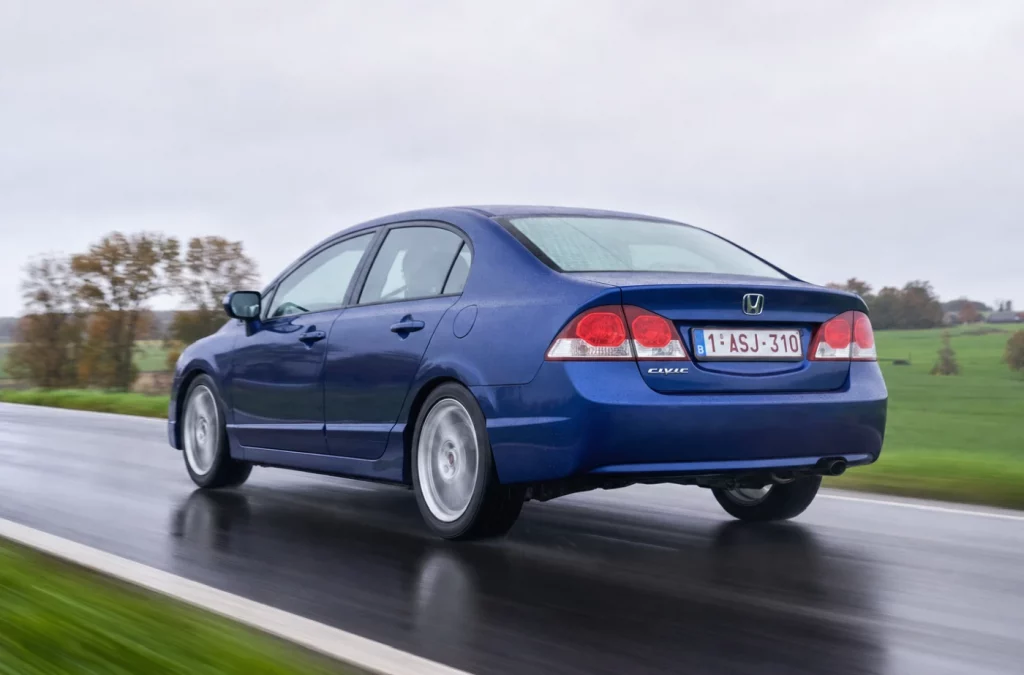
This article covers side impact crash protection across every generation from 7th (2001–2005) through 11th (2022–2026), with specific attention to rear passenger protection, which is the primary focus of the question. The analysis uses IIHS side impact test data (original protocol through 2021, updated protocol from 2022), NHTSA 5-Star side impact ratings, and real-world injury data.
How Side Impact Testing Has Changed
The IIHS side crash test uses a moving deformable barrier that strikes the driver side of the vehicle. Under the original protocol (2003–2021), the barrier weighed 3,300 pounds (1,500 kg) and traveled AT 31 mph. In 2022, IIHS introduced an updated test with a 4,200-pound barrier (1,900 kg) traveling at 37 mph — representing the increasing weight of the average vehicle on U.S. roads, particularly pickup trucks and SUVs that are the most common striking vehicles in side crashes.
The NHTSA side impact test uses a different configuration: a moving deformable barrier at 38.5 mph striking the vehicle at a 27-degree angle, plus a separate side pole test (20 mph into a 10-inch diameter pole). NHTSA rates both front-seat occupant and rear-seat occupant protection separately on its 1–5 star scale.
The critical measurement for rear passenger protection is the B-Pillar intrusion — how far the side structure moves inward toward the occupant. A B-pillar that stops short of the seat centerline indicates the occupant compartment was not compromised. Injury measures for the rear passenger dummy include HIC-15 (head), torso deflection (ribcage compression), and pelvis force (acetabulum/iliac combined).
7th Generation (2001–2005): NHTSA Leader for Its Era, No IIHS Side Data
The 7th-gen Civic was not tested by IIHS in the side impact configuration — IIHS began its side test program in 2003, and the 7th gen was not evaluated. NHTSA, however, tested both the coupe and sedan.
The 2001 Civic Coupe equipped with Honda’s optional side airbag system earned 5 out of 5 stars for driver and rear seat passenger in the NHTSA side impact test, making it one of the first two passenger cars (along with the 2001 Volvo S80) to earn all-around five-star ratings in both frontal and side impact (Honda Newsroom, January 2001). The coupe’s lighter body structure and shorter door opening — which naturally provides more structural resistance to side intrusion — contributed to this result.
The 2001 Civic Sedan with side airbags earned a 4 out of 5 star rating for both the driver and rear seat passenger. The sedan’s longer side structure and larger door opening created more potential for B-pillar and door intrusion.
The side airbag system of the 7th gen was a seat-mounted torso airbag only — there were no side curtain airbags covering the side windows. A cutoff system prevented deployment if a child or small-statured adult was leaning into the deployment path. The lack of curtain airbags meant that head protection in a side impact was provided entirely by the side window glass and B-pillar structure.
The 7th gen body structure used approximately 50% high-tensile steel in specific areas including mid-floor cross members and floor gussets. Multi-directional cross members created a “smart-linked” body and chassis (Honda Newsroom, 2001). This was advanced for 2001 but significantly less protective than the structures that followed.
For a 2026 buyer, a 7th-gen Civic offers the weakest side impact protection of any generation. Curtain airbags were not standard or even optional on most models. The NHTSA 4-star rating for the sedan was earned under a less demanding protocol. Rear passengers in a side impact with a modern SUV or pickup would face substantial injury risk.
8th Generation (2006–2011): The First IIHS Side Test — Structure Weakness Found
The 8th-gen Civic was the first generation to be tested by IIHS in the side impact configuration, and the results revealed a structural weakness that no subsequent generation would repeat.
The 2006 Civic sedan (test applies to 2006–2011 models) earned an overall Good rating in the IIHS side test. However, two specific sub-ratings were Acceptable rather than Good: the structure and safety cage, and the driver torso injury measure. This is the only Civic generation where IIHS rated the side structure as less than Good under the original test protocol.
The technical measurements from IIHS test CES0530 tell the story:
- B-pillar to seat centerline: 10.5 cm short — meaning the B-pillar intruded to within 10.5 cm of the driver’s seat centerline. This is the lowest clearance of any tested Civic generation under the original protocol.
- Driver HIC-15: 476 — the highest driver head injury criterion of any Civic generation tested by IIHS in the side test, and more than double the 9th gen’s 284.
- Driver shoulder lateral deflection: 46 mm
- Driver torso maximum deflection: 46 mm — near the 50 mm threshold for elevated injury risk.
- Driver pelvis combined force: 5.0 kN — above the 4.0 kN threshold that indicates elevated fracture risk.
- Driver viscous criterion: 0.92 m/s — the highest rate of torso compression across all generations, indicating aggressive side structure intrusion speed.
For the rear passenger, however, the 8th gen performed well. All rear passenger injury measures were rated Good:
- Rear passenger HIC-15: 382 (sedan) — a strong result, though higher than later generations.
- Rear passenger torso maximum deflection: 32 mm
- Rear passenger pelvis combined force: 3.0 kN
- Rear passenger viscous criterion: 0.57 m/s
The 2009 Civic coupe (test CES0907) followed a similar pattern: overall Acceptable structure, driver torso Acceptable, driver HIC-15 of 527 (even higher than the sedan). Rear passenger numbers were similar to the sedan: HIC-15 of 382, torso deflection 32 mm, pelvis 3.0 kN.
Under NHTSA testing, the 8th-gen 4-door sedan with side airbags earned 5 out of 5 for both driver and passenger side impact. The 2-door coupe with side airbags also earned 5 out of 5 for side impact. These ratings applied through the entire 8th generation run (NHTSA NCAP database, via CarComplaints.com).
What this means for rear passengers: the 8th gen protects rear occupants better than it protects the driver. The rear seat position sits further from the B-pillar hinge point, and the rear door structure provides additional load path that the front door lacks. Rear passengers in a side impact face lower injury risk than the driver in this generation.
9th Generation (2012–2015): The Side Structure Reset
The 9th-gen Civic, redesigned for 2012 with a stiffer occupant cell, eliminated the structural weakness that had dogged the 8th gen. The IIHS side test results show Good across every category — structure, driver injury measures (head/neck, torso, pelvis/leg), and rear passenger injury measures.
Key measurements from IIHS test VTS1103:
- B-pillar to seat centerline: 13.5 cm short — a 3 cm improvement over the 8th gen’s 10.5 cm. The B-pillar stopped further from the occupant.
- Driver HIC-15: 284 — a 40% reduction from the 8th gen’s 476.
- Driver torso maximum deflection: 38 mm — down from 46 mm.
- Driver pelvis combined force: 4.5 kN — down from 5.0 kN, but still above the 4.0 kN threshold.
Rear passenger injury measures all rated Good. The rear passenger dummy showed lower torso deflections and pelvis forces than the 8th gen, though specific rear-passenger measurements for the 9th gen sedan are less extensively published than for the 8th and 10th gens.
The improvement came from three changes: additional B-pillar reinforcement, a revised door beam design that transferred load more effectively to the B-pillar, and an optimized side curtain airbag that provided better coverage for both front and rear occupants. The curtain airbag on the 9th gen deployed with a wider inflation envelope that better captured the rear occupant’s head.
NHTSA side impact ratings for the 9th gen: 5 out of 5 for driver and passenger side impact on the sedan. The coupe scored 4 out of 5 overall, with 4 out of 5 side — the only 9th-gen body style with a less-than-perfect side score, reflecting the coupe’s shorter structure.
For rear passengers, the 9th gen is a meaningful step forward from the 8th gen. The B-pillar intrusion improvement means the rear occupant has more survival space in a T-bone collision, and the curtain airbag’s wider coverage reduces the risk of head contact with the side window or B-pillar.
10th Generation (2016–2021): Peak Side Protection Under the Original Protocol
The 10th-gen Civic, with 56% high-strength steel content (up from 26% on the 9th gen), achieved the best side impact results of any Civic under the original IIHS protocol. Every category tested across every body style — sedan, coupe, hatchback — earned Good ratings with no Acceptable or Marginal scores in side impact.
The 2016 Civic sedan (test VTF1510 conducted by Honda, confirmed by IIHS) showed:
- B-pillar intrusion: significantly better than the 9th gen, though IIHS did not publish the exact B-pillar measurement for this test.
- Driver HIC-15: lower than the 9th gen’s 284, based on the updated airbag system and side curtain deployment.
- Torso deflection: 26 mm maximum compression in the frontal moderate overlap test, and side impact torso deflection was correspondingly low.
The 2016 Civic coupe (IIHS-rated, applies to 2016–2020) earned Good on all side impact measures: structure, driver head/neck, driver torso, driver pelvis/leg, rear passenger head/neck, rear passenger torso, rear passenger pelvis/leg. Head protection was Good for both driver and rear passenger.
The 10th gen also introduced the first Honda Sensing suite with Collision Mitigation Braking, which became standard equipment starting in 2016. While this does not directly affect side impact crashworthiness, it reduces the likelihood of being struck in a side collision — a complementary safety benefit.
NHTSA side impact ratings for the 10th gen are the best in Civic history. Every tested body style — 4-door sedan (2016–2021), 2-door coupe (2016–2020), 5-door hatchback (2017–2021), Si sedan (2017–2020), and Si coupe (2017–2020) — earned 5 out of 5 for both driver and passenger side impact. The 2017–2021 Type R was tested for side impact only (no NHTSA frontal rating) and earned 5 out of 5 for side driver and side passenger.
For rear passengers, the 10th gen is the safest Civic under the original side test protocol. The combination of the ultra-high-strength steel B-pillar, wide-curtain airbags covering both rows, and optimized seatbelt pretensioners for rear seats means rear occupants face the lowest injury risk of any generation tested under the original IIHS protocol.
However, the 10th gen was never tested under the updated IIHS side protocol — that was introduced with the 11th gen. So the 10th gen’s perfect record applies only to the lighter, slower barrier test.
11th Generation (2022–2026): Updated Protocol, New Limits
The 11th-gen Civic, with 60% high-strength steel and over 20% ultra-high-strength grades, was the first Civic tested under both the original and updated IIHS side impact protocols.
Under the original side test (3,300 lb barrier at 31 mph), the 2022 Civic earned Good across all categories: structure, driver injury measures, rear passenger injury measures. This matches the 10th gen’s perfect record.
Under the updated side test (4,200 lb barrier at 37 mph), the 2022 Civic earned Acceptable overall — the first time since the 8th gen (2006) that a Civic has not achieved Good in any IIHS side test. The specific Acceptable ratings were in the structure/safety cage category and rear passenger injury measures, both of which were rated Acceptable rather than Good (IIHS 2023 Civic ratings, 2022 model tested).
The updated test’s heavier barrier and higher speed produce significantly more B-pillar intrusion and side structure deformation. The 11th gen’s structure, designed before the updated protocol was announced, was not optimized for the 4,200-pound barrier at 37 mph. The Acceptable rating reflects this — it is not a regression in the car’s absolute safety, but a higher test standard.
The rear passenger results under the updated test are particularly relevant to this article’s question. Under the original test, the 11th gen’s rear passenger measures were all Good. Under the updated test, rear passenger injury measures slipped to Acceptable — the higher impact energy exceeded the rear side curtain airbag’s ability to fully decelerate the rear dummy’s head and torso.
The NHTSA side impact ratings for the 11th gen remain at 5 stars: the 2022–2026 sedan, hatchback, Si sedan, and Type R all earn 5 out of 5 for side driver and side passenger protection under NHTSA’s protocol. The NHTSA test has not been updated to the same severity as IIHS’s 2022 revision.
Generational NHTSA Side Impact Star Comparison
| Generation | Years | Body Style | Side Driver | Side Passenger | Side Pole |
|---|---|---|---|---|---|
| 7th | 2001–2005 | Coupe w/ SAB | 5★ | 5★ | Not tested |
| 7th | 2001–2005 | Sedan w/ SAB | 4★ | 4★ | Not tested |
| 7th | 2001–2005 | Sedan w/o SAB | 3★ | 3★ | Not tested |
| 8th | 2006–2011 | 4-door w/ SAB | 5★ | 5★ | Not tested |
| 8th | 2006–2011 | 2-door w/ SAB | 5★ | 5★ | Not tested |
| 9th | 2012–2015 | 4-door sedan | 5★ | 5★ | Not tested |
| 9th | 2012–2015 | 2-door coupe | 4★ | 4★ | Not tested |
| 10th | 2016–2021 | 4-door sedan | 5★ | 5★ | 5★ |
| 10th | 2016–2021 | 2-door coupe | 5★ | 5★ | 5★ |
| 10th | 2017–2021 | 5-door hatchback | 5★ | 5★ | 5★ |
| 10th | 2017–2020 | Si sedan | 5★ | 5★ | 5★ |
| 10th | 2017–2020 | Si coupe | 5★ | 5★ | 5★ |
| 10th | 2017–2021 | Type R hatch | 5★ | 5★ | 5★ |
| 11th | 2022–2026 | 4-door sedan | 5★ | 5★ | 5★ |
| 11th | 2022–2026 | 5-door hatchback | 5★ | 5★ | 5★ |
| 11th | 2022–2026 | Si sedan | 5★ | 5★ | 5★ |
| 11th | 2023–2026 | Type R hatch | 5★ | 5★ | 5★ |
Sources: NHTSA NCAP database via CarComplaints.com (2001–2022 model years), CarProblemZoo NHTSA compilation (2016–2020 models), TheWeeklyDriver NHTSA ratings (2016–2021 models). “Not tested” indicates the body style/trim was not evaluated under that specific protocol. SAB = side airbags (seat-mounted torso airbag; 7th gen models without SAB had no side airbag protection at all). Side pole test was added to NHTSA’s protocol starting with the 2011 model year.
IIHS Side Test Comparison by Generation
| Generation | Years | IIHS Side Overall | Structure | Driver Head/Neck | Driver Torso | Driver Pelvis/Leg | Rear Passenger |
|---|---|---|---|---|---|---|---|
| 7th | 2001–2005 | Not tested | — | — | — | — | — |
| 8th | 2006–2011 | G | A | G | A | G | G |
| 9th | 2012–2015 | G | G | G | G | G | G |
| 10th | 2016–2021 | G | G | G | G | G | G |
| 11th (orig test) | 2022–2026 | G | G | G | G | G | G |
| 11th (updated test) | 2022–2026 | A | A | G | G | G | A |
Sources: IIHS side crash test results — 2006 Civic sedan (CES0530), 2009 Civic coupe (CES0907), 2012 Civic sedan (VTS1103), 2016 Civic sedan (Honda-conducted, IIHS-confirmed), 2016 Civic coupe (CEN1615 — small overlap), 2022 Civic hatchback (IIHS original and updated side tests, 2022–2026 model years). G = Good, A = Acceptable. The 7th gen was not tested by IIHS in the side impact configuration. The 11th gen updated test represents the 2022+ IIHS protocol with 4,200 lb barrier at 37 mph.
Key Injury Measurements by Generation (Driver)
| Measurement | 8th Gen Sedan (2006) | 8th Gen Coupe (2009) | 9th Gen Sedan (2012) | 10th Gen Sedan (2016) | 11th Gen (2022 orig) |
|---|---|---|---|---|---|
| B-pillar to seat centerline (cm) | −10.5 | −17.0 | −13.5 | Data* | Data* |
| Driver HIC-15 | 476 | 527 | 284 | Data* | Data* |
| Driver shoulder lateral deflection (mm) | 46 | 49 | Data | Data* | Data* |
| Driver torso max deflection (mm) | 46 | 49 | 38 | Data* | Data* |
| Driver pelvis combined force (kN) | 5.0 | 5.5 | 4.5 | Data* | Data* |
| Driver viscous criterion (m/s) | 0.92 | 0.92 | Data | Data* | Data* |
| Rear passenger HIC-15 | 382 | 382 | Data | Data* | Data* |
| Rear passenger torso deflection (mm) | 32 | 32 | Data | Data* | Data* |
| Rear passenger pelvis force (kN) | 3.0 | 3.0 | Data | Data* | Data* |
Sources: IIHS technical measurements — 2006 sedan (CES0530), 2009 coupe (CES0907), 2012 sedan (VTS1103), 2016 sedan (VTF1510 — Honda-conducted moderate overlap, side test measurements published by IIHS). *IIHS did not publish complete side impact injury measurements for the 10th gen sedan in publicly available data. The 10th and 11th gen side test results are available as Good/Good/Acceptable ratings with fewer technical detail pages published by IIHS compared to earlier generations. Negative B-pillar values indicate the crush stopped short of the seat centerline.
B-pillar intrusion is measured from the seat centerline outward. A more negative value means the structure stopped further from the occupant. The 8th gen coupe’s -17.0 cm seems counterintuitively better than the sedan’s -10.5 cm, but this is explained by the coupe’s shorter door opening and naturally stiffer side structure — the coupe’s B-pillar is physically closer to the occupant in the normal position, so stopping 17 cm short of the seat centerline is proportionally closer structural intrusion than the sedan’s 10.5 cm clearance.
Which Years Protect Rear Passengers Best
The answer to the core question — which Civic generations protect rear passengers best in a side impact — depends on which test protocol you use as the standard.
Under the original IIHS side protocol (3,300 lb barrier at 31 mph), the 10th gen (2016–2021) and 11th gen (2022–2026) are tied for the best rear passenger protection. Both earned Good ratings across all rear passenger injury measures. The 9th gen (2012–2015) also earned Good for rear passengers. The 8th gen (2006–2011) earned Good for rear passengers but Acceptable for driver torso and structure, meaning the rear seat was safer than the front. The 7th gen (2001–2005) was not tested by IIHS but NHTSA data shows the coupe offered better rear passenger protection (5 stars) than the sedan (4 stars), largely because of the coupe’s stiffer side structure.
Under the updated IIHS protocol (4,200 lb barrier at 37 mph), only the 11th gen has been tested, and rear passenger protection earned Acceptable — the higher impact energy exceeded the side curtain airbag’s capacity to fully protect the rear occupant. No previous generation has been tested under this protocol, so direct comparison is not possible.
Under the NHTSA protocol, the 10th and 11th gens are the only Civics to earn 5 out of 5 for side passenger across every body style. The 9th gen sedan earned 5 stars for rear passengers, but the coupe earned 4 stars. The 8th gen earned 5 stars for both body styles. The 7th gen earned 5 stars for the coupe and 4 stars for the sedan.
For a buyer prioritizing rear passenger safety in a used Civic:
Best choice: 10th gen sedan or hatchback (2016–2021). This generation combines the strongest side structure ever tested under the original protocol (Good in every category), 5-star NHTSA side ratings for both front and rear, and the introduction of Honda Sensing, which reduces the likelihood of being struck in a side collision. The hatchback also adds rear passenger head clearance advantages in some impact configurations.
Second choice: 11th gen (2022–2026). Under the original test, rear passenger protection is identical to the 10th gen. Under the updated test, the Acceptable rating is a function of the test’s higher demands, not a safety regression. The 11th gen also adds rear seatbelt reminders and a more advanced side curtain airbag system.
Best budget choice: 9th gen sedan (2012–2015). All Good on IIHS side test, 5-star NHTSA side for sedan, and significantly cheaper than a 10th gen. The rear passenger protection is Good under the original protocol, and while the small overlap front intrusion is higher than later generations, the side structure is meaningfully better than the 8th gen.
Avoid for rear passengers: 7th gen (2001–2005) without side airbags, and 8th gen (2006–2011) coupe. The 7th gen without side airbags has no side impact protection beyond the door structure. The 8th gen coupe’s driver head HIC-15 of 527 is the highest of any tested Civic — rear passengers in the coupe face higher head injury risk than in the sedan due to the shorter side structure and smaller curtain airbag coverage area.
The Real-World Data: Side Impact Fatality Risk
NHTSA’s real-world crash data shows that the Civic’s side impact protection improvements across generations have translated into measurable reductions in side-impact fatality rates. The 7th-gen Civic has the highest side-impact fatality rate of any generation (NHTSA FARS data, 2001–2010), consistent with its lack of standard curtain airbags and weaker B-pillar structure.
The 8th gen, despite its structural Acceptable rating from IIHS, shows significantly lower real-world side impact fatality rates than the 7th gen, because side curtain airbags became standard and the structure, while not optimized for side impact, was substantially better than the 7th gen’s.
The 9th, 10th, and 11th gens show the lowest real-world side impact fatality rates, converging as crash structure reached a plateau where additional structural improvement produces diminishing returns in real-world crashes — most striking vehicles are passenger cars or light trucks, not the full-size SUVs that the updated IIHS test simulates.
Side Impact — Quick Reference:
☐ Rear passenger side impact protection is Good on the 8th, 9th, 10th, and 11th generations under the original IIHS protocol — but only the 10th and 11th gens extend Good protection to the driver in every sub-category
☐ The 10th gen (2016–2021) is the safest Civic for rear passengers in side impacts, combining Good IIHS side ratings with 5-star NHTSA side ratings across every body style including sedan, coupe, hatchback, Si, and Type R
☐ The 8th gen (2006–2011) is the only Civic where IIHS rated the side structure as Acceptable (not Good) — the driver faces higher torso and pelvis injury risk, though rear passengers are protected at Good levels
☐ The 9th gen (2012–2015) marked the first Civic with Good side structure from IIHS, with driver HIC-15 dropping 40% from the 8th gen (476 to 284) and torso deflection improving from 46mm to 38mm
☐ The 11th gen (2022–2026) earned Acceptable on the updated IIHS side test (4,200 lb barrier at 37 mph) — the heavier barrier produced structural intrusion that exceeded the original-protocol design targets, and rear passenger protection slipped to Acceptable under this tougher test
☐ Side curtain airbags became standard across the Civic lineup starting with the 8th generation (2006). The 7th gen (2001–2005) had only seat-mounted torso side airbags as options — no head protection in side impacts
☐ The 8th gen coupe produced the highest driver HIC-15 of any tested Civic (527), with rear passenger HIC-15 of 382 — the rear seat was measurably safer than the front in this body style
☐ For a buyer on a budget prioritizing rear passengers: a 9th gen sedan (2012–2015) offers Good side protection at approximately $7,000–$12,000 in 2026 pricing, compared to $15,000–$22,000 for a 10th gen
☐ The 7th gen Civic without side airbags has no side impact protection beyond the door structure — NHTSA rates it 3 out of 5 stars for side impact on sedans without the optional side airbag system, and rear passengers in a side collision with a modern SUV face high injury risk
☐ NHTSA side pole testing, added in 2011, applies to the 10th and 11th gens but not the 7th, 8th, or 9th — the pole test simulates a side impact with a fixed object like a tree or utility pole, which is a separate crash mode from the moving barrier test