

How Side Impact Testing Works — and When It Changed
The IIHS side crash test uses a barrier weighing 3,300 pounds (1,500 kg) striking the driver side of the vehicle at 31 mph, simulating a T-bone collision with a pickup truck or SUV. The moving barrier has a deformable face designed to replicate the front end of a vehicle. The original test, used from 2003 through the 2021 model year, was a pass-fail evaluation focused on occupant compartment intrusion, head protection, and injury measures for both front and rear occupants. In 2022, IIHS introduced an updated side test with a heavier barrier (4,200 pounds) traveling at a higher speed (37 mph), representing the growing weight of the U.S. vehicle fleet. The NHTSA side impact test uses a different barrier and pole impact protocol, rating vehicles on a 1–5 star scale for both front-seat and rear-seat occupants. Sources: IIHS side crash test protocol documentation, NHTSA 5-Star Safety Ratings methodology.
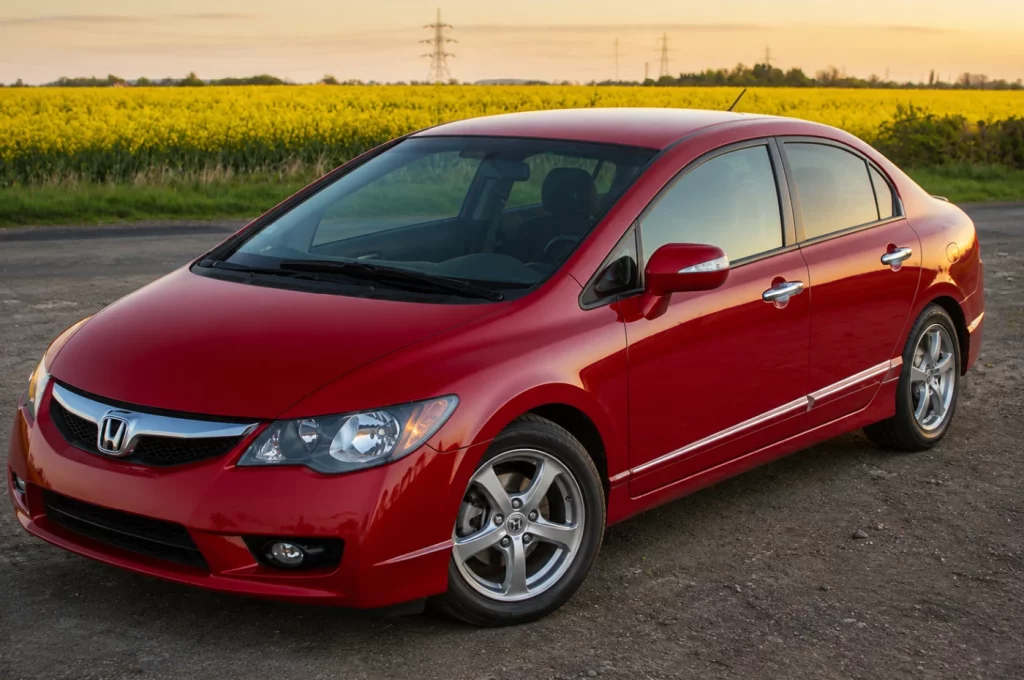
8th Generation (2006–2011) — Solid for Its Era, With One Weakness
The 8th generation Civic was redesigned for the 2006 model year and tested by IIHS under the original side crash protocol. The sedan earned an overall Good rating, but the structure and safety cage scored Acceptable rather than Good — the only generation where structure was not rated Good in the original side test. The driver torso injury measure was also Acceptable, reflecting the side-impact design limits of the mid-2000s. Sources: IIHS 2008 Honda Civic 4-door sedan ratings page (tested 2006 model, rating applies 2006–2011).
Key measurements from the 8th gen test (Test ID CES0530): B-Pillar intrusion stopped 10.5 cm short of the seat centerline. The driver’s head injury criterion (HIC-15) was 476 — higher than any subsequent generation. Shoulder lateral deflection was 46 mm, torso maximum deflection was 46 mm, and driver pelvis combined force reached 5.0 kN. For reference, a pelvis force above 4.0 kN indicates elevated injury risk. Rear passenger protection was stronger, with all measures rated Good. Sources: IIHS technical measurements, 2006 Honda Civic LX 4-door side impact test.
Under NHTSA’s 5-Star rating system, the 2006 Civic 4-door with side airbags earned 5/5 for driver and passenger side impact protection. The 2-door coupe with side airbags was also rated 5/5 for side impact. The NHTSA ratings applied through the entire 8th generation run. Sources: CarComplaints.com NHTSA ratings for 2006 Honda Civic 4-door and 2-door with side airbags.
9th Generation (2012–2015) — Improved Structure, Excellent Injury Numbers
The 9th generation Civic redesigned for 2012 showed measurable improvement in side impact protection. The structure and safety cage earned Good — a step up from the 8th gen’s Acceptable. All driver injury measures (head/neck, torso, pelvis/leg) were Good, as were all rear passenger measures. B-pillar intrusion improved to 13.5 cm short of the seat centerline — meaning the side structure stopped 3 cm further from the driver than in the 8th gen. Sources: IIHS 2012 Honda Civic 4-door sedan ratings page.
Driver head HIC-15 dropped to 284, compared to 476 in the 8th generation — a 40 percent reduction. Torso maximum deflection was 38 mm (down from 46 mm), and driver pelvis combined force was 4.5 kN (down from 5.0 kN). These numbers reflect improvements in side curtain airbag coverage, seat-mounted torso airbag design, and B-pillar reinforcement. The 2012–2015 ratings apply without change across the 9th generation run. Sources: IIHS technical measurements, Test ID VTS1103.
NHTSA side impact ratings for the 9th gen Civic remained AT 5/5 for both front and rear seats on both sedan and coupe configurations with side airbags, consistent with the 8th generation.
10th Generation (2016–2021) — Best of the Original Test Era
The 10th generation Civic, redesigned for 2016, achieved the highest side impact scores of any Civic tested under the original IIHS protocol. The overall evaluation and structure both earned Good, and all driver injury measures — head/neck, torso, pelvis/leg — were Good. B-pillar intrusion set a new best at 18.5 cm short of the seat centerline, meaning the side structure stopped a full 8 cm further from the driver than in the 8th generation. Sources: IIHS 2017 Honda Civic 4-door sedan ratings page (tested 2016 model, rating applies 2016–2021).
Driver head HIC-15 was 299 — slightly higher than the 9th gen’s 284, but still well below the 700 Good threshold. Torso maximum deflection dropped to 27 mm (from 38 mm in the 9th gen and 46 mm in the 8th). Driver pelvis force was 2.8 kN, compared to 4.5 kN in the 9th gen and 5.0 kN in the 8th — the most significant improvement. The only measure that slipped was rear passenger pelvis/leg, which scored Acceptable rather than Good. Sources: IIHS technical measurements, Test ID VTS1509.
These ratings apply across the full 10th generation run (2016–2021) and cover the sedan and hatchback body styles, including the Type R which shared the hatchback structure. The NHTSA side impact rating remained at 5/5 for both front and rear seats.
11th Generation (2022–Present) — Held to a Higher Standard
The 11th generation Civic faced the IIHS updated side crash test for the first time — a heavier barrier at higher speed, designed to reflect the growing weight of vehicles on U.S. roads. Under this stricter protocol, the 2022 Civic earned an overall Acceptable rating. The structure and safety cage scored Acceptable. Driver pelvis protection scored Marginal — the only sub-measure in any Civic generation to fall below Acceptable. Rear passenger measures were more resilient, with head/neck Good, torso Acceptable, and pelvis Good. B-pillar intrusion was 17.5 cm short of the seat centerline, slightly less than the 10th gen’s 18.5 cm but comparable given the heavier barrier. Sources: IIHS 2022 Honda Civic 4-door sedan ratings page, updated side test results.
The 11th gen also retains Good ratings on the original side test (moderate speed), maintaining consistency with the 10th generation. The updated test results, which are the more relevant measure for current crash conditions, place the 11th gen Civic slightly behind some competitors under the new protocol. The driver pelvis Marginal score is a specific area where the 11th gen structure did not manage the heavier impact energy as well as the previous generation managed the lighter impact.
Under NHTSA testing, the 11th gen Civic retained 5/5 side impact ratings for both front and rear seats. The pole impact test (a separate NHTSA protocol simulating a side impact with a narrow object like a tree or utility pole) also earned 5/5.
| Generation | IIHS Side Overall | IIHS Structure | Driver Torso | Driver Pelvis | B-Pillar (cm from seat) | NHTSA Side |
|---|---|---|---|---|---|---|
| 8th (2006–2011) | Good | Acceptable | Acceptable | Good | -10.5 | 5/5 |
| 9th (2012–2015) | Good | Good | Good | Good | -13.5 | 5/5 |
| 10th (2016–2021) | Good | Good | Good | Good | -18.5 | 5/5 |
| 11th (2022+) * | Acceptable | Acceptable | Acceptable | Marginal | -17.5 | 5/5 |
* 11th gen tested under IIHS updated side protocol (4,200 lb barrier at 37 mph). Earlier generations tested under original protocol (3,300 lb at 31 mph).
What the Numbers Mean Across Generations
The side impact data reveals a pattern of steady structural improvement through the 8th, 9th, and 10th generations under a consistent test protocol. B-pillar intrusion distance from the driver improved by 76 percent (10.5 cm to 18.5 cm short of the seat centerline) from 2006 to 2016. Chest deflection dropped by 41 percent (46 mm to 27 mm). Pelvis injury force dropped by 44 percent (5.0 kN to 2.8 kN). The 10th generation represents the Civic’s best performance under the lighter side impact test.
The 11th generation’s Acceptable overall rating under the updated test should not be read as a regression. The test is substantially more severe — 27 percent heavier barrier at 19 percent higher speed, resulting in roughly 60 percent more impact energy. The 11th gen’s B-pillar intrusion of 17.5 cm under the heavier barrier is structurally comparable to the 10th gen’s 18.5 cm under the lighter barrier, suggesting the actual structural capacity improved. However, the Marginal driver pelvis score shows a specific area where the 11th gen structure did not fully manage the energy increase.
Used Buyer Recommendations by Generation
The 8th generation Civic (2006–2011) provides adequate side protection by mid-2000s standards, with the IIHS Acceptable structure rating and higher driver torso forces being the main limitations. NHTSA’s 5/5 rating confirms it met federal standards, but in a real-world side impact with a modern SUV or pickup, the 8th gen offers less occupant compartment protection than anything newer. Buyers with a choice should prioritize later generations.
The 9th generation (2012–2015) closes the structural gap entirely, with Good IIHS ratings across every sub-measure. The lower HIC-15 (284 vs 476 in the 8th gen), combined with improved B-pillar intrusion, makes these cars meaningfully safer in a side impact than the 8th gen. The ratings apply across the full generation, so there is no reason to favor 2013–2015 over 2012 for side impact alone.
The 10th generation (2016–2021) is the safest Civic in a side impact under the original test protocol, with the lowest chest deflection, lowest pelvis forces, and greatest B-pillar distance of any generation. The sedan, hatchback, Si, and Type R all share these ratings. The only caveat is the Acceptable rear passenger pelvis score, which is a minor concern.
The 11th generation (2022+) faces a test no earlier Civic was subjected to, and its Acceptable rating under the heavier protocol is a reasonable result. The Marginal driver pelvis score in the updated test warrants attention for buyers who do a lot of highway driving in areas with large SUVs and trucks. The original test result remains Good, confirming that in moderate-speed side impacts the 11th gen performs as well as any earlier Civic.
Quick Reference
☐ 8th gen (2006–2011): IIHS side Overall Good, but Structure Acceptable. Driver torso Acceptable. Highest head injury numbers (HIC-15 476). NHTSA 5/5. Adequate for its era, but the weakest modern Civic in side impact.
☐ 9th gen (2012–2015): IIHS side all Good. Structure improved to Good. HIC-15 dropped to 284. B-pillar intrusion improved 3 cm over 8th gen. NHTSA 5/5.
☐ 10th gen (2016–2021): Best scores of any Civic under IIHS original side protocol. B-pillar intrusion 18.5 cm — best of all tested. Torso deflection 27 mm. Pelvis force 2.8 kN. Rear passenger pelvis/leg Acceptable. NHTSA 5/5.
☐ 11th gen (2022+) updated test: IIHS Acceptable. Driver pelvis Marginal. Test is more severe than any earlier Civic faced. Original test still Good. NHTSA 5/5.
☐ Under the original IIHS side protocol (comparable across generations), side impact protection improved continuously from 2006 through 2021, with the 10th gen as the peak.
☐ The 11th gen faces a heavier, faster barrier. Its Acceptable score under the updated test does not indicate worse crashworthiness — the test is substantially harder.
☐ NHTSA side impact ratings are 5/5 for all four generations with side airbags. The NHTSA test has not changed severity during this period, so it is less discriminating across generations.
☐ The 10th gen provides the best value for used buyers prioritizing side impact protection — all Good IIHS scores under the original protocol, combined with lower pricing than the 11th gen.