

Every car commercial shows a happy family effortlessly clipping a pristine car seat into the back row. What they don’t show is you bent double in a parking lot, swearing under your breath, tearing your cuticles to shreds while hunting for a metal bracket buried deep inside the upholstery.
If you are choosing a used Civic as a family daily driver in the US, space and geometry are everything. Let’s skip the dry regulatory lectures. This is the raw, garage-tested reality of exactly how child seats fit across five generations of the Civic, where you’ll lose your legroom, and how to survive the back-seat squeeze.
7th Gen (2001–2005) — The “Knee-to-Dashboard” Era
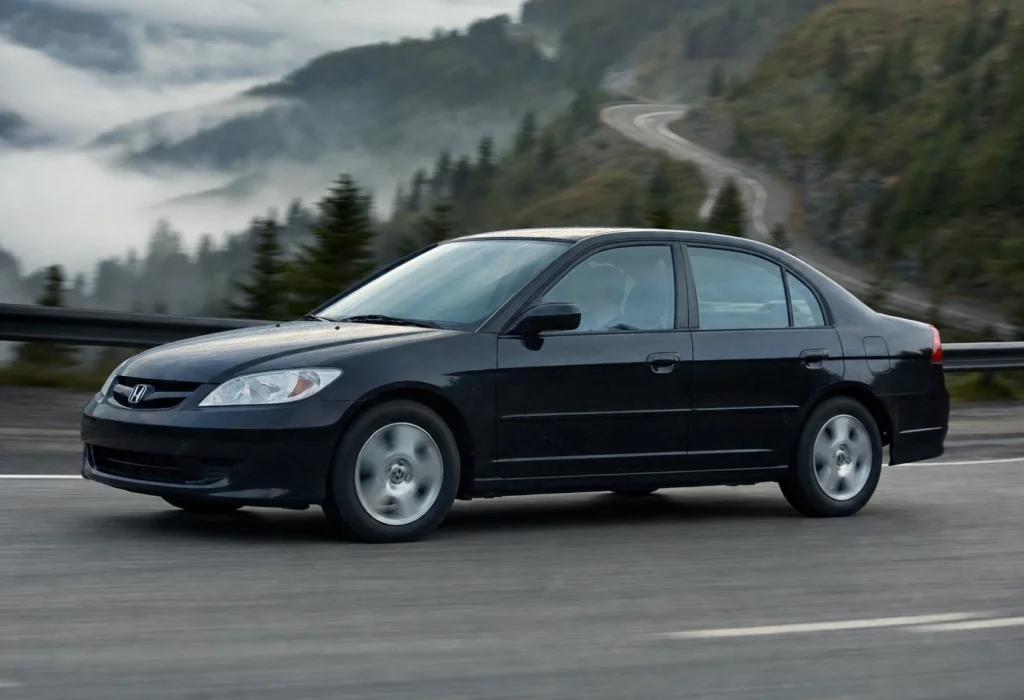
The 7th Gen (ES1 sedan / EM2 coupe) was the pioneer that introduced the LATCH system (mandated in late 2002), but that’s where the good news ends. This is the smallest modern Civic platform, and it feels like it.
The Space Reality: You get a pathetic 33 inches of rear legroom in the sedan — and significantly less in the coupe. Your knees will know exactly where the front seat ends.
The Rear-Facing Nightmare: If you drop a rear-facing monster (like a Chicco KeyFit 30) into the outboard position, your front-seat passenger is done for. Anyone taller than 5’6″ will be sitting with their knees mashed directly into the dashboard just so the child seat can clear the front headrest. It’s a knee-to-dashboard special.
LATCH Hunt: The lower metal loops are buried deep inside a rigid, tight seat bight. Installing a seat with rigid plastic connectors requires pure brute force. You’ll be bleeding by the time you’re done.
Family Verdict: Strictly a two-car-seat vehicle. Don’t even dream of a three-across configuration. The coupe version is completely unusable for parents — unless you enjoy throwing out your back every time you load a toddler.
8th & 9th Gen (2006–2015) — The Budget Sweet Spot
The 8th Gen (FA5) and 9th Gen (FB6) grew wider and stretched the rear legroom up to 34–36 inches for the sedan. Finally, some breathing room.
The Big Win: These models represent the golden era of fully removable rear head restraints. If your kid graduates to a forward-facing harness or a high-back Booster, you yank the vehicle headrest out, and the car seat sits perfectly flush against the seatback. Exactly how safety engineers intended.
The LATCH Grade: The 9th Gen earned an official IIHS Acceptable score. The cushions are more forgiving, so snapping your anchor clips in won’t leave you with bloody knuckles. Progress.
Three-Across Survival: It is mathematically possible but highly restricted. With only 52 inches of rear shoulder room, standard car seats will trigger an immediate jam. You must buy specialized ultra-narrow hardware like a Diono Radian RXT or Clek Fllo to pull off a three-wide row. Your wallet will cry, but it can be done.
The Floppy Buckle Curse: Both generations use long, flexible seat belt buckle stalks. When your kid tries to buckle themselves, the base of the seat slides over the buckle, burying it into the cushion. Expect to lean over the seat to save them every single time. Every. Single. Time.
Family Verdict: The 9th Gen sedan (2013–2015) is the best used Civic for booster-age families. Removable headrests, Acceptable LATCH, and decent interior room. Avoid the 2012 model — the rushed redesign created weird fitment issues.
10th Gen (2016–2021) — The Long-Legged Fortress
This generation (FC1 sedan / FK7 hatchback) is the absolute gold standard for rear-facing monster seats. Honda stretched the Wheelbase and exploded rear legroom to a massive 37.4 inches.
The Space Victory: The cabin is so deep that a 6-foot adult can sit comfortably in the front passenger seat with a massive rear-facing convertible seat installed directly behind them. No more knees-in-the-dash torture. This is a game-changer.
The LATCH Upgrade: Honda ditched the tight upholstery gaps and hid the anchors under a wide fabric flap — the Fabric Flap Masterclass. You flip the flap up, see the metal ring, and click it in instantly. No more blind hunting.
Three-Across Mastery: Rear shoulder room expanded to 55 inches. You can actually fit three standard Chicco infant seats across the back row — a feat that was physically impossible in older Civics. Three-across survival is finally achievable.
The Sedan Catch: Watch out for the fixed headrests on the sedan. They protrude forward and screw up the flush fitment of tall forward-facing child seats. If you want this generation, buy the FK7 Hatchback to get the removable headrest loophole.
Family Verdict: The 10th Gen is the best Civic for families with rear-facing seats. The hatchback is the pick for forward-facing kids. The sedan is fine for infants but frustrating for older kids.
11th Gen (2022–2026) — Easiest Anchors, Annoying Geometry
The 11th Gen (FE1 sedan / FL1 hatchback) is the largest, most premium Civic ever built, but it comes with a split personality for parents.
The Good News: It is the only Civic in history to bag a flawless IIHS Good LATCH rating. The lower loops are fully visible under heavy-duty flaps and require literally one pound of pressure to lock onto. Infant and rear-facing setups earn effortless A-grades. It’s the easiest LATCH install in Civic history.
The Bad News (The Sedan Trap): The fixed rear headrests on the sedan are bulkier than ever. Cars.com slapped the forward-facing install with a mediocre B-grade because the headrest forces tall seatbacks forward, messing up the top-tether tension. You have to route the tether strap awkwardly over the top of the permanent headrest block. Annoying, but doable.
The Buckle Jam: The seat belt buckles are heavily recessed into the bottom cushion. If you drop a booster seat back there, it pinches the buckle out of reach, completely killing independent buckling for your kids. You’ll be leaning over the seat again.
Family Verdict: The 11th Gen sedan is a paradox — best LATCH ever, worst booster geometry ever. The hatchback solves the headrest problem and keeps the excellent LATCH. If you need a sedan and booster fitment is critical, a 2013–2015 sedan might actually be better than a 2022+ sedan.
| Civic Generation | Rear Legroom | IIHS LATCH Score | Headrest Type | Best Body Style for Car Seats |
|---|---|---|---|---|
| 7th Gen (2001–05) | ~33 inches | Not Rated | Fixed / Primitive | Sedan Only (Coupe is a nightmare) |
| 8th Gen (2006–11) | ~34–36 inches | Not Rated | Removable | Sedan |
| 9th Gen (2012–15) | ~34–36 inches | Acceptable | Removable | Sedan (Better lateral stability) |
| 10th Gen (2016–21) | 37.4 inches | Acceptable | Fixed (Sedan) | FK7 Hatchback (Has removable pods) |
| 11th Gen (2022–26) | 37.4 inches | Good | Fixed (Sedan) | FL1 Hatchback (Best LATCH + flat back) |
The Headrest Timeline — Why It Matters
The single most important factor driving child seat compatibility across Civic generations is the rear head restraint design:
2001–2005 (7th Gen): Fixed, primitive headrests. Not great, but also not the main problem (space is).
2006–2015 (8th & 9th Gen): All three rear positions have removable head restraints. Booster and forward-facing fitment is best in class. This is the golden era for families with older kids.
2016–2021 Sedan/Coupe (10th Gen): Fixed, protruding, non-removable head restraints for all three rear seats. The direct quote from The Car Seat Lady: “not ideal.” Understatement of the century. The hatchback retains removable headrests.
2022+ Sedan (11th Gen): Still uses fixed head restraints. The hatchback returns to removable head restraints, creating a split within the generation where body style determines compatibility.
The practical effect: A 2013 Civic with the head restraint removed can achieve proper forward-facing seat positioning. A 2016 Civic sedan cannot remove the head restraint — the seat is forced forward, reducing effectiveness. Your kid is less safe because Honda decided headrests should be permanent.
The Floppy Buckle Curse — A Civic-Wide Problem
Every single Civic generation from 2001 through 2026 has received criticism for floppy seat belt buckles in the rear seat. Cars.com mentioned floppy buckles in every Car Seat Check across every generation tested.
The issue is consistent: the buckle stalks are long and flexible, causing them to fall behind the booster seat or disappear into the seat bight. A child sitting in a booster seat needs to be able to reach and grasp the buckle independently. Floppy buckles that fall behind the seat or between the booster and the seat cushion make this difficult or impossible for younger children.
Honda has used flexible buckle stalks across multiple Civic generations to accommodate different seat positions. The trade-off is that a booster seat, especially a high-back model with side wings, can push the buckle stalk out of reach. You will be leaning over the front seat every single time. It’s 2026, Honda. Figure it out.
Used Buyer Parent Cheat Sheet — The 4 Hard Rules
Rule #1: The Center LATCH Lie. No Civic generation has ever built LATCH lower anchors into the middle seat position. If you want a car seat in the dead center, you must use the seat belt installation method. Period.
Rule #2: The 65-Pound Cliff. Honda’s beautiful lower LATCH anchors have a strict combined weight limit of 65 pounds (that’s the child’s weight plus the heavy car seat frame combined). The second your kid crosses that threshold, abandon LATCH and secure the base with the adult seat belt. Most parents forget this and wonder why their seats are loose.
Rule #3: The Airbag Warning. Never, under any circumstance, put a child restraint in the front passenger seat of an 8th through 11th Gen Civic. There are no manual cutoff switches, and the explosive force of the front passenger airbag can be fatal. The back row is the only survival zone.
Rule #4: Buy the Hatchback. If you are shopping for a 2016 or newer Civic, save your sanity and buy the hatchback variant. The removable rear headrests are mandatory if you don’t want your forward-facing seats and high-back boosters pushed into unsafe angles. The sedan will make you miserable.
Generation-by-Generation Scorecard
☐ 7th Gen (2001–2005): First Civic with LATCH. Tightest rear space. Knee-to-dashboard for front passengers. Coupe is a nightmare. Two-car-seat max. Budget pick only.
☐ 8th Gen (2006–2011): More rear space (~34–36 inches). Removable headrests. Coupe has ceiling tether anchors — awkward. Decent budget pick for families with older kids.
☐ 9th Gen (2012–2015): IIHS Acceptable LATCH. Removable headrests. 2013–2015 models are the best used Civic for booster-age families. Avoid 2012. Floppy buckles are annoying but manageable.
☐ 10th Gen Sedan/Coupe (2016–2021): Fixed, non-removable headrests. 37.4 inches legroom — best for rear-facing. But headrests ruin forward-facing fitment. Buy the hatchback instead.
☐ 10th Gen Hatchback (2017–2021): Removable headrests. Same great space as sedan. Best Civic for families with rear-facing AND forward-facing kids. The loophole.
☐ 11th Gen Sedan (2022+): IIHS Good LATCH (best ever). But fixed headrests. Cars.com C-grade for forward-facing. Paradox — best LATCH, worst geometry. Buy the hatchback.
☐ 11th Gen Hatchback (2022+): Removable headrests. IIHS Good LATCH. The ultimate pick for families. Best of both worlds.
☐ Floppy Buckles: Plague every generation. Kids will struggle to buckle themselves. Accept it and plan to help them.
☐ Three-across: 8th/9th Gen require narrow seats (Diono, Clek). 10th/11th Gen wider platform fits standard seats.
☐ LATCH weight limit: 65 lb combined (child + seat). Switch to seatbelt above that.
☐ Airbag warning: No front-seat child restraints in 8th–11th Gen. Back seat only.
☐ Headrest timeline: 2001–2005 (fixed) → 2006–2015 (removable) → 2016–2021 sedan/coupe (fixed) → 2022+ sedan (fixed), 2022+ hatchback (removable).
☐ Honda still hasn’t fixed the floppy buckles. It’s 2026. Come on, Honda.