

If you’re running a family daily driver in the US, buying a used Civic for your booster-age kids can be a massive win or an absolute logistical nightmare. On paper, every modern Civic has five-star crash scores. In reality? Honda’s interior designers made some choices that will make you want to rip your hair out when trying to click a child seat into the back row.
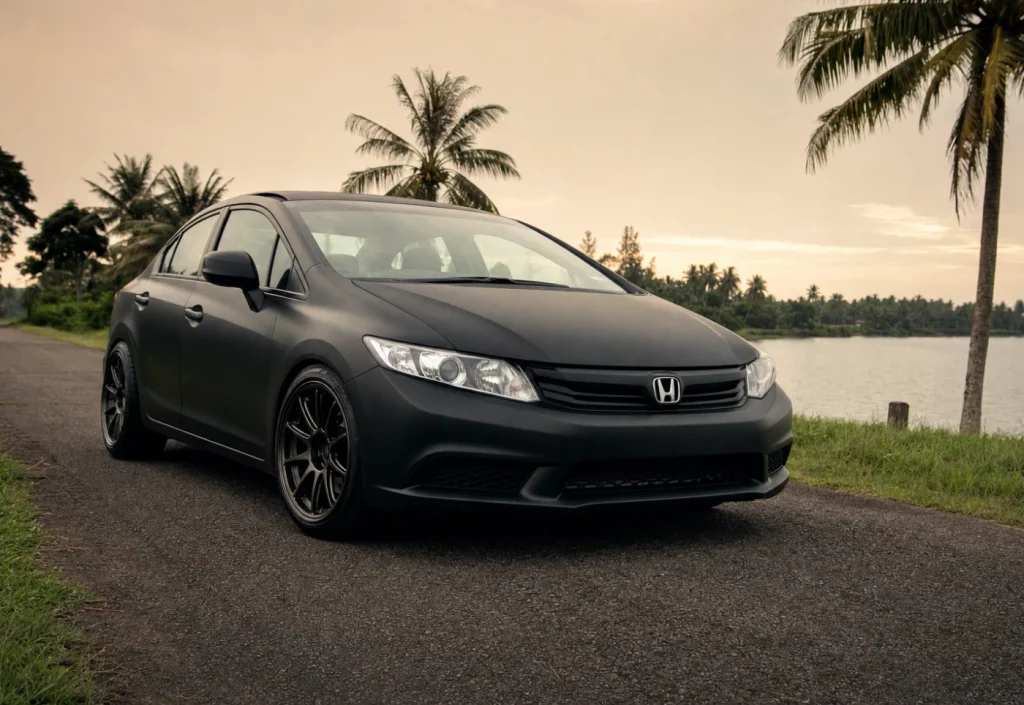
Let’s skip the dry laboratory datasheets. This is the raw, real-world breakdown of which Civic generations actually accommodate high-back boosters, where Honda hid the LATCH anchors, and why certain body styles are a trap for parents.
8th & 9th Gen (2006–2015) — The Golden Era of Removable Headrests
For parents with kids graduating from infant seats to high-back boosters, the 8th Gen (FA5) and 9th Gen (FB6) are the unsung heroes of the used car market.
The Big Advantage: All three rear seating positions have fully adjustable, fully removable head restraints. If you drop a Graco TurboBooster onto the bench, you just pull the headrest completely out, and the shell of the Booster sits 100% flush against the vehicle seatback — exactly how safety engineers intended.
The LATCH Setup: The 8th Gen was never officially scored by the IIHS for LATCH ease of use, and the anchors are buried tightly behind stiff seat fabric. The 9th Gen stepped up to an IIHS Acceptable rating; the cushions are softer, making the lower anchor hunt way less frustrating. You won’t be digging around with bloody knuckles.
The Floppy Buckle Curse: Here is where the irritation begins. Both generations use long, flexible seat belt buckle stalks. When a child tries to buckle themselves in independently, the wide base of the booster seat slides right over the floppy buckle, burying it into the cushion. You will be leaning over the front seat to help them every single time. Every. Single. Time.
Three-Across Potential: Poor. The platform is narrow. Trying to fit three car seats across an 8th or 9th Gen bench triggers instant gridlock unless you spend big money on specialized ultra-narrow profile seats like the Diono Radian or Clek Fllo. Your wallet will cry, but it can be done.
Used Buyer Verdict: The 9th Gen sedan (2013–2015) is the best used Civic for booster-age families. Removable headrests, Acceptable LATCH, and decent interior room. Avoid the 2012 model — the rushed redesign created weird fitment issues, especially on the Si coupe.
10th Gen (2016–2021) — The Fixed Headrest Trap Begins
The 10th Gen (FC1 sedan / FC3 coupe) brought a wider stance and more legroom, but Honda’s engineering team introduced a major structural flaw for families.
The Fixed Headrest Penalty: For the 2016 overhaul, Honda welded fixed, protruding, non-removable head restraints onto the rear seatbacks of the sedan and coupe. Because these headrests angle forward, they slam into the top of any standard high-back booster, pushing the entire child seat away from the seatback. This creates an empty, unsafe gap behind the child’s lower back. The booster isn’t doing its job anymore.
Cars.com Grade: Consistent B-grades across the board because of this structural interference and deeply recessed LATCH hoops on the coupe. The sedan’s booster fitment was described as “marginal” — not great, not terrible, but definitely not what you want for your kid.
The Hatchback Loophole: If you are shopping for a 10th Gen and have kids, buy the FK7 Hatchback. The hatchback utilizes a completely different rear seat frame that retains removable headrests, allowing high-back boosters to sit flush. Same great platform, zero headrest headaches. Honda giveth and Honda taketh away, but the hatchback giveth back.
Three-Across Victory: Thanks to the wider platform, you can actually build a three-across configuration using standard seats without squeezing your hands raw. Just watch out for the floppy buckles that still slide under the booster bases. Some things never change.
Used Buyer Verdict: The 10th Gen sedan is the worst Civic for booster-age children. Fixed headrests ruin booster fitment. The hatchback is the only acceptable option in this generation if you have booster-age kids. Period.
11th Gen (2022–2026) — Perfect LATCH Scores, Flawed Sedan Geometry
The 11th Gen (FE1 sedan / FL1 hatchback) is a tale of two entirely different cars depending on the trunk layout.
The LATCH Masterclass: Honda absolutely nailed the anchor accessibility here, scoring a flawless IIHS Good rating. The lower metal hoops aren’t buried in the bight; they live under wide, heavy-duty fabric flaps that open cleanly. You can pop a clip in using one pound of pressure without hunting blindly. It’s the easiest LATCH install in Civic history.
The Sedan Disaster: Despite the gorgeous LATCH design, Cars.com slapped the 2022+ Civic sedan with a brutal C-grade for forward-facing car seats and a poor review for boosters. Why? The fixed headrests are back and bulkier than ever. They force high-back boosters off the seatback and completely jam up the harness adjustments of forward-facing convertible seats as your child grows taller. A C-grade in 2022 is embarrassing when competitors are getting A’s.
The Floppy Buckle Continues: Honda refused to switch to rigid, click-in buckle stalks. Kids still can’t buckle themselves independently because the stalk moves away from their hands. It’s 2026, Honda. Figure it out.
The Hatchback Savior: Once again, the FL1 Hatchback saves the day. It features removable rear head restraints, combining the best-in-class IIHS Good LATCH access with a flat, flush seatback contour. Cars.com didn’t explicitly test the 11th Gen hatchback for boosters, but the removable headrests make it the obvious choice for families.
Used Buyer Verdict: The 11th Gen sedan is a paradox — best LATCH ever, worst booster geometry ever. If you need a sedan and booster fitment is critical, a 2013–2015 sedan might actually be better than a 2022+ sedan for your specific needs. The hatchback is the ultimate pick — good LATCH, removable headrests, no compromises.
| Civic Era / Style | IIHS LATCH Score | Headrest Behavior | Booster Fitment | Best Body Style for Kids |
|---|---|---|---|---|
| 8th Gen (2006–11) | Not Rated | Removable (All Three) | Good (Flush Fit) | Sedan Only |
| 9th Gen (2012–15) | Acceptable | Removable (All Three) | Good (Flush Fit) | Sedan (Avoid 2012) |
| 10th Gen Sedan | Acceptable | Fixed (Pushes Forward) | Marginal / Awkward | Hatchback (Has Removable HR) |
| 11th Gen Sedan | Good (Easiest Flaps) | Fixed (C-Grade Jam) | Poor (Seat Gap) | Hatchback (The Ultimate Pick) |
The Headrest Timeline — Why It Matters
The single most important factor driving booster seat compatibility across Civic generations is the rear head restraint design. The Car Seat Lady’s Civic guide provides a clear timeline:
2006–2015 (8th & 9th Gen): All three rear positions have removable head restraints. Booster fitment is best in class. This is the golden era.
2016–2021 (10th Gen Sedan/Coupe): Fixed, protruding, non-removable head restraints for all three rear seats. The direct quote from The Car Seat Lady: “not ideal.” Understatement of the century. This is the worst period for booster fitment.
2022+ Sedan (11th Gen): Still uses fixed head restraints. The hatchback returns to removable head restraints, creating a split within the generation where body style determines booster compatibility.
The practical effect: A 2013 Civic with the head restraint removed can achieve proper booster seat positioning. A 2016 Civic sedan cannot remove the head restraint — the booster is forced forward, reducing the effectiveness of the seat’s side wings and head protection. Your kid is less safe because Honda decided headrests should be permanent.
The Floppy Buckle Curse — A Civic-Wide Problem
Every single Civic generation from 2006 through 2026 has received criticism for floppy seat belt buckles in the rear seat. Cars.com mentioned floppy buckles in every Car Seat Check across every generation tested — 2013 sedan, 2014 coupe, 2016 sedan, 2016 coupe, 2017 coupe, and 2022 sedan.
The issue is consistent: the buckle stalks are long and flexible, causing them to fall behind the booster seat or disappear into the seat bight. A child sitting in a booster seat needs to be able to reach and grasp the buckle independently. Floppy buckles that fall behind the seat or between the booster and the seat cushion make this difficult or impossible for younger children.
The engineering root cause is the buckle stalk length and stiffness. Honda has used flexible buckle stalks across multiple Civic generations to accommodate different seat positions. The trade-off is that a booster seat, especially a high-back model with side wings, can push the buckle stalk out of reach. This is not a safety defect — the buckle still functions properly — but it creates a practical usability nightmare for families. You will be leaning over the front seat every single time.
Used Buyer Parent Cheat Sheet — The 3 Golden Rules
Rule #1: The Trunk Rule. If you are buying a 2016 or newer Civic (10th or 11th Gen) and your kids still use high-back boosters or tall forward-facing harnesses, do not buy the sedan. Buy the hatchback. The removable headrests on the hatch style are mandatory for proper safety seat alignment. The sedan will make you miserable.
Rule #2: The 65-Pound Cliff. Remember that Honda’s excellent lower LATCH anchors have a combined weight limit of 65 pounds (weight of the child + weight of the heavy seat carcass combined). The moment your kid hits that threshold, you must abandon LATCH and switch to a standard seatbelt installation. Most parents forget this and wonder why their seats are loose.
Rule #3: The Test Drive Click. When shopping for a used 9th Gen EX or 10th Gen sedan, do not just check the engine. Bring your actual kid’s booster seat to the dealership. Drop it on the rear bench and see if your kid can reach the buckle stalk independently. If the floppy buckle disappears into the upholstery crack, buy a backless booster alternative or look AT the hatchback variants. Your kid’s ability to buckle themselves matters for school drop-off sanity.
Generation-by-Generation Scorecard — Quick Reference
☐ 8th Gen (2006–2011): Removable headrests on all three positions. Not rated by IIHS. Good booster fitment. Narrow rear seat — three-across requires narrow seats. Solid budget pick.
☐ 9th Gen (2012–2015): Removable headrests. IIHS Acceptable LATCH. 2013–2015 models are the best used Civic for booster-age families. Avoid 2012 — weird fitment issues. Floppy buckles are annoying but manageable.
☐ 10th Gen Sedan/Coupe (2016–2021): Fixed, non-removable headrests. B-grade booster fitment. The worst generation for booster-age children. Avoid at all costs if you have booster-age kids. The hatchback is the only acceptable option in this generation.
☐ 10th Gen Hatchback (2017–2021): Removable headrests. Same Acceptable LATCH as the sedan. Buy this instead of the sedan if you’re looking at 10th Gen. It’s the loophole.
☐ 11th Gen Sedan (2022+): IIHS Good LATCH (best ever). But fixed headrests ruin booster fitment. C-grade for forward-facing convertible seats. Paradox — best LATCH, worst booster geometry. Buy the hatchback instead.
☐ 11th Gen Hatchback (2022+): Removable headrests. IIHS Good LATCH. The ultimate pick for families. Best of both worlds.
☐ Floppy Buckles: Plague every generation. Kids will struggle to buckle themselves. Accept it and plan to help them.
☐ Three-across: 8th/9th Gen require narrow seats (Diono, Clek). 10th/11th Gen wider platform fits standard seats.
☐ LATCH weight limit: 65 lb combined (child + seat). Switch to seatbelt above that.
☐ Headrest timeline: 2006–2015 (removable) → 2016–2021 sedan/coupe (fixed) → 2022+ sedan (fixed), 2022+ hatchback (removable).
☐ Honda still hasn’t fixed the floppy buckles. It’s 2026. Come on, Honda.