

For years, the Honda Civic Type R has been the undisputed king of the front-wheel-drive performance segment. It was the car that rewrote the rules of what was possible with two driven wheels. Then Hyundai did something unexpected. They built a car that could challenge the Type R’s dominance at a significantly lower price point. The Elantra N arrived with 276 horsepower, an aggressive chassis, and a price tag that undercut the Type R by more than $10,000.
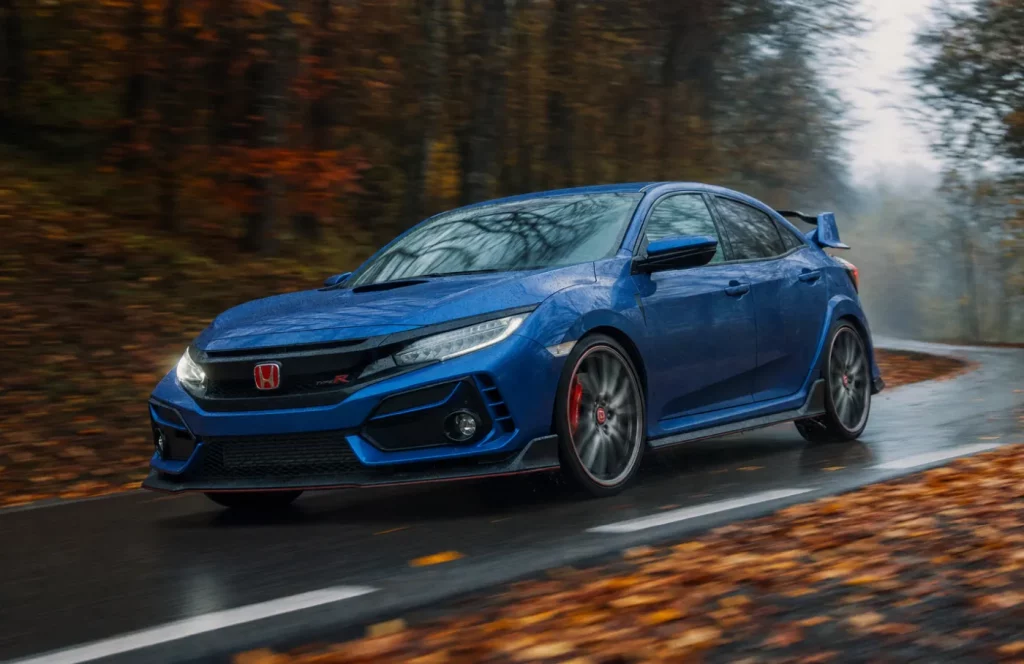
On paper, the comparison seems straightforward. The Type R makes 315 horsepower and 310 lb-ft of torque. The Elantra N makes 276 horsepower and 289 lb-ft. The Type R is faster on track. The Elantra N is cheaper. But the real question is more complicated than which car is faster in a straight line or which one sets a better lap time.
Does the Civic Type R’s superior track pedigree and resale value justify its much higher purchase price, or is the Elantra N the smarter performance-car buy for enthusiasts who want maximum value for their money?
The Elantra N offers incredible performance per dollar, a longer warranty, and more daily usability. The Civic Type R delivers superior track consistency, better steering feel, and stronger resale value. The $10,000+ price gap narrows significantly when you factor in depreciation and ownership costs. Choose the Elantra N if you want maximum value today; choose the Type R if you want the ultimate FWD track car and better long-term value retention.
The $10,000 Question
In the current market, the price gap between these two cars is substantial. The Civic Type R starts AT approximately $45,000 to $47,000, often with dealer markups pushing the price even higher. The Elantra N starts at roughly $35,000 to $37,000, with far more reasonable dealer pricing.
That’s a $10,000 difference. And $10,000 is not just a number on a sticker. It’s a set of track tires, several years of fuel, insurance premiums, performance modifications, or a significant chunk of future depreciation. The question is whether the Type R’s advantages justify that premium.
If the Type R retains more of its value over five years, does it actually cost more in the long run? That’s the real question this article answers.
| Specification | Honda Civic Type R FL5 | Hyundai Elantra N (Facelift) |
|---|---|---|
| Engine | K20C1 2.0L turbo I4 | Theta-II 2.0L turbo I4 |
| Horsepower | 315 hp @ 6,500 rpm | 276 hp @ 5,500–6,000 rpm |
| Torque | 310 lb-ft @ 2,600–4,000 rpm | 289 lb-ft @ 2,100–4,700 rpm |
| N Grin Shift (NGS) | Not available | +10 hp for 20 seconds |
| Drivetrain | Front-wheel drive | Front-wheel drive |
| Transmission | 6-speed manual | 6-speed manual / 8-speed DCT |
| LSD | Helical | Electronic (e-LSD) |
| Curb weight | ~3,183 lb | ~3,200–3,300 lb |
| Starting price (MSRP) | ~$45,000+ | ~$35,000+ |
Raw Specs: Why This Comparison Is More Complicated Than the Price Suggests
On paper, the Civic Type R has the horsepower advantage. 315 horsepower versus 276 horsepower is a significant difference. But the Elantra N has a secret weapon. The N Grin Shift (NGS) system provides a temporary boost of 10 horsepower for 20 seconds, bringing peak power to 286 horsepower during overtaking or aggressive driving.
The Elantra N also has an 8-speed DCT option that the Type R cannot match. The DCT provides faster shifts, launch control, and better straight-line acceleration. The Type R is manual-only, which is a feature for enthusiasts but a limitation for buyers who want the fastest possible acceleration.
The price difference is significant, but the performance gap is much smaller than the power numbers suggest.
Straight-Line Performance: The Hyundai Can Embarrass the Honda
This is where the Elantra N surprises people. The DCT-equipped Elantra N is genuinely quick from a standing start. In MotorTrend testing, the DCT Elantra N recorded 0-60 mph in 4.7 seconds and the quarter mile in 13.3 seconds at 106.7 mph. The same publication recorded the Civic Type R at 5.3 seconds to 60 mph and 13.9 seconds at 104.2 mph in the quarter mile.
The cheaper car can be faster in a straight line. That’s a significant finding. The Type R’s front-wheel-drive launch is its Achilles’ heel, and the Elantra N’s DCT and launch control make the most of its available traction.
But the manual Elantra N tells a different story. MotorTrend recorded 5.7 seconds to 60 mph and 14.3 seconds in the quarter mile for the manual version. That’s significantly slower than the DCT car and closer to the Type R’s manual experience.
- 0-60: 4.7 seconds
- Quarter mile: 13.3 sec @ 106.7 mph
- Launch control
- Faster in a straight line
- 0-60: 5.3 seconds
- Quarter mile: 13.9 sec @ 104.2 mph
- Manual only
- FWD launch struggle
If the Elantra N is faster in a straight line and costs $10,000 less, what justifies the Type R premium? The answer lies in how these cars perform on a track over multiple laps.
Track Day: This Is Where the Type R Earns Its Price
The Civic Type R is not designed to win drag races. It’s designed to win corners. And on a dry track, the Type R demonstrates why it commands a premium price.
The Type R’s chassis balance, steering feedback, and front-end precision are unmatched in the front-wheel-drive segment. The dual-axis front suspension eliminates torque steer. The Michelin Pilot Sport 4S tires provide immense grip. The adaptive dampers offer three distinct modes. And the cooling system is designed to handle sustained track use.
On aggregate track data, the FL5 Type R consistently shows a lap-time advantage over the Elantra N, though specific results vary significantly depending on the track, tire choice, and configuration of each car. At Buttonwillow, the Type R typically gains a 1.0 to 1.5 second advantage per lap, which translates into a meaningful difference over a full session.
The Elantra N is a fast car you can take to the track. The Type R is a track car engineered to survive daily life. That distinction matters.
The Five-Lap Problem: Speed Is Not the Same as Consistency
This is where the Type R’s engineering advantage becomes clear. Any car can set one fast lap. The question is whether it can still perform on lap five.
The Type R is designed for sustained track use. The cooling system manages temperatures effectively. The brakes are sized and ventilated for repeated hard stops. The tires are chosen for consistent grip over multiple heat cycles. Honda deliberately engineered the FL5 to address the FK8‘s heat management issues, increasing radiator size and improving brake cooling.
The Elantra N is capable on track, but it’s not designed for the same level of sustained abuse. The cooling system is adequate for a few hot laps but can struggle with extended sessions. The brakes are strong but may fade with aggressive use. The DCT can overheat with repeated hard launches.
Speed is not the same as consistency. The Type R is the more reliable track tool over a full session.
| Track-Day Aspect | Civic Type R | Elantra N |
|---|---|---|
| Cooling system | Excellent — revised radiator and brake cooling | Adequate — can struggle with extended sessions |
| Brake consistency | Strong — designed for track use | Good — may fade with aggressive use |
| Transmission durability | Manual — robust for track use | DCT — can overheat with repeated launches |
| Lap-time consistency | High — maintains performance over sessions | Variable — drops off with heat |
Consumables: The Hidden Cost of the Type R
The Type R’s performance equipment comes with a cost. The 265-section Michelin Pilot Sport 4S tires are expensive to replace. The Brembo brake components are pricier than standard parts. The lightweight 19-inch wheels are more vulnerable to damage and cost more to replace.
The Elantra N uses more reasonable consumables. The 245-section tires are cheaper. The brakes are less exotic. The 18-inch wheels are more forgiving on rough roads.
Does the Type R save money through resale value while costing more to run? That’s the real financial question. The Type R’s higher running costs offset some of its resale advantage, but the math varies depending on how you drive and maintain the car.
Warranty: Hyundai Wins on Paper — By a Lot
This is one of the Elantra N’s most significant advantages. Hyundai offers a 5-year/60,000-mile basic warranty and a 10-year/100,000-mile powertrain warranty for the original owner. The Civic Type R offers a 3-year/36,000-mile basic warranty and a 5-year/60,000-mile powertrain warranty.
For the first owner, the Elantra N provides substantially more coverage. For subsequent owners, Hyundai’s powertrain warranty drops to the balance of the 5-year/60,000-mile coverage.
However, warranty coverage is not a free pass for modifications. Hyundai, like Honda, will deny warranty claims if they can prove that modifications caused the failure. ECU tuning, piggyback modules, and aftermarket modifications can all affect warranty coverage. Track use alone typically doesn’t void the warranty, but modifications do.
Reliability vs Warranty: These Are Not the Same Thing
Hyundai’s longer warranty is an advantage, but warranty length is not the same as reliability. The Type R’s K20C1 engine has a proven track record of durability. The Honda manual transmission is robust. The chassis is designed for longevity.
The Elantra N’s Theta-II engine has a less established track record. The DCT, while impressive, adds complexity. The electronics are more sophisticated. Long-term reliability remains unproven compared to the Type R’s established reputation.
Hyundai’s warranty protects you if something fails. Honda’s reputation reduces the likelihood that something will fail. Both are valuable, but they’re different forms of protection.
Depreciation: The Type R’s Secret Weapon
This is where the Type R’s financial case becomes compelling. Honda Civic Type Rs historically hold their value exceptionally well. The Type R badge, limited production, enthusiast demand, manual-only configuration, and cult reputation all contribute to strong resale value.
The Elantra N depreciates more like a mainstream Hyundai. The initial $10,000 price gap narrows significantly after a few years of ownership. If the Type R loses $10,000 in value over three years and the Elantra N loses $12,000, the cost difference becomes much smaller than the initial purchase price suggests.
Data-driven analyses generally show a clear advantage for Civic Type R in retained value, though specific figures depend heavily on mileage, condition, and market conditions at the time of sale.
The Used Market Test
Let’s look at what actually happens when you sell these cars.
If you buy a new Type R for $45,000, after three years of ownership, you can expect to sell it for somewhere in the range of $38,000–$42,000, depending on mileage and condition. The depreciation loss is modest.
If you buy a new Elantra N for $35,000, after three years, you might sell it for $25,000–$28,000. The depreciation loss is more significant. The $10,000 price gap shrinks to roughly $3,000–$5,000 on the used market.
The Type R’s resale value is its secret weapon. The car costs more up front but loses less of its value over time.
The $10K Gap After Five Years
This is the central financial question. Let’s break down the five-year ownership costs.
Civic Type R — New Purchase:
- Purchase price: $45,000
- Depreciation (5 years): ~$16,000 (Edmunds estimate for 2025 model)
- Running costs (tires, brakes, maintenance): Higher
- Insurance: Higher
- Total 5-year cost: Depends on usage
Elantra N — New Purchase:
- Purchase price: $35,000
- Depreciation (5 years): Unknown but likely higher than Type R
- Running costs (tires, brakes, maintenance): Lower
- Insurance: Lower
- Total 5-year cost: Depends on usage
The initial $10,000 gap shrinks significantly after five years. The Type R’s higher resale value offsets its higher running costs. Depending on mileage and condition, the Elantra N may only save you $3,000–$5,000 over five years, not the full $10,000.
The Tuning Question: Which One Gives You More for Your Money?
This is an important consideration for enthusiasts who plan to modify their cars.
Option A: Buy a stock Civic Type R for $45,000 and enjoy a track-ready car out of the box.
Option B: Buy an Elantra N for $35,000 and use the $10,000 savings on modifications: tires, brakes, ECU tuning, suspension upgrades, and track days.
Which approach delivers better performance? That depends on your priorities. The modified Elantra N can be faster than a stock Type R, but it lacks the Type R’s engineering integrity, warranty protection, and resale value. The Type R is the better car out of the box; the Elantra N gives you room to build something faster.
Interior and Daily Life
Both cars are practical enough for daily use, but they approach daily life differently.
The Civic Type R has a more premium interior with better materials, red sports seats, and a hatchback body that provides more cargo versatility. The cabin is focused on the driver, with a mechanical feel that reminds you you’re driving something special.
The Elantra N has a more conventional sedan layout with a roomy back seat and a usable trunk. The N-specific infotainment adds character, and the DCT option makes it more daily-friendly in traffic. The interior is less premium than the Type R’s, but it’s more than adequate for daily use.
The Type R is the car you want on a weekend drive. The Elantra N is the car you can live with every day without compromise.
The Emotional Problem
This is where the comparison becomes personal. The Type R buyer is purchasing heritage, engineering pedigree, a badge that commands respect, and confidence in resale value. The Type R is an emotional purchase — a car that makes you feel something every time you drive it.
The Elantra N buyer is purchasing value, performance, features, and warranty. The Elantra N is a rational purchase — a car that delivers maximum performance per dollar.
The Type R asks you to pay for engineering. The Elantra N asks you to question whether that engineering is worth the premium.
Who Should Buy the Civic Type R?
Buy the Civic Type R if track days are a serious hobby, steering feel matters more than straight-line speed, you want the best manual transmission experience, resale value is important to your purchasing decision, and you plan to keep the car enthusiast-owned and well-documented.
Buy the Type R if you want the ultimate front-wheel-drive track car — the one that sets the benchmark for the segment.
Who Should Buy the Elantra N?
Buy the Elantra N if you want maximum performance per dollar, you want a DCT option with launch control, warranty coverage matters to your ownership experience, you would rather spend $10,000 on modifications or track days, and you want a fast daily driver without Type R pricing.
Buy the Elantra N if you value the spreadsheet over the heritage.
Verdict: Which Generation Wins?
The conclusion should be nuanced. Here’s how it breaks down.
| Category | Winner |
|---|---|
| Purchase price | Elantra N |
| Straight-line speed (DCT) | Elantra N |
| Manual transmission experience | Type R |
| Track consistency | Type R |
| Ultimate chassis precision | Type R |
| Warranty | Elantra N |
| Features per dollar | Elantra N |
| Resale confidence | Type R |
| Running costs | Depends |
| Value for money | Elantra N |
| Ultimate enthusiast car | Type R |
Final Thought
The Elantra N wins the spreadsheet. The Civic Type R wins the long game.
If you want the most performance for your money today, buy the Elantra N. If you want the car you’re more likely to remember — and potentially sell without losing your shirt — buy the Type R.
The Elantra N is the rational choice. The Type R is the emotional choice. Both are excellent cars. They just serve different priorities and different buyers.
The Elantra N proves that you don’t need to spend $45,000 to get a genuinely fast, track-capable front-wheel-drive car. The Type R proves that when you do spend the extra money, you get something truly special.
The Type R is the better car. The Elantra N is the smarter buy. Which one is right for you depends on what you value more: engineering perfection or value for money.
FAQ — Civic Type R vs Elantra N
Which is faster, the Civic Type R or the Elantra N?
It depends on the conditions. In a straight line with DCT, the Elantra N is faster to 60 mph (4.7 seconds vs 5.3 seconds for the Type R). On a dry track, the Type R is generally faster due to superior chassis dynamics and cornering grip. The Type R is faster in rolling acceleration and quarter-mile trap speed.
Does the Elantra N have a better warranty than the Type R?
Yes — Hyundai offers a 10-year/100,000-mile powertrain warranty for the original owner, compared to Honda’s 5-year/60,000-mile powertrain warranty. Hyundai also offers a 5-year/60,000-mile basic warranty versus Honda’s 3-year/36,000-mile coverage. However, both manufacturers can deny warranty claims for modifications that cause failures.
Which car holds its value better?
The Civic Type R holds its value significantly better than the Elantra N. The Type R badge, limited production, and enthusiast demand create strong resale value. The Elantra N depreciates more like a mainstream Hyundai. The initial $10,000 price gap narrows considerably after a few years of ownership.
Does the Elantra N have a manual transmission?
Yes — the Elantra N is available with a six-speed manual transmission or an eight-speed DCT. The manual version is slower in straight-line testing (5.7 seconds to 60 mph versus 4.7 seconds for the DCT) but offers more engagement for enthusiasts. The Type R is manual-only.
Is the Elantra N reliable?
The Elantra N is relatively new, so long-term reliability data is limited. Hyundai’s warranty provides protection, but the Theta-II engine and DCT are more complex than Honda’s K20C1 and manual transmission. The Type R has a more established reputation for durability.
Which car is better for track days?
The Civic Type R is generally better for track days, especially for sustained sessions. It has better cooling, stronger brakes, more consistent performance over multiple laps, and superior steering feel. The Elantra N is capable on track but not designed for the same level of sustained abuse.
Is the Type R worth $10,000 more than the Elantra N?
It depends on your priorities. If you value track consistency, steering feel, resale value, and the Type R badge, yes. If you prioritize value for money, warranty coverage, and DCT convenience, the Elantra N is the smarter buy. The $10,000 gap shrinks significantly after five years due to the Type R’s stronger resale value.
Does the Elantra N have N Grin Shift?
Yes — the Elantra N has N Grin Shift (NGS) that temporarily boosts power by 10 horsepower for 20 seconds, bringing peak output to 286 horsepower. The Type R does not have a similar feature.
Which car has the better interior?
The Civic Type R has a more premium interior with better materials, red sports seats, and a more driver-focused layout. The Elantra N’s interior is more conventional, less premium, but still functional and daily-friendly. The Type R’s hatchback body provides more cargo versatility.
Should I buy a Civic Type R or Elantra N?
Buy the Civic Type R if you want the ultimate FWD track car with superior steering feel, resale value, and manual transmission experience. Buy the Elantra N if you want maximum performance per dollar, DCT convenience, a longer warranty, and a more daily-friendly car. Both are excellent — choose based on your priorities.