

The FL5 Civic Type R is not just another generation of Honda’s track-focused icon. It is the most refined, most capable, and most track-ready Civic Type R ever built — and it arrived at a moment when the used market for the FK8 had already proven that these cars hold their value, attract enthusiasts, and demand careful inspection before purchase. The FL5 builds on that legacy with a stiffer chassis, a redesigned cooling system, and a more mature driving experience. But it is also a young model, with no long-term reliability record, and it carries the same recalls that affect the entire 11th-generation Civic lineup.
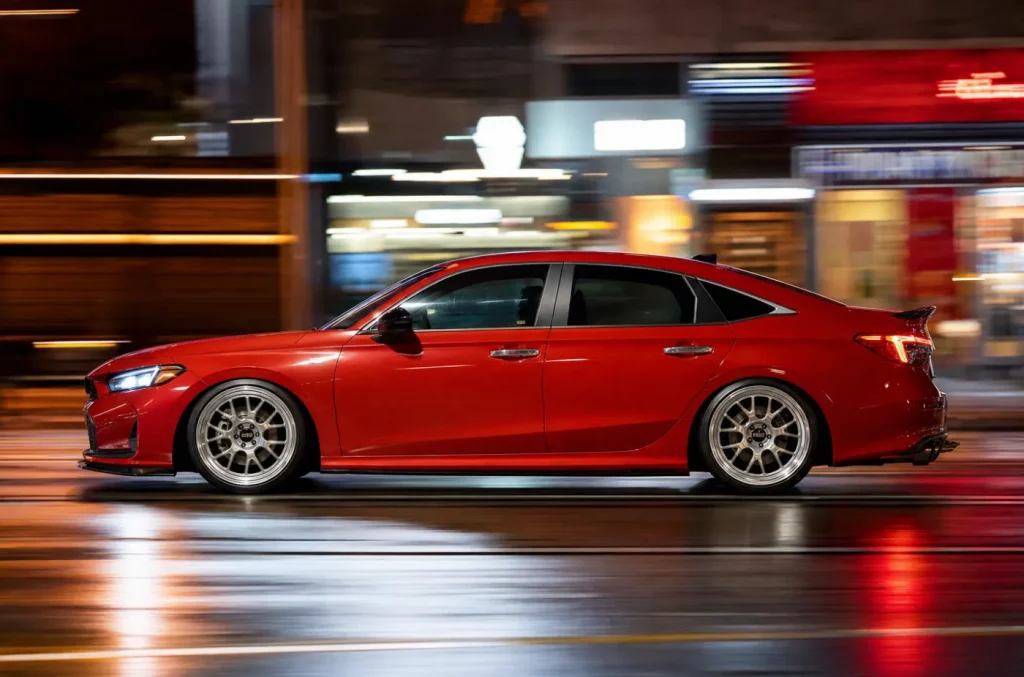
This guide is built for buyers who understand that “track-ready” is not a marketing slogan — it is an engineering claim that can be verified, measured, and stress-tested. It covers the FL5’s real track capabilities, its thermal limitations, the recalls you must verify, and a complete pre-purchase inspection checklist for used examples. Because this is a first-year model with limited long-term data, this guide also explains what is inherited from the FK8, what is genuinely improved, and what remains unproven.
The FL5 Civic Type R is the strongest front-wheel-drive performance platform on the used market — 315 hp, 310 lb-ft, 6-speed manual, and a chassis that is 15% stiffer than the FK8. It is genuinely more track-capable than its predecessor, with a 48% larger grille opening and a redesigned cooling system. But it still heat-soaks under sustained track use: coolant temps can reach 244°F and oil temps run high even with aftermarket coolers. Verify the sticky steering recall (NHTSA 24V-744) and the high-pressure Fuel Pump Recall are completed. Check for 2nd gear grind under hard acceleration. Inspect brake rotors for heat cracking if the car was track-driven. The FL5 holds its value exceptionally well — clean examples often command prices at or above original MSRP. This is a first-year model, so long-term reliability data is limited. For buyers who prioritize predictability, a used FK8 with documented service history may be a safer choice. For buyers who want the best front-wheel-drive platform available, the FL5 is the answer.
What You’re Actually Buying — The FL5 Blueprint
The FL5 Civic Type R (2023–Present) is the sixth-generation Type R and the second to be sold in North America. It is built on the 11th-generation Civic platform — a fundamental architectural shift from the FK8’s 10th-generation bones. The K20C1 engine returns with 315 horsepower at 6,500 rpm and 310 lb-ft of torque from 2,600 to 4,000 rpm for the US market, a modest increase over the FK8’s 306 hp and 295 lb-ft.
But the real story is the chassis. The FL5 features 15% greater torsional rigidity and 54% higher rear-end rigidity compared to the FK8, achieved through more structural adhesive and improved body bracing. The Wheelbase is 1.4 inches longer, the front and rear tracks are wider, and the lower cowl improves forward visibility while contributing to better weight distribution.
The result is a car that feels more planted, more stable, and more composed than the FK8 — especially at high speeds and during quick transitions. The FL5 also features revised dampers, optimized bushings, and a retuned Multi-link Rear Suspension, delivering better bump absorption and mid-corner stability without sacrificing road feel.
The tire change is equally significant: the FL5 moved to 265/30R19 tires in a square setup, replacing the FK8’s narrower 245-section tires on 20-inch wheels. This wider contact patch is a major contributor to the FL5’s sharper turn-in and higher cornering limits.
| Specification | FL5 Civic Type R |
|---|---|
| Engine | K20C1 2.0L turbo I4, closed-deck |
| Horsepower | 315 hp @ 6,500 rpm |
| Torque | 310 lb-ft @ 2,600–4,000 rpm |
| Transmission | 6-speed manual, rev-matching |
| Differential | Helical limited-slip |
| Chassis | 11th-gen Civic, +15% torsional rigidity |
| Curb weight | ~3,183 lb |
| Wheelbase | 107.7 inches |
| Tire size | 265/30R19 (square) |
| 0–60 mph | ~5.0 seconds (independent testing) |
| Fuel economy (city/hwy/comb) | 22/28/24 mpg |
| MSRP (2026, with destination) | $48,090 |
- 15% stiffer chassis, 54% stiffer rear
- 48% larger grille opening vs FK8
- 265-section tires in square setup
- Faster-responding adaptive dampers
- Two-piece Brembo rotors front and rear
- Honda LogR telemetry built in
- Still heat-soaks under sustained track use
- Coolant temps can reach 244°F on track
- Oil temps run high even with coolers
- Stock brake pads wear quickly on track
- Sticky Steering recall (24V-744)
- Fuel Pump recall affects all FL5
Track Readiness — What the FL5 Gets Right
The FL5 was designed with track use in mind. Honda addressed the FK8’s most significant weakness — heat management — with a substantially improved cooling system. The air intake area was increased by 48% compared to the FK8, and the radiator was uprated to handle sustained high-load driving. The intercooler was enlarged, and a vented aluminum Hood was added to extract hot air from the engine bay.
The FL5 also benefits from a redesigned Turbocharger housing, improved intake flow, a more efficient exhaust system, and a lighter flywheel with revised rev-matching software. These changes result in more consistent performance during extended track sessions. While the FK8 could heat-soak under aggressive use, the FL5 is built to maintain power and throttle response under prolonged load.
The chassis itself is a significant step forward. The wider track, increased rigidity, and revised suspension geometry give the FL5 a more planted feel through corners, improved high-speed stability, and sharper response to steering input. The adaptive dampers respond faster than those on the FK8, improving balance during quick transitions.
The FL5 also features new Brembo 350mm two-piece discs at the front and 305mm at the rear, with four- and single-piston Calipers respectively. These provide strong stopping power, though track-day enthusiasts may want higher-spec brake pads for sustained abuse.
One unique feature for track enthusiasts: Honda LogR is built into the infotainment system. It provides real-time telemetry including tire pressures, fluid temperatures, G-forces, and a lap timer with GPS mapping for major US tracks. This eliminates the need for aftermarket data logging equipment for most drivers.
| Component | Stock | Track-Ready Recommendation | Why |
|---|---|---|---|
| Tires | Michelin Pilot Sport 4S | Pilot Sport Cup 2 or equivalent | More grip, better heat resistance |
| Brake pads | OEM Brembo | Paragon P3/P5, Endless, or equivalent | Fade resistance under sustained abuse |
| Brake fluid | OEM DOT 4 | Castrol SRF or equivalent | Higher boiling point |
| Alignment | Factory street spec | Track-oriented camber/toe | Better turn-in, reduced tire wear |
| Cooling | Stock | Monitor first; CSF/PRL or Mishimoto if needed | Thermal control under sustained load |
| Oil | OEM spec | Monitor temperature; consider 5W-30 for track | Sustained high-load protection |
| Transmission fluid | OEM | Change every 15,000–20,000 miles if tracked | Synchro protection |
Heat Management — The FL5’s Real Track Limitation
Despite the improved cooling, the FL5 still has thermal limitations on track. A documented track session AT Carolina Motorsports Park revealed maximum coolant temps around 244°F (approximately 118°C) with ambient temperature at 75°F. The driver experienced reduced power from overheating the day before, completely wore out brand new front brake pads, warped the rotors, and still saw high oil temperatures despite running an aftermarket oil cooler.
This is important context for potential buyers. The FL5 is more track-ready than the FK8, but it is not immune to heat issues. Sustained track use — especially in hot climates — will push the cooling system to its limits. The difference is that the FL5 takes longer to reach those limits than the FK8, and it recovers more quickly between sessions.
For owners planning serious track use, cooling upgrades are recommended. The CSF/PRL cooling package addresses oil temperature, coolant temperature, and intake air temperature simultaneously. The package includes a dual engine oil cooler kit, a billet intercooler, and a high-performance all-aluminum radiator. The oil cooler kit reduces oil temperatures by up to approximately 15°F and increases overall oil capacity to approximately 7 quarts.
Mishimoto also offers an oil cooler kit that increases oil volume by 12% over stock and delivers approximately 5°F lower oil temperatures under demanding conditions. Their performance intercooler is engineered to reduce intake air temperatures and maintain consistent performance through repeated heat-soak conditions.
Critical Track Note: Even with the improved cooling, do not turn off the engine immediately after a hard track session. Let it idle for 60–90 seconds to allow the turbo shaft to slow down and the oil to carry heat away from the center housing before flow stops. This is especially important for the K20C1 turbocharged engine, which runs high oil temperatures under load.
Known Problems & Recalls — What to Check Before Buying
The FL5 is a relatively new model, but it has already accumulated several documented issues. Understanding these before purchase is essential.
1. Sticky Steering Recall (NHTSA 24V-744): This is the most significant issue affecting the FL5. The steering gearbox issue is caused by a decrease in grease amount in the worm gear meshing area of the electric power steering gearbox. During use, the sliding resistance in the meshing area increases and torque fluctuation happens while turning the steering wheel. This causes abnormal noise or sticky steering that the driver can feel.
Honda Malaysia recalled approximately 36,000 units of the Civic, Civic Type R, and CR-V over this issue, including FL5 Type R models from 2023–2024. The recall involves updating or replacing the EPS gearbox. In some markets, 280 units of the FL5 were affected. The repair takes about half an hour for inspection, but replacement work takes about four hours.
For used buyers, this recall is critical to verify. Check the VIN through NHTSA or Honda’s official recall portal to confirm the fix has been completed.
2. High-Pressure Fuel Pump Recall: The high-pressure fuel pump may crack and leak fuel, increasing fire risk. This recall affects the FL5 Type R as part of a broader Honda campaign. Verify completion before purchase.
3. Transmission Grinding: Some owners have reported occasional grinding noises through the transmission, particularly on the 1st-to-2nd shift under hard acceleration near redline. This is not a universal issue, but it is worth checking during a test drive. The FK8 had a similar reputation, and while the FL5’s transmission was revised, the fundamental design is shared.
4. Steering Becoming Overly Heavy: There has been a recall to address steering that could become overly heavy. Actual instances of that happening are rare, verging on non-existent. The FL5’s steering came with new bearings, though it is unclear if there is any connection to the recall.
5. Cooling System Limitations: As noted above, the FL5 can still heat-soak under sustained track use. This is not a defect in the traditional sense, but it is a limitation that buyers planning track use should understand.
6. Rear Spoiler Rattle: Some owners report a rattle from the rear hatch area where the spoiler mounts to the body. The plastic trim and mounting points can loosen over time, especially on cars that see frequent high-speed driving where the wing generates meaningful downforce.
7. Rev-Hang: The FK8’s rev-hang issue — where RPMs drop slowly between shifts — is still present in the FL5. This is not a defect but a characteristic of the ECU tuning. It is most noticeable when shifting near redline. Buyers should be aware of it before their first track day.
| Issue | Severity | Action |
|---|---|---|
| Sticky steering (24V-744) | High | Verify recall completion |
| Fuel pump leak | High | Verify recall completion |
| Transmission grinding (2nd gear) | Medium | Test drive under load |
| Overly heavy steering | Medium | Test drive at speed |
| Heat soak on track | Medium | Consider cooling upgrades |
| Rear spoiler rattle | Low | Inspect mounting points |
| Rev-hang | Low | Characteristic, not defect |
How to Identify a Tracked FL5
Track use is not automatically a deal breaker. A well-maintained FL5 with documented HPDE history and supporting cooling upgrades can be a better purchase than a car that was never tracked but has unknown maintenance. The key is to identify what kind of track use the car has seen and whether it was properly managed.
Check tire wear patterns: Track-driven cars often show uneven wear across the tire face, with outer shoulders worn more than the center. This is normal for track use but can indicate aggressive alignment settings or sustained cornering loads.
Inspect brake rotors: Look for heat checking — small surface cracks that develop from repeated thermal cycling. Light heat checking is normal on track-driven cars. Deep cracks that reach the Rotor edges are a sign of severe abuse and require replacement.
Check brake pad deposits: Uneven pad deposits on the rotor surface can cause vibration under braking. This is common on cars that have been driven hard and then parked without proper cool-down.
Look for aftermarket cooling components: An oil cooler, upgraded radiator, or intercooler can indicate a owner who was serious about track use. This is not necessarily bad — it may mean the car was properly prepared. But it also means the car has likely seen sustained high-load driving.
Check for aftermarket brake fluid and pads: High-temperature Brake Fluid (like Castrol SRF) and track-compound pads are strong indicators of track use. Ask the seller directly about track history.
Inspect wheels for curb rash: Track use often involves close encounters with apex curbs. Damage to the inner or outer wheel lips is common.
Check for tow hooks or harness modifications: These are strong indicators of organized track events.
Check ECU tuning history: Hondata, KTuner, and Cobb all support the FL5. If the car has been tuned, verify whether the tune was for track use and whether it was properly removed or disclosed.
Ask for oil analysis records: Serious track enthusiasts often perform oil analysis to monitor engine health. This is a positive sign, not a negative one.
Pro Tip: A tracked FL5 with documented maintenance and cooling upgrades is often a better buy than a garage-queen example with unknown service history. Track use exposes weaknesses — if the car survived it with proper maintenance, that is evidence of a healthy example. The danger is a car that was tracked without supporting modifications or maintenance.
Pre-Purchase Inspection Checklist
Before buying a used FL5 Type R, run through this checklist.
Recalls & Software:
- Verify sticky steering recall (24V-744) completion
- Verify fuel pump recall completion
- Check for any steering-related software updates
- Verify all open recalls are addressed via VIN check
Test Drive:
- Steering feel at highway speeds — check for stickiness or abnormal noise
- Transmission — test 1st-to-2nd, 2nd-to-3rd shifts under hard acceleration for grinding
- Clutch — check engagement point and slip under load
- Adaptive dampers — test Comfort, Sport, and +R modes for noticeable differences
- Brakes — check for vibration or excessive wear
- Cooling system — monitor temperature gauge during hard driving
- Rev-matching — verify it works in Track mode without interfering with heel-toe
Visual Inspection:
- Cooling system — check radiator, intercooler, and oil cooler condition
- Brake rotors — check for cracking or heat checking (especially if track-driven)
- Tires — verify even wear and remaining tread
- Wheels — check for curb rash or damage, especially inner lips
- Interior — check seat wear, especially driver’s bolster
- Underbody — check for scrapes or damage
- Rear spoiler — check mounting points for looseness or rattle
Modification History:
- Check for aftermarket cooling components (oil cooler, intercooler, radiator)
- Check for ECU tuning (Hondata, Ktuner, Cobb)
- Check for aftermarket intake, downpipe, or exhaust
- Verify all modifications were professionally installed
- Ask directly about track use — do not assume
History:
- Carfax or AutoCheck report
- Service records — oil changes every 5,000 miles minimum, 3,000 if tracked
- Accident history
- Number of owners
- VIN check for open recalls
- Oil analysis records if available
FL5 vs FK8 — Which Generation Actually Drives Better?
If you are cross-shopping the FL5 against a used FK8, the FL5 is the stronger foundation for long-term ownership and track builds. The key advantages:
Chassis: The FL5’s stiffer platform, wider track, and improved suspension geometry make it more capable and balanced than the FK8.
Cooling: The FL5’s improved cooling system addresses the FK8’s most significant weakness. It is more track-ready out of the box.
Interior and Tech: The FL5 features a fully digital gauge cluster, a 9-inch infotainment system with wireless Apple CarPlay and Android Auto, improved seat materials, and a lower, more centered seating position. Physical climate controls return, and the cabin uses higher-quality materials.
Daily Drivability: The FL5 is more refined and more livable than the FK8. The adaptive dampers respond faster, and the cabin is quieter and more comfortable.
Tuning Potential: The FL5’s stronger cooling and chassis foundation give it more headroom for high-performance builds. Early tuning results show strong potential. A documented Stage 3 build with a stock engine internally produced 620 horsepower and 535 lb-ft of torque using Hondata cams, Eventuri intake, MHI Stage 2 turbo, and E85 fuel.
The FK8 remains a solid choice for value-focused buyers or fans of its sharper, more aggressive edge. But for long-term ownership and track builds, the FL5 is the stronger foundation.
| Factor | FK8 (2017–2021) | FL5 (2023–Present) |
|---|---|---|
| Platform | 10th-gen Civic | 11th-gen Civic |
| Chassis rigidity | Baseline | +15% torsional, +54% rear |
| Cooling | Heat-soaks quickly | Improved, but still limited |
| Tire size | 245/30R20 | 265/30R19 |
| Infotainment | 7-inch, wired CarPlay | 9-inch, wireless CarPlay |
| Gauge cluster | Analog + digital | Fully digital |
| Daily comfort | Stiffer, louder | More refined, quieter |
| Used market | More affordable | Holds value strongly |
| Track potential | Proven, but needs cooling | Stronger foundation |
Pricing — What to Expect on the Used Market
The FL5 Civic Type R has held its value exceptionally well. For the 2026 model year, the starting MSRP is $46,895, with destination bringing it to $48,090 — a $1,000 increase over the previous year.
On the used market, clean examples with low mileage typically command prices close to or even above original MSRP. This is a car that depreciates slowly, especially in stock, unmodified condition. For buyers, this means the used market does not offer significant savings over new — but it does offer the opportunity to find a well-maintained example with the initial depreciation already absorbed.
| Model Year | MSRP (with destination) | Typical Used Range |
|---|---|---|
| 2023 (launch) | ~$44,000 | $42,000–$46,000 |
| 2024 | ~$45,000 | $43,000–$47,000 |
| 2025 | ~$47,000 | $45,000–$49,000 |
| 2026 | $48,090 | New |
It is worth noting that the FL5 is still in production, and Honda has not published final production numbers. Any claims about “final edition” or “limited production” should be treated with skepticism unless verified by Honda directly.
Ownership Costs — What to Budget
The FL5 is a performance car, and its running costs reflect that. Here is what to expect.
| Item | Estimated Cost | Frequency |
|---|---|---|
| Oil change (full synthetic) | $80–$120 | Every 5,000 miles (3,000 if tracked) |
| Transmission fluid | $100–$150 | Every 30,000 miles (15,000 if tracked) |
| Brake pads (front, OEM) | $200–$300 | Every 20,000–30,000 miles (2–3 track weekends) |
| Brake pads (track compound) | $300–$500 | Per track season |
| Brake rotors (front pair) | $800–$1,200 | Every 40,000–60,000 miles (or when cracked) |
| Tires (set of four, PS4S) | $1,200–$1,500 | Every 15,000–25,000 miles |
| Tires (track, set of four) | $1,500–$2,000 | Per track season |
| Brake fluid flush | $100–$200 | Every 12 months if tracked |
| Alignment | $150–$300 | Annually or after track events |
| Cooling upgrades (CSF/PRL) | $1,500–$2,500 | One-time if tracking |
Reliability — An Honest Assessment for a First-Year Model
This is the most important caveat for used buyers. Because the FL5 was introduced for the 2023 model year, there is no long-term reliability history. Consumer Reports does not yet have sufficient data to rate the FL5’s reliability. But it is not a verdict, because the data simply does not exist yet.
What we do know:
- The K20C1 engine has a proven record in the FK8, with known weaknesses including Oil dilution in cold climates and carbon buildup on intake valves
- The hybrid system is not relevant here — the FL5 is purely gasoline-powered
- Honda offers a 3-year/36,000-mile basic warranty and a 5-year/60,000-mile powertrain warranty
- Two NHTSA recalls have been issued — the sticky steering recall and the fuel pump recall — both of which should be completed on any used example
What we do not know:
- How the turbocharger will hold up over 100,000+ miles of track use
- How the transmission synchros will wear with repeated hard shifts
- Whether the adaptive dampers will develop leaks or failures over time
- How the cooling system will perform after years of thermal cycling
For buyers who prioritize predictability, a used FK8 with documented service history may be a safer choice. For buyers who want the latest technology and are willing to accept some uncertainty, the FL5 is a compelling option.
Final Thought
The FL5 Civic Type R is the most track-ready Civic ever built from the factory. It is stiffer, sharper, and more refined than the FK8, with improved cooling and a more capable chassis. But it is not immune to heat issues, and it demands proper maintenance and cool-down procedures for sustained track use.
For used buyers, prioritize stock examples with completed recalls, verified service history, and no evidence of aggressive track abuse without supporting cooling upgrades. The FL5 holds its value exceptionally well, so do not expect significant savings over new — but you do get a nearly new car with the initial depreciation already absorbed.
If you plan to track the car seriously, budget for cooling upgrades. The CSF/PRL package addresses oil, coolant, and intake air temperatures simultaneously, and it is the most comprehensive solution available. Mishimoto also offers proven cooling components.
FAQ — FL5 Civic Type R Buyer Guide
Is the FL5 Civic Type R track-ready out of the box?
The FL5 is the most track-ready Civic ever built, with a 15% stiffer chassis, 48% larger air intake, and improved cooling. But it still has thermal limitations — coolant temps can reach 244°F on track, and oil temps run high even with aftermarket coolers. For serious track use, cooling upgrades are recommended.
What is the sticky steering recall on the FL5?
The sticky steering recall (NHTSA 24V-744) affects the FL5 and other Honda models. The issue is caused by decreased grease in the EPS gearbox worm gear meshing area, causing abnormal noise or sticky steering. The fix involves replacing or updating the EPS gearbox. Verify completion before purchase.
Does the FL5 Type R have heat soak problems?
Yes — despite improved cooling, the FL5 can still heat-soak under sustained track use. A documented track session at Carolina Motorsports Park recorded max coolant temps around 244°F and high oil temps even with an aftermarket oil cooler. Cooling upgrades are recommended for serious track use.
What cooling upgrades are recommended for the FL5?
The CSF/PRL cooling package includes a dual oil cooler kit, billet intercooler, and high-performance radiator. It reduces oil temps by up to approximately 15°F and increases oil capacity to approximately 7 quarts. Mishimoto also offers oil cooler and intercooler kits that improve thermal management.
Is the FL5 better than the FK8?
The FL5 is the stronger platform — stiffer chassis, improved cooling, better interior, and more refined driving experience. The FK8 remains a solid choice for value-focused buyers or fans of its sharper edge. For long-term ownership and track builds, the FL5 is the better foundation.
How much does the FL5 Type R cost?
The 2026 model starts at $48,090 with destination. Used examples hold their value exceptionally well, often commanding prices close to or above original MSRP for clean, stock examples.
What should I check before buying a used FL5?
Verify sticky steering recall (24V-744) and fuel pump recall completion. Test transmission for grinding under hard acceleration. Check adaptive dampers in all modes. Inspect cooling system condition. Look for brake rotor cracking if track-driven. Check for aftermarket modifications and ECU tuning history.
What is the FL5’s transmission like?
The FL5 uses a short-throw, finger-light six-speed manual with revised rev-matching. Heel-and-toe downshifting is easy, and the rev-matching system works perfectly. Some owners have reported occasional grinding noises, so test thoroughly during a test drive.
Is the FL5 good for daily driving?
Yes — the FL5 is surprisingly livable as a daily driver. The adaptive dampers provide a comfortable ride in Comfort mode, the interior is more refined than the FK8, and the hatchback body offers practical cargo space. Fuel economy is rated at 22/28/24 mpg.
What is the FL5’s tuning potential?
The FL5 has strong tuning potential thanks to its improved cooling and chassis. A documented Stage 3 build with a stock engine internally produced 620 horsepower and 535 lb-ft of torque using Hondata cams, Eventuri intake, MHI Stage 2 turbo, and E85 fuel. Hondata, Cobb, and KTuner all support the FL5 ECU.
How do I know if a used FL5 has been tracked?
Check tire wear patterns, brake rotor condition (heat checking and cracking), brake pad deposits, aftermarket cooling components, high-temperature brake fluid, track-compound pads, wheel damage, tow hooks, and ECU tuning history. Ask the seller directly about track use.
Should I buy a used FL5 or wait?
Buy now if you want the best front-wheel-drive performance platform available, value the improved cooling and chassis, and are willing to accept the uncertainty of a first-year model. Wait if predictability is your top priority — consider a used FK8 with documented service history instead.