

The Honda Civic sedan and hatchback share the same platform, the same engines, the same dashboard, and the same powertrain options. They also share the same fundamental character — a compact car that punches above its class in refinement, driving dynamics, and interior quality. The differences are concentrated in two areas: cargo utility and rear-seat experience. The sedan is the more polished commuter; the hatchback is the more versatile household tool. Neither is the wrong choice, but one will fit your actual use pattern better than the other, and the wrong pick will cost you across years of ownership.
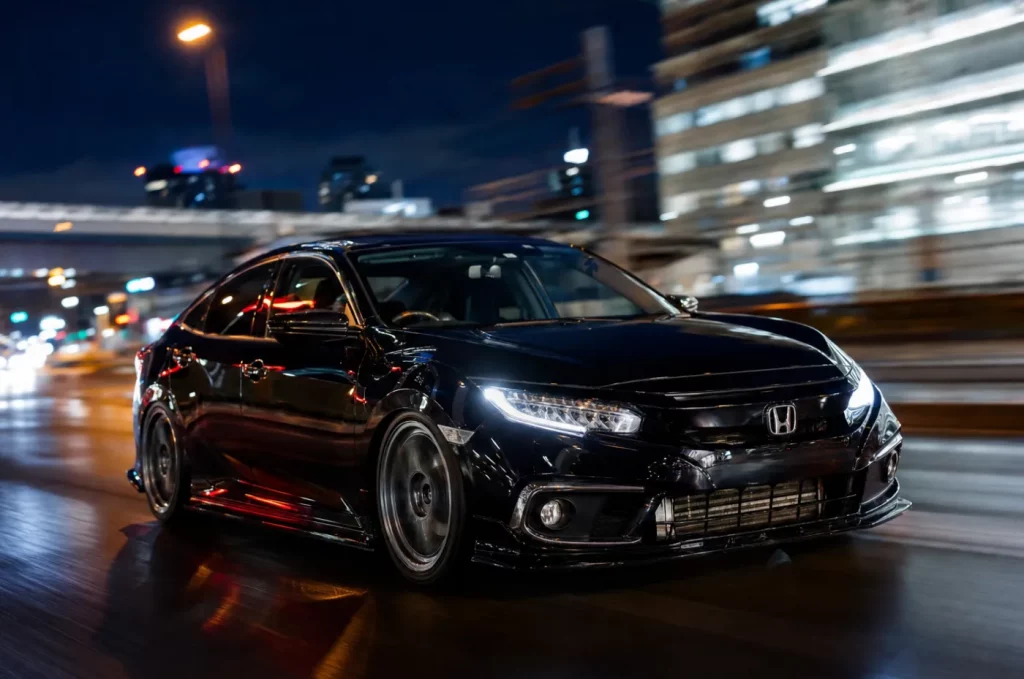
This guide covers both body styles across the 8th through 11th generations, with emphasis on the current 2025–2026 lineup, using verified dimensional data, EPA fuel economy ratings, professional sound-level testing, and real-world owner experience from Civic forums. The decision between sedan and hatchback is not about which car looks better — it is about which car does more of what you actually need.
The most important rule of Civic body styles: The sedan and hatchback are not interchangeable choices. The hatchback offers 66% more cargo space with the seats up and nearly double with the seats folded. The sedan offers a quieter cabin, better fuel economy, and a lower price. Choose based on how you use the car, not how it looks.
Quick Answer — Which Body Style Should You Choose?
| Your Priority | Best Body Style | Why |
|---|---|---|
| Highway commuting, quiet cabin | Sedan | Quieter at 70 mph (67.3 vs 68.9 dB), better MPG, lower price |
| Frequent cargo hauling (bikes, furniture, gear) | Hatchback | 24.5 cu ft seats up, 46.2 cu ft folded, huge liftgate opening |
| Tall rear passengers (teenagers, adults) | Hatchback | 39.1 in rear headroom vs 37.1 in — 2 extra inches |
| Manual transmission (2022–2024) | Hatchback | Only body style with 6MT on standard trims |
| City parking, tight spaces | Hatchback | 5 inches shorter than sedan, easier to parallel park |
| Lowest purchase price | Sedan | $1,200 cheaper than equivalent hatchback |
| Best all-around value | Hatchback Hybrid | 49 mpg, 200 hp, 24.5 cu ft cargo, only $1,200 more than sedan |
Generational Availability — When the Hatchback Was Available
The Civic hatchback was not always available in the US market. The 8th and 9th generations (2006–2015) were sedan and coupe only in the US. The hatchback was sold in Europe and Japan but never officially imported to the US. The 10th generation (2016–2021) brought the hatchback back to the US market for the first time since the 5th generation (1991–1995). The 11th generation (2022–present) continues the hatchback alongside the sedan.
| Generation | Years | Sedan Available | Hatchback Available (US) | Coupe Available |
|---|---|---|---|---|
| 8th Gen | 2006–2011 | ✅ Yes | ❌ No (European market only) | ✅ Yes |
| 9th Gen | 2012–2015 | ✅ Yes | ❌ No (European market only) | ✅ Yes |
| 10th Gen | 2016–2021 | ✅ Yes | ✅ Yes (FK7) | ✅ Yes (2016–2020) |
| 11th Gen | 2022–present | ✅ Yes | ✅ Yes (FL1/FL5) | ❌ No (discontinued) |
Source: Honda official model year information.
For used buyers: If you are shopping for an 8th or 9th generation Civic and want a hatchback, you will need to look AT European market imports — which are not federally legal for daily use in the US without significant modification. The practical choice for US buyers is sedan or coupe for those generations. The hatchback returned as a practical choice with the 10th generation in 2017.
The Dimensions That Matter
Both body styles share identical front-seat dimensions, the same 42.3 inches of front legroom, the same 39.3 inches of front headroom, and the same 57 inches of shoulder room. The divergence begins at the B-Pillar. The sedan is longer overall (by approximately 4 to 5 inches depending on the generation), but the hatchback is significantly taller in the cargo area and provides a much larger opening for loading. The sedan’s trunk is a secure, lockable compartment with 14.8 cubic feet of volume. The hatchback’s cargo area behind the rear seats measures 24.5 cubic feet in the current 11th-gen model — 66 percent more volume than the sedan without folding the seats.
| Dimension | 2026 Sedan | 2026 Hatchback | Difference |
|---|---|---|---|
| Cargo (seats up) | 14.8 cu ft | 24.5 cu ft | +9.7 cu ft (66%) |
| Cargo (seats folded) | ~25 cu ft (pass-through) | 46.2 cu ft | Nearly double |
| Rear headroom | 37.1 in | 39.1 in | +2.0 in |
| Rear legroom | 37.4 in | 37.4 in | Identical |
| Passenger volume | 99.0 cu ft | 99.0 cu ft | Identical |
| Overall length | 184.0 in | 179.0 in | Hatchback 5 in shorter |
| Curb weight (Sport gas) | 2,926 lbs | 2,976 lbs | +50 lbs |
| Curb weight (Sport Hybrid) | ~3,178 lbs | ~3,289 lbs | +111 lbs |
Sources: Honda specifications and press materials for the 2026 model year, EPA fueleconomy.gov. Curb weight from Edmunds and Honda technical specifications. Folded cargo volume for sedan is an approximation based on pass-through opening — Honda does not publish a sedan “seats folded” number because the trunk opening limits what can actually pass through.
10th Generation Dimensions (2016–2021)
The 10th generation had slightly different dimensions. The sedan offered 15.1 cubic feet of trunk space. The hatchback offered 25.7 cubic feet behind the rear seats on higher trims (EX, EX-L, Touring) and 22.6 cubic feet on Sport and Sport Touring trims (due to the center exhaust’s impact on the cargo floor height). With the rear seats folded, the 10th-gen hatchback provided 46.2 cubic feet of maximum cargo volume.
The 10th-gen hatchback also had slightly less rear legroom than the sedan — 36.0 inches versus 37.4 inches — a trade-off of the shorter overall length. This gap was eliminated in the 11th generation, where both body styles offer the same rear legroom.
10th gen hatchback cargo note: The 10th-gen hatchback Sport and Sport Touring trims have less cargo space than the EX and EX-L trims because the center exhaust system takes up space under the cargo floor. If you are buying a 10th-gen hatchback and cargo capacity is your priority, check which trim you are looking at — the difference is approximately 3 cubic feet.
Cargo Utility — Where the Hatchback Dominates
The numeric difference — 24.5 cubic feet versus 14.8 cubic feet — understates the real-world advantage of the hatchback. The opening matters more than the volume. The sedan’s trunk has a fixed opening roughly the size of a standard sedan Trunk Lid, which limits what you can load to items that fit through that aperture. The hatchback’s liftgate opens to the roofline, providing access to a space that is 41 inches wide between the wheel wells, approximately 49 inches at the widest point behind the wheels, roughly 31 inches deep behind the rear seats, and approximately 22 to 30 inches tall depending on where you measure under the cargo cover.
With the rear seats folded, the hatchback can accommodate:
- A full-size mountain bike with the front wheel removed
- A 60-inch assembled IKEA bookcase
- A dorm-room mini fridge
- Multiple large suitcases (the sedan can only fit 2-3)
- Golf clubs without removing the driver
- A standard 55-inch TV in its box
- Four track wheels with tires mounted
- Camping gear for a family of four
Owner reports from CivicX and Civic11 forums confirm that the 10th and 11th-gen hatchback swallows large objects that the sedan cannot. Multiple owners report fitting full-size mountain bikes (front wheel off) with the rear seats folded, and one owner noted that the Civic hatchback cargo area is close in length and width to a Honda CR-V’s, lacking only the height.
The cargo cover: The removable pull-type cargo cover in the 11th-gen hatchback is a well-designed solution — it slides out of the way from either side and does not require the awkward removal and storage that cross-mounted hard covers demand. In the 10th-gen, the cargo cover is a conventional roll-up design that must be removed to load tall items. The 11th-gen design is a genuine improvement.
The one cargo disadvantage of the hatchback is security. Items in a hatchback cargo area are visible through the rear glass. The sedan’s trunk is fully enclosed and lockable, which matters if you regularly park in areas where visible cargo is a theft risk. Honda’s cargo cover provides a visual barrier, but it is fabric and offers no physical security. For most owners, this is a minor concern, but it is worth noting if you regularly transport valuable equipment.
What Actually Fits — A Practical Guide
| Item | Sedan | Hatchback |
|---|---|---|
| 2-3 large suitcases | ✅ Yes | ✅ Yes (easier loading) |
| 4 large suitcases | ❌ No | ✅ Yes (with seats folded) |
| Mountain bike | ❌ No (requires roof rack) | ✅ Yes (front wheel off, seats folded) |
| Road bike | ❌ No (requires roof rack) | ✅ Yes (seats folded) |
| Golf clubs | ✅ Yes (driver must be angled) | ✅ Yes (easier loading) |
| 55-inch TV in box | ❌ No | ✅ Yes (seats folded) |
| Full-size stroller | ✅ Yes (tight fit) | ✅ Yes (easy) |
| Home Depot run (4×8 plywood) | ❌ No | ❌ No (too wide for any compact car) |
| 2×4 lumber (8 ft) | ❌ No (too long) | ✅ Yes (passes between front seats) |
| Camping gear (family of 4) | ❌ No (too tight) | ✅ Yes |
| Grocery run (10 bags) | ✅ Yes | ✅ Yes |
Fuel Economy — The Sedan Wins by a Narrow Margin
The sedan’s more aerodynamic shape and lower weight (approximately 50-100 pounds less) give it a fuel economy advantage across all powertrain configurations. The gap is widest on the gas models and narrows to near-irrelevance on the hybrids.
| Powertrain | Sedan MPG (city/hwy/comb) | Hatchback MPG (city/hwy/comb) | Annual fuel cost difference |
|---|---|---|---|
| 2.0L gas (LX) | 32 / 41 / 36 | — (not available) | — |
| 2.0L gas (Sport) | 31 / 39 / 34 | 30 / 38 / 34 | Sedan saves ~$40/yr |
| Hybrid (Sport Hybrid) | 50 / 47 / 49 | 50 / 45 / 48 | Sedan saves ~$25/yr |
| Hybrid (Sport Touring) | 50 / 47 / 49 | 50 / 45 / 48 | Sedan saves ~$25/yr |
EPA ratings from Honda official specifications for 2026 model year, confirmed by EPA fueleconomy.gov. Annual fuel cost difference calculated at 15,000 miles per year and $3.50 per gallon.
The fuel economy gap is small enough that it should not drive the decision for most buyers. Over five years at 15,000 miles per year, the Sport gas sedan saves approximately $200 compared to the hatchback. The hybrid sedan saves approximately $125 over the same period. These are not meaningful differences in the context of a $25,000 to $33,000 purchase. The hatchback’s additional cargo utility is worth far more than $200 over five years for most owners.
Pricing — The Hatchback Premium
The hatchback carries a price premium of $1,200 on the Sport gas model and $1,200 on the hybrid trims for 2026. The Sport sedan starts at $26,695 compared to the hatchback Sport at $27,895. The Sport Hybrid sedan starts at $29,395 compared to $30,595 for the hatchback. The Sport Touring Hybrid sedan starts at $32,395 compared to $33,595 for the hatchback.
This premium is not arbitrary — you are paying for additional glass area, a more complex liftgate mechanism, a cargo cover system, and additional body structure. The hatchback also includes some standard equipment that the equivalent sedan trim does not: rear-seat pass-through, variable-speed intermittent wipers, rear privacy glass, and available roof-rack mounting points.
Resale value: At resale, the hatchback typically retains a slightly higher percentage of its original MSRP than the sedan, according to CarGurus market data, because the hatchback’s buyer pool values the utility. The premium usually does not fully recoup at trade-in — the extra $1,200 paid at purchase translates to roughly $300 to $500 in additional resale value at three to five years — but the gap is narrowing as hatchback demand increases.
Cabin Noise — The Sedan Is Quieter
Independent sound-level testing has measured a consistent advantage for the sedan. Car and Driver’s instrumented testing recorded interior noise of 67.3 decibels in the sedan at 70 mph versus 68.9 decibels in the hatchback — a 1.6 decibel difference. Motor Trend also noted that the Civic’s road noise at highway speed is a long-standing Honda trait that the 2025 update only partially addressed.
The sedan’s trunk acts as an additional sound barrier between the rear axle and the cabin. The hatchback’s open cargo area transmits more road and tire noise directly into the passenger compartment. The rear wheel wells in the hatchback are effectively inside the cabin — the tire roar is not muffled by a separate trunk compartment.
The 2025+ hybrid models add active noise cancellation through the audio system and additional cabin insulation, which Motor Trend reports narrows the gap. The hybrid hatchback is noticeably quieter than the gas hatchback at highway speeds, though it still does not match the hybrid sedan.
For buyers who spend significant time on highways — 50-plus miles per day — the sedan’s quieter cabin is a legitimate quality-of-life advantage. For urban and suburban drivers who spend most of their time at lower speeds, the difference is unlikely to be noticeable.
Performance — Hybrid Hatchback Is Quick
Motor Trend tested the 2025 Civic Hatchback Sport Touring Hybrid and recorded a 0-to-60 mph time of 6.3 seconds, compared to 6.1 seconds for the equivalent sedan in their testing. The sedan’s slight advantage is attributable to its lower curb weight (approximately 80 pounds less on hybrid models — the hatchback hybrid weighs approximately 3,289 pounds according to Honda specs).
The 0.2-second gap is not meaningful in real-world driving. Both body styles with the hybrid powertrain are significantly quicker than the previous-generation turbocharged hatchback (7.7 seconds for the 2022 Civic Sport Touring hatchback with the 1.5T per Motor Trend) and the current Si (7.4 seconds per Motor Trend).
The hatchback also carried a slight handling advantage in the 10th generation due to a retuned rear stabilizer bar and quicker steering ratio on the Sport and Sport Touring trims. In the 11th generation, the Sport Touring Hybrid sedan and hatchback share the same suspension tuning and steering calibration. There is no meaningful difference in handling between the two body styles in the current generation.
Rear Seat — Same Legroom, Different Headroom
Both body styles offer 37.4 inches of rear legroom in the 11th generation — essentially identical. The difference is rear headroom, where the hatchback provides 39.1 inches versus the sedan’s 37.1 inches. This matters for taller rear passengers.
A 6-foot-2 passenger sitting upright in the sedan’s rear seat will have their head touching the headliner or the rear window glass. The same passenger in the hatchback will have approximately 2 inches of clearance. This is a genuine advantage for families with teenagers or for anyone who regularly carries tall passengers.
Rear-seat amenities are identical and minimal across both body styles. The Civic does not offer rear air vents, rear USB ports (except on higher trims), or a rear armrest on the LX. This is a limitation that both body styles share and that Honda has not addressed. Motor Trend specifically noted the Civic’s lack of rear-seat amenities as a frustration, even on the top-trim Sport Touring Hybrid.
Visibility — The Sedan Has Better Rear Visibility
The sedan’s rear window is more upright than the hatchback’s sloped hatch glass. The rear window gives a better view of what is behind the car. The hatchback’s rear window is smaller and more angled, and the rear headrests and C-pillars obstruct more of the view.
Both body styles have a backup camera as standard. The camera makes the rear visibility difference less important than it was before backup cameras became mandatory. The hatchback’s rear wiper is a practical advantage in rain and snow — the sedan does not have a rear wiper, and the trunk lid tends to collect dirt and water that obscures the rear window.
8th and 9th Generation — Sedan vs Coupe
For 8th and 9th generation buyers, the body style choice is sedan vs coupe, not sedan vs hatchback. The coupe offers less rear headroom (34.8 inches in the 8th gen vs 36.2 inches in the sedan), less rear legroom (30.9 inches vs 34.6 inches), and a much smaller trunk opening. The coupe also has longer doors that are more difficult to open in tight parking spaces.
The sedan is the practical choice for any buyer who carries passengers or cargo regularly. The coupe is the style choice for a buyer who drives alone most of the time and prioritizes appearance over utility. The resale market reflects this — sedan Civics are easier to sell and hold value better than coupes.
10th Generation — The Hatchback Returns
The 10th-gen hatchback was a fundamentally different proposition from the current model. It was the only body style that offered the 1.5T engine in the Sport trim (the sedan Sport used the 2.0L naturally aspirated engine), and it was the only body style available with a manual transmission in the Sport and Sport Touring trims. The 10th-gen hatchback also had a more distinct exterior design than the sedan — it borrowed styling cues from the Type R, including a dual-center exhaust on the Sport and Sport Touring, a more aggressive rear diffuser, and a more sharply angled rear window.
For used buyers, the 10th-gen hatchback is the only way to get a manual transmission with the 1.5T engine outside the Si. The 10th-gen sedan Si is manual-only, but the Si is a different car with different running costs. The 10th-gen hatchback Sport and Sport Touring with the 6-speed manual are the last standard Civics with a manual transmission — a genuinely rare configuration that commands a premium on the used market.
11th Generation — The Hybrid Changes Everything
The 11th-generation hatchback is available with the hybrid powertrain, and that changes the calculus entirely. The hybrid hatchback offers 48-49 mpg combined, 200 horsepower, 232 lb-ft of torque, and 24.5 cubic feet of cargo space. It is the most practical Civic ever built — efficient, powerful, and versatile.
The sedan hybrid is slightly more fuel-efficient (49 mpg combined vs 48 mpg), slightly quieter, and slightly cheaper. The hatchback hybrid is slightly quicker (6.3 sec 0-60 vs 6.1 sec for the sedan — barely noticeable), more versatile, and better for tall rear passengers. The choice between the two hybrids is genuinely difficult — both are excellent cars, and the decision comes down to cargo needs and cabin noise tolerance.
2016–2021 10th Gen Specifics
The 10th-gen hatchback is the one to buy if you want the manual transmission in a standard Civic. The 2017–2021 hatchback Sport and Sport Touring with the 6-speed manual are the only Civics outside the Si and Type R to offer a manual with the 1.5T engine. The sedan and coupe Sport trims used the 2.0L naturally aspirated engine, and the EX and Touring trims were CVT-only.
The 10th-gen hatchback also offers 25.7 cubic feet of cargo space behind the rear seats on EX, EX-L, and Touring trims, and 22.6 cubic feet on Sport and Sport Touring trims (the center exhaust takes up space under the cargo floor). With the seats folded, all trims offer 46.2 cubic feet. The sedan offers 15.1 cubic feet of trunk space and a much smaller pass-through opening.
For a 10th-gen used buyer, the hatchback is the clear choice if you value cargo utility or want a manual transmission. The sedan is the better choice if you prioritize a quieter cabin or a lower purchase price.
2022–2026 11th Gen Specifics
The 11th-generation hatchback is available with the hybrid powertrain, and that changes the calculus entirely. The hybrid hatchback offers 48-49 mpg combined, 200 horsepower, 232 lb-ft of torque, and 24.5 cubic feet of cargo space. It is the most practical Civic ever built — efficient, powerful, and versatile.
For 2022–2024 models, the hatchback was the only way to get a manual transmission on the Sport and Sport Touring trims. For 2025+, the manual is only available on the Si and Type R. If you want a 2025+ manual Civic, your only options are the Si or Type R — both are excellent cars, but they are not standard Civics.
The 11th-generation hatchback also has better rear headroom than the sedan — 39.1 inches vs 37.1 inches — which matters if you regularly carry tall rear passengers. The sedan has a quieter cabin at highway speeds and is slightly more fuel-efficient.
Which Body Style for Which Buyer
| Your Profile | Buy This | Why |
|---|---|---|
| Long highway commuter (40+ mi/day) | Sedan | Quieter cabin at 70 mph, slightly better highway MPG |
| Budget buyer on gas Sport trim | Sedan | $1,200 cheaper, nearly identical equipment, slightly better fuel economy |
| Family with tall rear passengers | Hatchback | 39.1 in rear headroom vs 37.1 in — 2 extra inches matters for teens |
| Regular cargo hauler (bikes, furniture, strollers) | Hatchback | 24.5 cu ft seats up, 46.2 cu ft seats down, liftgate access for bulky items |
| Manual transmission buyer (2022–2024) | Hatchback | Only body style offered 6MT on standard trims |
| City dweller, parallel parker | Hatchback | 5 inches shorter overall length makes urban parking noticeably easier |
| Best all-around value | Hatchback Hybrid | 49 mpg combined, 200 hp, 24.5 cu ft cargo, only $1,200 more than sedan |
| Security-conscious (valuable cargo in car) | Sedan | Trunk is fully enclosed and lockable — hatchback cargo is visible through glass |
Used-Buyer Differences by Body Style
When buying a used hatchback, check the rear hatch alignment and the condition of the hatch struts. The hatch door is heavy and the struts wear out over time. A hatch that does not stay open or closes with a slam indicates worn struts ($50–$100 per pair). Also check for water leaks around the hatch seal — the hatchback’s larger opening means more potential for leaks.
When buying a used sedan, check the trunk for Water Intrusion. The sedan trunk seal can fail, and the trunk floor can rust if water has been trapped. Also check the trunk hinges and torsion bars — they can squeak or bind.
Both body styles can suffer from rear bumper damage from loading items. Check the rear bumper cover for scratches, dents, or signs of impact. Also check the cargo floor for signs of heavy use — a damaged cargo floor is a negotiating point.
The Verdict
The sedan is the more rational financial decision for the highway commuter who prioritizes cabin quietness and minimum purchase price. It costs less, uses less fuel, and provides a more serene driving experience at highway speeds. The hatchback is the more versatile choice for the owner who values cargo utility, takes the occasional piece of furniture or sporting equipment, carries tall passengers in the rear, or parks in tight urban spaces. The $1,200 premium buys a car that can do things no sedan can match — carry a bike with the seats folded, load a stroller without removing the rear wheel, or accommodate a college student’s dorm move-in with a single trip.
The strongest recommendation across the current lineup goes to the hatchback Sport Touring Hybrid. At $33,595, it delivers the hybrid powertrain’s 49 mpg combined and 200 horsepower, the full luxury and tech package (leather, Bose audio, 9-inch touchscreen with Google built-in, wireless CarPlay), and the hatchback’s 24.5 cubic feet of cargo space with the useful liftgate opening. It does everything a compact car can do, and it does most of it well. The sedan Sport Touring Hybrid at $32,395 is the better choice only if the $1,200 savings matters more than the cargo utility — and for most buyers, the hatchback’s versatility will save more than $1,200 in inconvenience over the ownership period.
For used buyers, the 10th-gen hatchback with the 6-speed manual is the most desirable configuration. It is the last standard Civic with a manual transmission, and it offers the 1.5T engine in a practical body style. The 10th-gen sedan is the better value for buyers who do not need the cargo utility and want to save money. The 11th-gen hybrid hatchback is the best all-around Civic for any buyer who can afford the premium.
Body Style Pre-Purchase Checklist
☐ Sedan — Test the trunk opening with your largest regular cargo item (stroller, golf bag, pet crate). The 14.8-cubic-foot volume is generous for a compact sedan, but the opening may limit what actually fits. Confirm that the rear seats fold (60/40 split on all trims above LX on 10th/11th gen) and that you are comfortable with the pass-through opening size. Check the trunk for water intrusion and rust.
☐ Hatchback — Take a test drive at highway speed (65–70 mph) with the radio off to assess road noise acceptability. Test cargo loading with a representative large item (bike, large suitcase, furniture box). Measure the width between the wheel wells (approximately 41 inches) against any regular cargo you carry. Verify the cargo cover operates smoothly — the 11th gen’s removable pull shade is well-designed, but confirm it does not interfere with taller items. Check the rear hatch struts for wear.
☐ Gas models (either body) — Compare the Sport sedan ($26,695) against the hatchback Sport ($27,895). The $1,200 premium buys 9.7 cubic feet of additional cargo space and a liftgate. If you will use the space more than twice per year, the hatchback pays for itself. If you will never use it, the sedan is the cheaper choice.
☐ Hybrid models (either body) — The fuel economy difference is minimal (1 mpg combined). The hybrid hatchback is the best daily driver in the lineup regardless of body style. Choose based on cargo needs and cabin noise tolerance, not fuel cost.
☐ 10th gen (2016–2021) — Only the hatchback offers the manual transmission and the 1.5T engine on the Sport trim. If these matter to you, the sedan is not an option. Also note the hatchback’s reduced rear legroom (36.0 inches vs 37.4 inches) on this generation — test rear-seat fit with your typical passengers. Check the hatchback’s cargo capacity by trim — Sport and Sport Touring have 22.6 cu ft vs 25.7 cu ft on EX and Touring.
☐ 8th/9th gen — Only the sedan body style was available in standard production. The hatchback returned with the 10th generation in 2017. For older Civics, the body-style question is simply sedan vs coupe (2006–2020), and the coupe’s dramatically reduced rear access makes it impractical for anyone carrying passengers or cargo regularly.
Sources: Honda specifications and press materials for the 2026 model year, EPA fueleconomy.gov, Car and Driver instrumented testing, Motor Trend road tests, Cars.com research, Edmunds cargo tests, CivicX and Civic11 forum owner reports. Prices are MSRP including destination and may vary by region and dealer markup.