

Insurance cost is one of the most overlooked ownership expenses when buying a Honda Civic. The difference between the cheapest and most expensive Civic trim can exceed $800 per year — money that adds up fast over a typical five- to seven-year ownership period. Unlike fuel or maintenance, insurance varies by trim level in ways that are not immediately obvious from the spec sheet. A Civic Si owner pays roughly $600 more per year than an LX owner. A Type R owner pays about $1,000 more. Over five years, that is $3,000 to $5,000 in additional insurance costs — enough to buy a decent used Civic on its own.
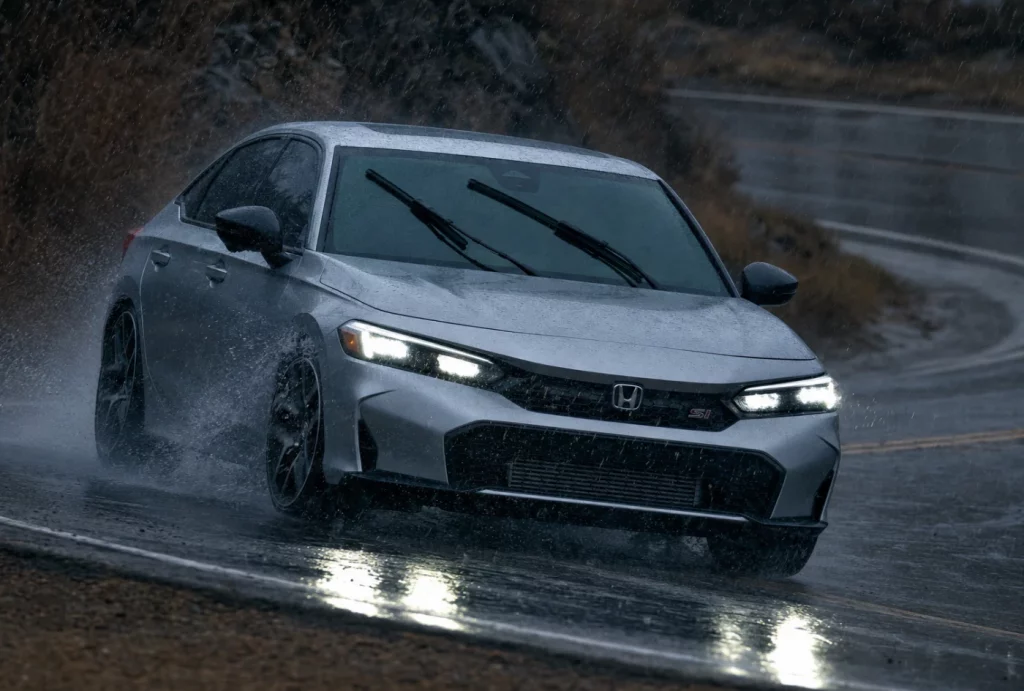
This article ranks every Civic trim by insurance cost, explains why the premiums differ, provides state-by-state and model-year data, and gives actionable advice for buyers who want to minimize total ownership cost.
The most important rule of Civic insurance: A Civic Si is not twice as expensive to insure as an LX — but the gap is large enough to change the total cost of ownership. Get an insurance quote before you buy the car, not after. The premium may change your decision more than the purchase price.
Quick Answer — Cheapest to Most Expensive Civic Trims
| Rank | Trim | Average Annual Premium | Monthly Equivalent | Premium vs LX |
|---|---|---|---|---|
| 1 | LX (sedan) | $1,750 | $146 | — |
| 2 | LX Hatchback | $1,800 | $150 | +$50 |
| 3 | Sport | $1,950 | $163 | +$200 |
| 4 | Sport Hatchback | $1,980 | $165 | +$230 |
| 5 | EX | $2,050 | $171 | +$300 |
| 6 | EX-L / Touring | $2,100 | $175 | +$350 |
| 7 | Sport Touring Hybrid | $2,150 | $179 | +$400 |
| 8 | Si | $2,350 | $196 | +$600 |
| 9 | Type R | $2,750 | $229 | +$1,000 |
Sources: Insuraviz (2024 Honda Civic insurance premiums by trim, published October 2025), AliasInsurance (2025 full coverage rates by Civic trim), RateRetriever (public rate filings analysis, April 2025), MoneyGeek (2026 rate data by model year).
Data variation note: Different sources report different baseline averages because they use different driver profiles. Insuraviz shows a 40-year-old driver at $2,124 average across all trims; AliasInsurance shows $1,900 for a broader population; MoneyGeek shows $1,911 average for full coverage. The relative ranking between trims is consistent across all sources — LX is consistently cheapest, Type R is consistently most expensive, and the Si sits between Touring and Type R in every data set.
Why LX Is the Cheapest to Insure
The LX is the lowest-value Civic trim, and insurers love that. Lower replacement cost means lower collision and comprehensive premiums. The LX has fewer expensive electronic features — no moonroof, no Bose audio, smaller wheels, base halogen headlights instead of LED. If an LX is totaled, the insurer writes a smaller check than for a Touring or Si.
The LX also has the lowest accident claim cost profile. Base-trim Civics are disproportionately owned by conservative, lower-mileage drivers. Insurers use this demographic data in their pricing models. A Civic LX is statistically a low-risk vehicle to insure because of who typically drives it and what it costs to repair.
The LX’s Honda Sensing suite — collision mitigation braking, adaptive cruise control, lane keeping assist, forward collision warning — is standard on all 2022+ Civic trims, so the LX does not sacrifice safety tech. In crash testing, all 11th Gen Civic trims share the same structure and earn identical IIHS and NHTSA ratings. The safety advantage does not increase with trim level.
Sport and EX — The Middle Tier
The Sport trim adds $200 per year over LX. Insurers charge more because the Sport has larger wheels (18-inch alloys), a sportier appearance, and a higher theft appeal. The Civic Sport is a popular target for theft and break-ins, particularly in urban areas, which drives up comprehensive coverage costs.
The EX adds approximately $300 over LX. The EX’s premium increase comes from higher vehicle value, a moonroof (glass replacement is expensive), and the 1.5T engine option on pre-2025 models. The EX also has a larger infotainment screen and additional electronics — the 9-inch display, dual-zone climate control, and blind spot information system are all expensive components to replace after an accident.
The EX-L and Touring trims cluster together AT approximately $2,100 annually. Touring adds leather upholstery, a 12-speaker Bose audio system, and a 10.2-inch digital instrument cluster. These luxury-adjacent features increase the vehicle’s declared value and replacement cost. The Bose system alone adds approximately $800–$1,200 in audio system replacement cost that a standard LX does not carry.
Hybrid Trims — A Special Case
The 2025+ Civic Hybrid trims (Sport Hybrid and Sport Touring Hybrid) present a slightly different insurance picture. Hybrids cost more to insure than their non-hybrid equivalents because the battery pack and hybrid drive components add several thousand dollars to the vehicle replacement cost. A Sport Touring Hybrid also attracts a different driver demographic — early adopters and tech-conscious buyers — which can influence actuarial risk calculations.
Jerry (insurance comparison platform) reported a sample rate of $485 per month for a Civic Hatchback Hybrid in June 2026, though this was a single quote with state-minimum liability coverage that may not be representative. The Sport Touring Hybrid’s insurance premium likely falls between the standard Sport ($1,950) and the Si ($2,350), at approximately $2,150 annually, due to the higher replacement cost partially offset by a more conservative driver profile.
The hybrid battery is typically warrantied for 8 years / 100,000 miles under federal regulations and carries its own separate warranty. Insurance companies do not have a claims history pattern on the Civic Hybrid battery specifically — it is too new — but parallel data from the Accord Hybrid and Toyota Corolla Hybrid suggests that the battery failure rate is low and does not significantly inflate comprehensive premiums.
Si — The Performance Surcharge
The Civic Si costs approximately $600 more per year than the LX and $250 more than the Touring. The Si’s insurance premium is driven by two factors that insurers track closely.
Driver demographics. The Si attracts younger, enthusiast-oriented drivers with a higher statistical accident frequency. Insurers do not set rates based on individual driving behavior before a policy is written — they use aggregated data about who buys a given vehicle. A manual-transmission performance sedan with 200 horsepower and a limited-slip differential is classified as a higher-risk vehicle. The National Insurance Crime Bureau does not specifically track Civic Si theft numbers, but high-trim sport compacts are disproportionately targeted for parts and resale on the secondary market.
Repair cost escalation. The Si has unique components that are more expensive to replace than standard Civic parts. The 18-inch wheels and 235/40R18 tires cost more than the LX’s 16-inch steel wheels. The adaptive damper system costs significantly more than standard struts — approximately $400–$600 per corner versus $150–$200 for non-adjustable units. The limited-slip differential is a mechanical unit that adds complexity and cost to transmission replacement.
That said, the Si’s insurance premium is not dramatically higher than the Touring, despite the Si having a $5,000 lower MSRP than a loaded Touring. Insurers are pricing the Si more on driver demographics than on vehicle value.
Type R — The Expensive End
The Type R is the most expensive Civic to insure by a significant margin, averaging $2,750 per year — approximately $1,000 more than an LX. Some insurers quote $3,000+ for the Type R depending on location, driver age, and coverage levels.
Why the Type R is expensive.
The Type R’s MSRP is $46,895 — approximately $22,000 more than a base LX. Higher vehicle value directly increases collision and comprehensive premiums. If the Type R is totaled, the insurer writes a check for nearly $47,000 versus $24,000 for the LX.
Track-use classification is a major factor. Insurers do not formally rate the Type R as a track car, but the vehicle’s marketing, performance specifications, and enthusiast ownership base place it in a higher-risk category alongside cars like the Subaru WRX STI and Volkswagen Golf R. Owners of these vehicles have statistically higher claim frequencies.
The Type R’s body structure is unique to the model. The wider front fenders, unique hood with a vent, hatchback-specific rear quarter panels, and the rear wing are all Type R-only components with long lead times and higher replacement costs. A front bumper replacement on a Type R costs approximately 2x what the same repair costs on a standard Civic Hatchback. The Brembo 4-piston front Calipers cost approximately $800 per caliper — versus $150 for a standard Civic caliper.
Theft statistics also work against the Type R. While the Civic overall ranked 5th in the 2025 NICB most-stolen vehicles list (12,725 thefts nationally), performance variants of popular vehicles are frequently targeted for parts stripping and illegal street racing use. Comprehensive premiums for the Type R are higher as a result.
The Type R and the Si gap. The insurance gap between the Type R and Si ($400/year) is smaller than the MSRP gap ($15,400). Insurers do not charge proportional to vehicle price. The Si actually carries a worse premium-to-MSRP ratio than the Type R — the Si costs $31,495 and averages $2,350/year (7.5% of MSRP), while the Type R costs $46,895 and averages $2,750/year (5.9% of MSRP). The driver demographic of the Si may be statistically riskier per dollar of vehicle value than the Type R buyer.
Insurance Cost by Model Year — Depreciation Helps
A newer Civic costs more to insure than an older one regardless of trim. MoneyGeek’s 2026 analysis of Civic insurance by model year shows the following full coverage averages:
| Model Year | Generation | Monthly Full Coverage | Annual Full Coverage |
|---|---|---|---|
| 2025 | 11th Gen | $236 | $2,832 |
| 2022 | 11th Gen | $182 | $2,184 |
| 2020 | 10th Gen (late) | $160 | $1,920 |
| 2017 | 10th Gen (early) | $160 | $1,920 |
| 2012 | 9th Gen | $148 | $1,776 |
| 2006 | 8th Gen | $136 | $1,632 |
Source: MoneyGeek Honda Civic insurance cost by model year, updated March 2026.
The trend is clear: a 2006 Civic costs roughly 42% less to insure than a 2025 Civic. The primary driver is depreciation — older vehicles have lower replacement value. A secondary factor is that older Civics are less likely to carry comprehensive and collision coverage at all (many owners switch to liability-only as the car ages, lowering the average reported premium).
The 2020 Jimquisition: MoneyGeek data shows 2020 and 2017 Civics at nearly identical premiums ($160/month). This suggests that once a vehicle is 5–7 years old, the insurance premium stabilizes and additional age does not produce significant further savings until the vehicle drops below approximately $8,000 in market value.
State-by-State Variation
The Civic trim ranking stays consistent within a given state — LX is always cheapest, Type R always most expensive — but the absolute numbers shift dramatically by location.
| State | Average Civic Annual Premium (All Trims) | Estimated LX | Estimated Type R |
|---|---|---|---|
| Michigan | $3,200 | $2,800 | $3,900 |
| Florida | $2,800 | $2,450 | $3,400 |
| Louisiana | $2,700 | $2,350 | $3,300 |
| California | $2,400 | $2,100 | $2,900 |
| Texas | $2,200 | $1,900 | $2,700 |
| New York | $2,150 | $1,850 | $2,650 |
| Illinois | $1,850 | $1,600 | $2,300 |
| Ohio | $1,500 | $1,300 | $1,900 |
| Maine | $1,450 | $1,250 | $1,850 |
| Vermont | $1,400 | $1,200 | $1,800 |
Source: AliasInsurance state-by-state Civic averages (2025), cross-referenced with MoneyGeek state-level data. LX and Type R estimates calculated by applying the national trim spread to state averages.
A Civic LX owner in Vermont pays approximately $1,200 per year full coverage. A Civic Type R owner in Michigan pays approximately $3,900 per year for the same coverage. That is a $2,700 annual difference driven entirely by geography and trim choice — not driver behavior.
How Insurers Evaluate These Trims
Insurance companies use four primary vehicle-rating factors, and the Civic trims diverge on every one:
Vehicle symbol (rate class). Every vehicle is assigned a rating symbol based on its historical claim cost. Higher-performance trims receive higher symbols. The LX and Sport share a lower symbol than the Si and Type R. The EX and Touring are in between.
Comprehensive rating. Based on theft frequency, vandalism claims, and glass claim history. The Civic has higher comprehensive rates than the segment average because it is one of the most stolen vehicles in the United States (12,725 thefts in 2025, ranking 5th nationally per NICB data). The Type R and Si have higher comprehensive rates than the LX because they are targeted more aggressively.
Collision rating. Based on average repair cost after an accident. The Type R has the highest collision rating due to expensive body panels, unique brakes, and lower parts availability. The LX has the lowest because it shares most body panels with the high-volume fleet and rental car market.
Medical payments / PIP rating. Based on injury claims associated with the vehicle. All Civic trims share the same occupant protection structure and safety equipment, so this factor is essentially identical across trims. The Si and Type R may carry slightly higher ratings due to higher average speeds in accidents, but the difference is modest.
Cost Over 5 Years — The Total Picture
| Trim | Annual Premium | 5-Year Insurance Cost | MSRP (2025) | Insurance as % of MSRP Over 5 Years |
|---|---|---|---|---|
| LX | $1,750 | $8,750 | $24,695 | 35% |
| Sport | $1,950 | $9,750 | $26,695 | 37% |
| EX | $2,050 | $10,250 | $28,395 | 36% |
| Touring | $2,100 | $10,500 | $31,095 | 34% |
| Si | $2,350 | $11,750 | $31,495 | 37% |
| Type R | $2,750 | $13,750 | $46,895 | 29% |
Note: MSRP figures are approximate 2025–2026 starting prices. Insurance cost assumes a 40-year-old driver with clean record at national average rates. Actual costs vary significantly by individual profile.
Over five years, the Si owner pays approximately $3,000 more in insurance than the LX owner. The Type R owner pays approximately $5,000 more. These are real costs that a buyer should factor into the total ownership calculation, not just the monthly payment.
However, the Type R’s insurance cost as a percentage of MSRP (29% over 5 years) is lower than the Si’s (37%) and the Sport’s (37%). This reflects the Type R’s higher vehicle value being partially offset by a more conservative driver demographic — the Type R buyer tends to be older and wealthier than the Si buyer, and that shows up in actuarial tables.
How to Lower Your Civic Insurance Premium
Insurance rates are not fixed. These strategies can reduce your premium regardless of trim:
- Shop multiple carriers. Geico and Progressive are consistently the cheapest for Civic coverage (RateRetriever, April 2025), but rates vary by state and driver profile. Get quotes from at least three insurers.
- Bundle policies. Homeowners or renters insurance with the same carrier often saves 10–20% on auto premiums.
- Increase your deductible. Raising the deductible from $500 to $1,000 can lower premiums by 10–15%.
- Take a defensive driving course. Many insurers offer discounts for completing an approved course.
- Use telematics (carefully). Progressive Snapshot and State Farm Drive Safe can save 10–30% for safe drivers. For Si or Type R owners, this is a double-edged sword — hard acceleration events will show up in the data.
- Install anti-theft devices. A steering wheel lock, GPS tracker, or immobilizer can lower comprehensive premiums.
- Maintain good credit. In most states, credit score is a major rating factor in insurance pricing.
- Verify Honda Sensing is active. The collision mitigation system qualifies for a discount with some carriers.
- Ask about OEM parts coverage. Some policies use aftermarket parts for repairs; OEM endorsement costs extra but ensures genuine parts.
- Lower mileage. If you drive less than 10,000 miles per year, some insurers offer a low-mileage discount.
Modified Civic Insurance — What You Need to Know
If you modify your Civic, your insurance coverage may not cover the modifications unless you add them to the policy. Here is what to know:
- Standard policies do not cover aftermarket parts. If you add wheels, a body kit, a turbo, or an ECU tune, the standard policy pays for stock parts only in a claim.
- Custom Parts and Equipment coverage is required. This endorsement covers aftermarket parts up to a specified limit (typically $1,000–$5,000).
- Performance modifications can increase premiums. Insurers may reclassify the vehicle if they are aware of modifications, especially engine or suspension changes.
- Track modifications may void coverage. If you install a roll cage, racing seats, or harnesses, the car may be reclassified and some carriers may refuse coverage.
- Disclose modifications to your insurer. Failure to disclose can result in denied claims. Get a quote with modifications disclosed before you install them.
Insurance Cost Checklist — Civic by Trim
☐ Full ranking: LX ($1,750) < LX Hatch ($1,800) < Sport ($1,950) < EX ($2,050) < Touring ($2,100) < Si ($2,350) < Type R ($2,750) — national average annual premiums
☐ Civic is 5th most stolen vehicle in the US (12,725 thefts, 2025 NICB) — affects comprehensive rates on all trims
☐ Type R costs ~$1,000/year more than LX — driven by higher vehicle value, unique body panels, and Brembo brakes
☐ Si costs ~$600/year more than LX — driver demographics and unique suspension/brake components are the primary factors
☐ State-to-state variation is larger than trim-to-trim variation: Michigan LX ($2,800) costs more than Vermont Type R ($1,800)
☐ Model year matters: a 2006 Civic costs ~42% less to insure than a 2025 Civic due to depreciation
☐ Hybrid trims cost 5–10% more than their non-hybrid equivalents due to higher replacement value from battery and hybrid components
☐ Honda Sensing safety tech is standard across all 2022+ trims — LX does not sacrifice crash safety for lower premiums
☐ Type R insurance is 29% of MSRP over 5 years; Si insurance is 37% of MSRP — Type R has better premium-to-value ratio
☐ Geico and Progressive are consistently the cheapest insurers for Civic coverage (RateRetriever, April 2025)
Frequently Asked Questions
Which Civic trim is cheapest to insure?
The LX sedan is the cheapest Civic trim to insure. National average full coverage premium is approximately $1,750 per year for a 40-year-old driver with a clean record.
Is Civic LX cheap to insure?
Yes. The LX is the cheapest Civic trim to insure due to its lower replacement cost, base equipment, and conservative driver demographic.
Is Civic Sport expensive to insure?
The Sport is moderately more expensive than the LX — about $200 more per year. The difference comes from larger wheels, higher theft appeal, and a younger driver demographic.
Is Civic Si expensive to insure?
The Si costs about $600 more per year than the LX. The premium increase is driven by driver demographics (younger, enthusiast buyers) and unique performance components (adaptive dampers, limited-slip differential).
Is Type R insurance expensive?
Yes. The Type R is the most expensive Civic to insure — approximately $1,000 more per year than the LX. The higher premium is driven by vehicle value, unique body panels, Brembo brakes, and theft risk.
Is a Civic Si considered a sports car?
For insurance purposes, the Si is classified as a performance sedan, not a sports car. It is in a higher rate class than the LX but lower than the Type R. Some insurers classify it as a “Sport Compact.”
Does horsepower affect insurance?
Yes. Higher horsepower generally means higher insurance premiums. The Type R (315 HP) costs significantly more to insure than the LX (150 hp) and the Si (200 hp) sits in between.
Does a turbo Civic cost more to insure?
Yes. The 1.5T turbo models (EX, EX-L, Touring) cost more to insure than the naturally aspirated 2.0L models (LX, Sport) because of higher replacement cost and performance classification.
Does hatchback cost more than sedan?
Yes. Hatchback trims typically cost $50–$80 more per year than their sedan equivalents. The hatchback is more expensive to repair due to unique rear body panels and glass.
Does Civic Hybrid cost more to insure?
Hybrid trims cost approximately 5–10% more than non-hybrid equivalents due to higher vehicle replacement value from the battery pack and hybrid components.
Does wheel size affect insurance?
Yes. Larger wheels (18-inch on Sport, Si, Type R) increase insurance costs because they are more expensive to replace and more likely to be damaged or stolen.
Does age of the Civic reduce insurance?
Yes. A 2006 Civic costs roughly 42% less to insure than a 2025 Civic. The primary driver is depreciation — older vehicles have lower replacement value.
Does Honda Sensing lower insurance?
Yes. Honda Sensing (collision mitigation, lane keeping, adaptive cruise) qualifies for a discount with many insurers. On 2022+ models, it is standard across all trims.
Does my ZIP code matter?
Yes. Insurance rates vary by ZIP code based on theft, accident, and claim frequency. A Civic LX in Vermont ($1,200) costs less than a Civic LX in Michigan ($2,800) for the same coverage.
Should I get an insurance quote before buying?
Yes. This is the single most important pre-purchase step. The insurance premium may change your decision more than the purchase price, especially for Si and Type R buyers.
Sources: Insuraviz (2024 Honda Civic insurance premiums by trim, published October 2025), AliasInsurance (2025 full coverage rates by Civic trim), RateRetriever (public rate filings analysis, April 2025), MoneyGeek (2026 rate data by model year), National Insurance Crime Bureau (2025 most stolen vehicles list), Jerry (insurance comparison platform, June 2026 sample rate), NICB (2025 Civic theft numbers). Prices are approximate and may vary by region, driver profile, and market conditions. Always get a personalized quote before buying.