

Here’s the cold truth nobody at the dealership will tell you: that shiny new 11th Gen FE1 with all its IIHS trophies and Honda Sensing wizardry? Your insurance company is going to bend you over the hood on premiums.
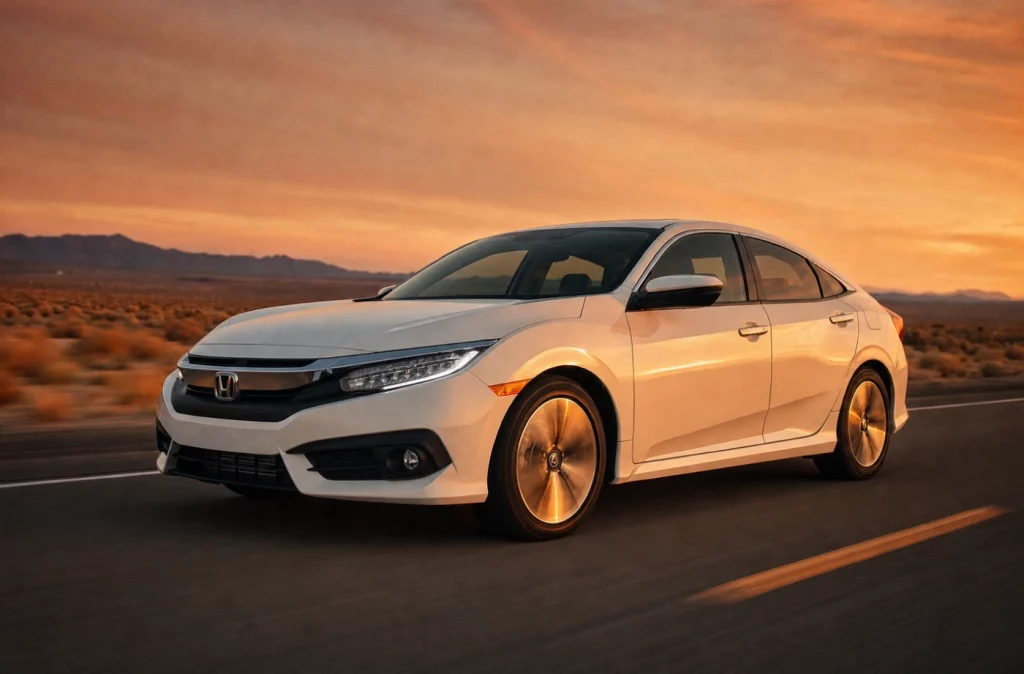
Trade in your beater 8th Gen FG2 for a brand new Civic, and your annual insurance bill will jump 60% to 80% — even though the new car has 10 airbags, a crash cage made of 1,500MPa steel, and enough cameras to land a drone. Welcome to the broken math of US auto insurance.
Here’s how the system actually works, why your “safer” Civic costs more to cover, and how to stop bleeding cash on your monthly premium.
Generation Breakdown — What You’ll Actually Pay
Data from Insure.com and Insuraviz for a standard profile (35-year-old male, clean record, full coverage with a $500 deductible) tells a brutal story. Safety ratings went up. Premiums went up faster. Here’s the damage by chassis:
| Gen / Chassis | Model Years | Annual Premium (Insure.com) | Annual Premium (Insuraviz) | IIHS Status |
|---|---|---|---|---|
| 8th Gen (FA5/FG2) | 2006–2011 | ~$1,500–$1,800 | ~$1,400 | Good (no TSP) |
| 9th Gen (FB6/FG4) | 2012–2015 | $2,070 | $1,386–$1,480 | Top Safety Pick |
| 10th Gen (FC1/FC3/FK7) | 2016–2021 | $2,192–$2,552 | $1,622–$1,964 | Top Safety Pick+ |
| 11th Gen (FE1/FL1/FL5) | 2022–present | $2,553–$3,051 | $2,124–$2,160 | TSP+ / TSP |
An 8th Gen beater costs ~$1,400/year to cover. An 11th Gen FE1 with the same driver? ~$2,786. That’s double the money for a car that’s objectively safer in every crash scenario. Make it make sense.
Why Your “Safer” Civic Screws You on Premiums
Insurance splits into two buckets: Liability (what you owe others) and Physical Damage (collision + comprehensive — aka fixing your own junk). Safety scores help the first bucket. They do jack shit for the second. Here are the three killers:
1. ACV (Actual Cash Value) is the real boss.
That 2008 R18 beater? ACV is maybe $4,000–$5,000. Total it, and the insurance company cuts a small check and moves on. Your 2026 FE1 Sport Touring? $30,000. Your FL5 Type R? $46,000+. Replacement cost dominates collision pricing. A 5% safety discount on liability is pocket change compared to a $25,000 payout difference. This single factor — vehicle value — completely crushes any IIHS trophy you’re flexing.
2. The Honda Sensing “Tax” on repairs.
Older cars had cheap bumpers and glass you could get from Safelite for $200. Modern 10th and 11th Gen cars? Every windshield replacement triggers a mandatory Honda Sensing camera recalibration. That’s an extra $150–$300 tacked onto a simple glass swap. Smack a parking curb and crack the grille-mounted radar unit? That’s another $500–$800 in parts alone. Insurers know modern Civics are expensive to fix, so comprehensive and collision rates get jacked up to cover it.
3. Theft demographics don’t care about airbags.
The Civic is perennially on the NICB’s most-stolen list. 10th Gen Si and Type R models are prime targets for wheel thefts and part-outs. High theft stats hit your comprehensive coverage hard. All the knee airbags in the world won’t stop a thief from cutting your cat or stealing your 19-inch wheels.
Trim-Level Tax — The “Enthusiast Penalty”
If safety features dictated rates, the fully-loaded Touring with all the driver assists would be cheaper than a base LX. Reality check — it’s the opposite. Here’s the 2024 Civic trim premium ladder:
| 2024 Trim | Annual Premium (Insuraviz) | Premium vs LX | MSRP |
|---|---|---|---|
| LX | $1,900 | Baseline | $25,500 |
| Sport | $1,958 | +$58 | $26,500 |
| EX | $2,212 | +$312 | $27,500 |
| Touring | $2,202 | +$302 | $30,000 |
| Si | $2,272 | +$372 | $31,000 |
| Type R (FL5) | $2,516 | +$616 | $46,690 |
Same crash structure. Same airbags. Same Sensing suite. But the Touring costs $300 more than the LX. The Si? $372 more. The Type R? A cool $616 more annually. That’s the “enthusiast tax” — higher-valued components (Bose audio, premium wheels, Brembos), higher repair bills, and statistically riskier driver profiles. Safety has nothing to do with it.
Honda Sensing — The Discount That Doesn’t Move the Needle
Yes, Honda Sensing reduces rear-end crashes by 30-40% per IIHS data. Yes, forward collision warning alone cuts police-reported rear-end collisions by 27%. Those are real numbers. But here’s what the actuaries won’t tell you:
A 2025 FE1 LX with full Sensing costs $2,786/year to insure. A 2014 FB6 LX with no Sensing — just ABS and basic airbags — costs $1,400/year. The Sensing car costs double. Why? Because the 2014 car is worth $8,000–$10,000, and the 2025 car is worth $25,500. That $15,000+ value gap overwhelms any safety discount. The Sensing discount applies to the liability portion only — roughly 5-10%, or about $120–$150/year. Pocket change compared to the generational premium hike.
And the Sensing suite itself costs you money. Windshield replacement on an 11th Gen includes mandatory camera recalibration. That’s $150–$300 extra for a repair that used to cost $200. Your insurer knows this. They price it into your comprehensive rate.
The Actuarial Lag — Why New Tech Gets No Love
When Honda dropped knee airbags and rear side airbags on the 11th Gen in 2022, insurance companies didn’t rush to cut rates. They can’t. Underwriters run on historical claims data, not engineering press releases. A new safety feature needs 3–5 years of real-world crash stats before actuaries can quantify its impact.
So if you bought an FE1 in 2022, you paid peak premium prices for safety tech that won’t even factor into pricing models until 2026–2027. You’re essentially paying for data collection. The 11th Gen’s safety features will lower premiums for future buyers, not for you.
The Brutal Comparison — Civic vs Corolla vs Sentra
Want proof that safety ratings don’t move premiums? Look AT the compact class:
- 2024 Toyota Corolla LE ($24,000 MSRP, IIHS Top Safety Pick) — ~$2,336/year
- 2024 Nissan Sentra SR ($19,000 MSRP, no Top Safety Pick) — ~$2,364/year
Nearly identical premiums despite a $5,000 MSRP gap and a full safety award difference. The safety advantage offsets the value increase but doesn’t create a price advantage. The safer car doesn’t cost less. It costs the same. That’s the ceiling of safety discounts in this segment.
Geography Destroys Safety Discounts
Where you park your Civic matters more than any IIHS award. Same car, same safety equipment, wildly different premiums:
- Illinois: ~$42–$43/month for a 2022 Civic
- Texas: ~$87–$89/month for the exact same 2022 Civic
That’s double the cost. The Safety Pick+ rating doesn’t close the gap. State regulations, medical cost inflation, lawsuit frequency, and fraud rates dominate the pricing algorithm. You can’t insure your way out of Texas’s insurance market.
Actionable Garage Tactics — How to Lower Your Bill
Since you can’t rely on IIHS trophies to cut your premium, here’s how to play the system:
- Crank the deductible to $1,000. Going from $500 to $1,000 shaves 10-15% off your physical damage premium. That’s real money.
- Shop GEICO, Progressive, and State Farm. These carriers consistently underwrite Civic drivers most favorably. Get itemized quotes and compare.
- Manually confirm your safety discounts. Make sure your agent checks the boxes for ABS, VSA, and forward collision warning. It’s only $100–$150/year, but it’s free money.
- Don’t declare cosmetic mods. Slapping Si wheels on your Sport or adding a lip kit? Keep your trim declaration stock. Declaring modifications moves you into a higher-risk tier.
- Consider dropping full coverage on older cars. If your 8th Gen is worth $4,000, do you really need collision coverage? Run the math. Self-insuring a beater can save hundreds per year.
The Bottom Line
The 11th Gen FE1/FL1/FL5 is objectively safer than any Civic that came before it. But “safer” doesn’t mean “cheaper to insure.” It means more expensive sensors, more expensive repairs, higher replacement costs, and a premium that ignores IIHS trophies.
Your insurance company doesn’t care how many airbags you have. They care how much it costs to fix your car when some distracted driver rear-ends you. And on a modern Civic, that number keeps going up.
Buy a Civic because you like the car — not because you think the safety ratings will save you money on insurance. They won’t.
Quick Reference Checklist
☐ 8th Gen (FA5/FG2) beater: ~$1,400/yr — cheap to cover because it’s worth nothing
☐ 11th Gen (FE1/FL1): ~$2,786/yr — 60-80% more for the same driver
☐ ACV (Actual Cash Value) is the #1 premium driver, not safety ratings
☐ Sensing recalibration adds $150–$300 to every windshield replacement
☐ Touring costs $300 more than LX — same crash structure, more expensive parts
☐ Si costs $372 more than LX — enthusiast tax is real
☐ Type R (FL5) costs $616 more than LX — $46,000+ replacement value hurts
☐ Safety discount is ~5-10% on liability only — about $120–$150/year at best
☐ Location (Texas vs Illinois) can double your premium — safety ratings won’t fix that
☐ Best way to save: $1,000 deductible, clean record, shop GEICO/Progressive/State Farm
☐ IIHS Top Safety Pick+ doesn’t measurably reduce premiums vs non-winners in the same class