

Back in 2012, Honda thought they were living in the year 3000. Instead of putting boring little amber lights in the side mirrors like every other carmaker on the planet, they slapped a live video camera under the passenger-side mirror of the 9th Gen Civic and called it LaneWatch. Revolutionary, right?
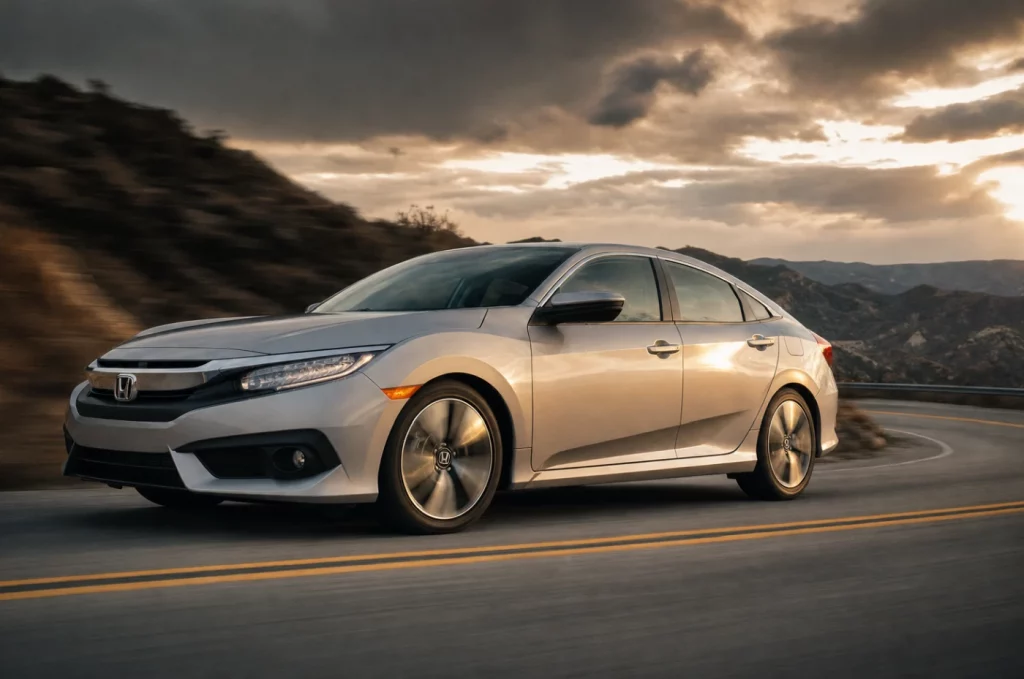
Fast forward to today, and LaneWatch is dead. Buried. Replaced by standard, boring Blind Spot Information (BSI) radar modules hidden inside the rear bumper of the 11th Gen. Honda finally admitted they screwed up.
If you’re hunting for a used 9th, 10th, or 11th Gen Civic (FB6/FG4, FC1/FC3/FK7, FE1/FL1/FL5), you need to know why Honda pulled the plug on their camera experiment, why LaneWatch is a ticking financial time bomb, and which setup keeps you from trading paint on the interstate.
How the Magic Works (Or Fails to Work)
The core philosophy between these two safety nannies couldn’t be more different:
LaneWatch (The Camera Gimmick): You slap your right turn signal down, and a CMOS camera in the passenger mirror projects a live video feed onto your center infotainment screen. No beeps. No warning lights. Just a screen for you to stare AT while you’re supposed to be looking at the road. Brilliant design, Honda.
BSI (The No-Nonsense Radar): Two 77 GHz millimeter-wave radar modules sit silently behind your rear plastic bumper cover. If a car is in your blind spot, an amber icon lights up right in your side mirror glass. If you signal anyway, it flashes angrily at you. No screens required. Your eyes stay forward where they belong.
The Massive Ergonomic Failure: Left Side Blindness
Let’s cut to the biggest joke of the LaneWatch era: Honda never put a camera on the driver’s side.
If you were driving a 10th Gen Civic EX (FC1) and wanted to merge right, you got a glorious wide-angle view of the lane. But if you wanted to merge left into the fast lane, you got absolutely nothing. You had to rely on your old-school neck joints and a standard mirror check like a caveman.
Why? Because Honda claimed looking at the center screen while turning your head left was a “cognitive nightmare.” Translation: they were too cheap to put a second camera on the left mirror. BSI fixes this corporate laziness by covering both sides equally. You get mirror indicators on both doors without changing how you naturally drive. Revolutionary concept, right?
Weather Warfare: Daylight vs. Pouring Rain
On a beautiful, sunny afternoon in California, LaneWatch feels like a supercar feature. You can see three lanes over with crisp lines telling you exactly how many car lengths you have.
But hit a messy winter night in Ohio, and the camera turns into a useless piece of junk:
- Night Blindness: The CMOS sensor has zero night vision illumination. On unlit highways, the feed becomes a grainy, dark mess of headlight glare. Good luck seeing anything.
- The Water Droplet Curse: Spend five minutes on CivicX.com forums, and you’ll find endless threads complaining about rain. One single water droplet sitting on the camera lens completely blurs the entire video feed. Add a fogged-up side window, and you’re blind.
- Sun Wash: Direct sun glare blinding the lens completely washes out the screen contrast. Hope you weren’t counting on that camera to merge.
Radar (BSI) doesn’t care about your weather problems. Millimeter waves punch right through heavy rain, blinding blizzards, dense fog, and direct sunlight. The amber mirror light works perfectly whether it’s noon or midnight. The only flaw? Radar sometimes panics and throws a false alert if you drive too close to a metallic guardrail or a concrete median barrier. But I’ll take a false alert over a black screen any day.
| System Characteristic | LaneWatch (Camera) | BSI (Radar) |
|---|---|---|
| Sensor location | Passenger mirror housing | Rear bumper (protected) |
| Sides covered | Passenger side ONLY | Both sides |
| Driver must look at screen? | Yes (eyes off road) | No (eyes forward) |
| Works at night? | Poor — grainy, dark | Excellent |
| Works in rain? | Poor — water droplets blur | Excellent — radar penetrates rain |
| Works in direct sun? | Poor — camera washes out | Excellent |
| Failure frequency | Common (water ingress) | Rare (protected) |
Trim and Generation Availability — Who Got What
Here’s the breakdown of which Civic you actually got this stuff on:
| Generation | Model Years | System | EX and above | LX / Sport |
|---|---|---|---|---|
| 9th Gen (FB6/FG4) | 2012–2015 | LaneWatch | Standard | Not available |
| 10th Gen (FC1/FC3/FK7) | 2016–2021 | LaneWatch | Standard | Not available |
| 11th Gen (FE1/FL1/FL5) | 2022–present | BSI (radar) | Standard | Not available |
Translation for used buyers: If you’re looking at a 9th or 10th Gen LX or Sport, you get nothing. Just mirrors and hope. If you want the camera gimmick, you need EX or above. On the 11th Gen, EX and above get BSI. LX and Sport? Still nothing. Honda loves their base trim buyers.
The Reliability Time Bomb — Why LaneWatch Will Make You Bleed Cash
If you’re shopping for a used 9th Gen (FB6) or 10th Gen (FK7) Civic, check that passenger camera immediately.
The LaneWatch camera housing is completely exposed to road debris, automatic high-pressure car washes, and brutal temperature cycles. Over time, the rubber weather seal degrades, leading to water ingress. First, your screen looks like it’s underwater. Then the CMOS sensor shorts out completely. Dead.
If it dies, get ready for the Dealer Tax:
- The OEM camera assembly alone costs roughly $500–$590
- You can’t just plug it in and drive away — it requires a manual dealer calibration using a physical target chart to line up the distance markers
- Total bill at a Honda dealership? $600 to $800 to fix a single camera.
BSI is tucked safely inside the rear bumper structure. It’s completely protected from the elements. Failures on the 11th Gen (FE1/FL5) are incredibly rare. The downside? If someone cracks your rear bumper in a parking lot, they might crush the radar module or tweak its mounting bracket. Replacing a BSI module costs about $550–$750 per side because the shop has to drop the entire rear bumper cover just to bolt it in.
| Cost Factor | LaneWatch | BSI (per side) |
|---|---|---|
| OEM part MSRP | $500–$590 | $400–$500 |
| Labor (dealer) | $100–$180 | $150–$250 (bumper removal) |
| Calibration required? | Yes (target chart) | No (bolt-in) |
| Total dealer replacement | $600–$800 | $550–$750 |
| Failure frequency | Common (water ingress) | Rare |
| Junkyard option | $50–$150 (same seal risk) | $100–$200 (better survival) |
Why Honda Finally Killed LaneWatch
Car and Driver confirmed in April 2019 that Honda was discontinuing LaneWatch across all models. The official reason? Honda never publicly admitted it. But the writing was on the wall:
- One side only. The driver’s side blind spot was completely ignored.
- Eyes-off-road display. Looking at a screen while merging is objectively stupid.
- Reliability nightmare. The cameras failed constantly from water ingress.
- Competitors had BSI. By 2020, every compact car competitor — Corolla, Mazda3, Elantra — had dual-side radar with mirror indicators. Honda was a decade behind.
BSI brings the Civic in line with the rest of the segment. No more camera gimmicks. No more left-side blindness. Just boring, reliable radar that works in the rain.
Used Buyer Guide: Gimmick vs. Tank Mode
9th & 10th Gen (2012–2021) — The LaneWatch Era:
- LaneWatch was standard on EX trims and above (LX and Sport got regular glass)
- It’s a cool party trick, but treat it as a luxury option that will eventually leak water and die
- Always test the right turn signal on a test drive. If the screen stays black, demand an $800 discount
- The driver’s side? No coverage at all. You’re on your own merging left
11th Gen (2022–Present) — The BSI Tank Mode:
- Honda finally admitted defeat and killed LaneWatch fleet-wide
- BSI covers both sides equally with mirror indicators
- Works forever, keeps your eyes on the road, and protects both sides of your quarter panels
- Spikes your insurance slightly because bumpers are now expensive to replace
- Vastly superior for daily survival — no camera gimmicks, no left-side blindness
The Bottom Line
LaneWatch was a neat idea that Honda never fully committed to. One camera on one side, eyes-off-road display, terrible in bad weather, and a guaranteed failure within 5-10 years. BSI is boring. BSI is standard. BSI works in the rain. BSI covers both sides. BSI keeps your eyes on the road.
If you’re buying a used 9th or 10th Gen EX or above, test the right turn signal and budget for a $600-800 camera replacement. If you’re buying an 11th Gen, enjoy the tank mode — it just works.
Quick Reference Checklist
☐ LaneWatch: Camera in passenger mirror. Passenger side ONLY.
☐ BSI: Radar modules in rear bumper. Both sides.
☐ LaneWatch requires looking at the center screen. BSI keeps eyes on the road.
☐ LaneWatch was on 9th & 10th Gen EX and above (2012–2021).
☐ BSI is on 11th Gen EX and above (2022+).
☐ LaneWatch in rain: useless — water droplets blur the lens.
☐ BSI in rain: works fine — radar penetrates precipitation.
☐ LaneWatch at night: grainy, dark, borderline useless.
☐ BSI at night: perfect — unaffected by ambient light.
☐ LaneWatch failure: common — water ingress through mirror seal. $600–$800 to fix.
☐ BSI failure: rare — protected inside bumper. $550–$750 per side to replace.
☐ Honda discontinued LaneWatch in 2019. 2021 was the last year.
☐ Used buyer rule: Test LaneWatch on any 2012–2021 EX or above before buying. If it’s dead, negotiate $800 off.
☐ The 10th Gen Si and Type R? No LaneWatch. No BSI. Just mirrors. Honda really screwed performance buyers on blind spot tech.