

The National Highway Traffic Safety Administration (NHTSA) 5-Star Safety Ratings program has tested the Honda Civic across four generations since 2006, but comparing scores across those years is not straightforward. The test protocol changed significantly in 2011 with a stricter side impact barrier, tighter chest deflection criteria, and the addition of the rollover resistance rating. The side pole test was added in 2012. A 5-star rating from 2006 and a 5-star rating from 2022 represent different levels of occupant protection because the later car was tested against a more demanding crash profile. This article presents every NHTSA star score for the Honda Civic from the 8th generation through the 11th generation, organized by model year and body style, with the protocol context needed to interpret the numbers.
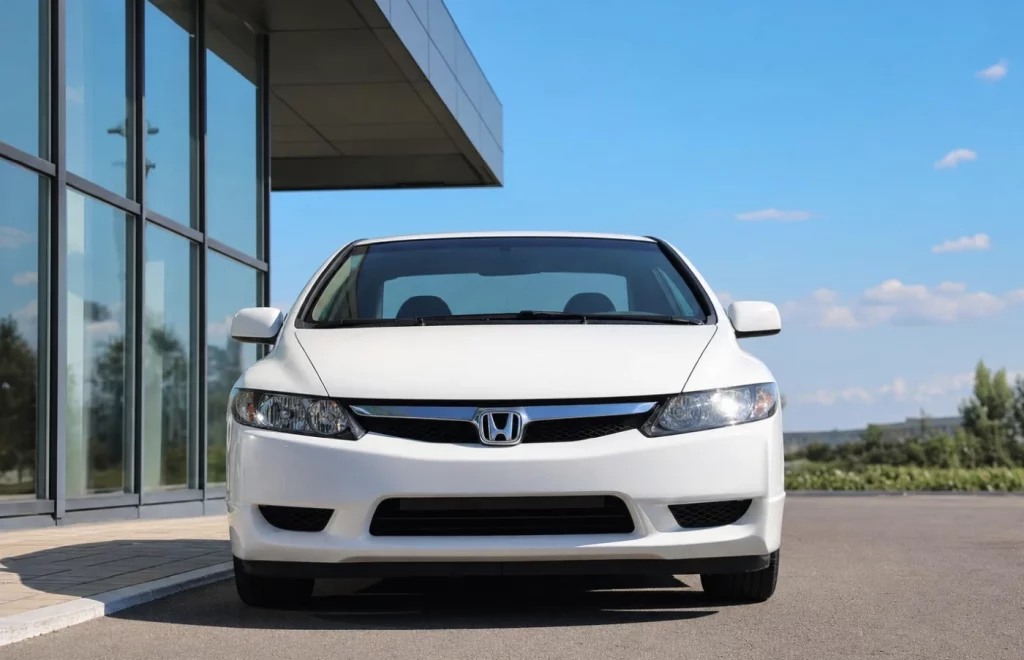
NHTSA Protocol Changes That Affect Civic Scores
The 5-Star Safety Ratings program has been updated several times since the Civic’s 8th generation debuted. Understanding these changes is necessary to avoid comparing scores across incompatible test conditions.
Pre-2011 protocol (2006–2010 model years). The frontal test used a 35 mph full frontal impact into a rigid barrier. The side impact test used a moving barrier AT 38 mph. Rollover resistance was not part of the NCAP rating system during these years. The 8th generation Civic tested under this protocol earned 5 out of 5 stars in frontal driver, frontal passenger, and side passenger categories. Side driver protection scored 4 out of 5 because the seat-mounted side airbag provided less comprehensive torso coverage than the later curtain airbag designs (NHTSA NCAP data, 2006–2010).
2011 NCAP update. NHTSA introduced a tougher side impact barrier, more stringent chest deflection criteria, and the rollover resistance rating. The 2011 Civic (still 8th generation, but tested under the new protocol) scored 4 out of 5 overall with 3 out of 5 frontal, 3 out of 5 side, and 3 out of 5 rollover. These scores appear significantly lower than the 2006–2010 results, but the test was substantially harder. The 2011 scores cannot be directly compared to the 2006–2010 scores (NHTSA NCAP).
2012 side pole test. The 2012 model year introduction of the side pole test (a 20 mph side impact into a 10-inch diameter pole at a 75-degree angle behind the A-Pillar) added a new dimension to the side rating. The 9th generation Civic, redesigned for 2012, was the first Civic tested with this protocol and earned 5 out of 5 overall (NHTSA NCAP; Cars.com, 2012).
Post-2016 protocol. The 10th generation Civic (2016) was tested under the current NCAP framework. The sedan and hatchback earned a perfect 5 out of 5 sweep across overall, frontal, side, and rollover categories — the first Civic to do so. The 11th generation (2022–present) maintained this performance with 29 out of 30 possible points across six sub-categories (NHTSA NCAP, 2016–2025).
8th Generation (2006–2011) — The Protocol Split
The 8th generation Civic is unique because it was tested under two different NHTSA protocols in the same generation. The 2006–2010 models were tested under the original NCAP protocol; the 2011 model was tested under the tougher 2011 update.
2006–2010 (pre-2011 protocol). The 2-door coupe and 4-door sedan both earned 5 out of 5 stars for frontal driver, frontal passenger, and side passenger protection. Side driver protection was 4 out of 5 on both body styles. Rollover resistance was not tested during these years — NHTSA did not assign a rollover rating to any Civic from 2006 through 2010. The 2007 GX (CNG) and Hybrid followed the same pattern as the gasoline sedan (NHTSA NCAP data).
2009–2010 Hybrid and GX. The Hybrid and CNG variants were structurally identical to the gasoline sedan and earned the same scores: 5/5 frontal driver, 5/5 frontal passenger, 5/5 side passenger, 4/5 side driver. No rollover rating (NHTSA NCAP).
2011 (post-2011 protocol). The 2011 Civic 4-door sedan, tested under the new NCAP protocol, scored 4 out of 5 overall with 3 out of 5 frontal, 3 out of 5 side, and 3 out of 5 rollover. The 2-door coupe (with side airbags) was not assigned overall, frontal, or side ratings when tested under this protocol — only rollover at 4 out of 5. The Hybrid and CNG matched the sedan’s 4/3/3/3 scores (NHTSA NCAP).
9th Generation (2012–2015) — First 5-Star Overall and the 2012–2013 Split
The 9th generation Civic was introduced for the 2012 model year with the next-generation Advanced Compatibility Engineering (ACE) body structure. This generation was the first Civic to earn a 5-star overall NHTSA rating. The 2012 model year scored 5 out of 5 in both frontal and side categories, with 4 out of 5 in rollover. For the 2013 model year, Honda significantly re-engineered the Civic (reinforced ACE body structure, additional structural improvements) after the 2012 model received criticism for its interior quality. The 2013–2015 models scored 5 out of 5 overall, 5 out of 5 frontal, but side protection dropped to 4 out of 5 compared to the 2012 model’s 5 out of 5 side. Rollover remained at 4 out of 5 (NHTSA NCAP; Honda Newsroom, 2013).
The 2013 Civic Sedan also became the first small car to earn the IIHS Top Safety Pick+ award, including a Good rating in the new small overlap frontal crash test — a test that NHTSA does not conduct but that the IIHS introduced in 2012 (Honda Newsroom, May 9, 2013).
10th Generation (2016–2021) — The Perfect Sweep
The 10th generation Civic was redesigned on a completely new global platform with a lighter, stiffer body structure. This generation achieved the first perfect 5 out of 5 sweep across all NHTSA categories for the sedan and hatchback variants.
Sedan and hatchback (2016–2021). The 4-door sedan and 5-door hatchback (introduced for the 2017 model year) both earned 5 out of 5 in overall, frontal, side, and rollover categories. Every sub-category scored 5 out of 5. This was the first Civic generation to achieve a perfect 5-star rollover rating (NHTSA NCAP; CarBuzz, 2024).
Coupe (2016–2020). The 2-door coupe earned 5 out of 5 overall, 5 out of 5 frontal, 5 out of 5 side, and 4 out of 5 rollover. The lower rollover score is a structural limitation of the coupe body style — the shorter Wheelbase and different roof structure produce a higher dynamic rollover risk. CarBuzz reports the coupe scored 4 out of 5 in frontal as well, but the NHTSA dataset shows 5 out of 5 frontal for the coupe (CarBuzz, 2024).
Civic Si (10th gen). The Si sedan received 5 out of 5 in every NHTSA category — the stiffer suspension and lower ride height did not degrade rollover resistance compared to the base sedan. The Si coupe scored 5 out of 5 overall, 5 out of 5 frontal, 5 out of 5 side, and 4 out of 5 rollover.
Civic Type R (FK8, 2017–2021). NHTSA did not assign overall or frontal ratings for the FK8 Type R. Side impact: 5 out of 5. Rollover: 5 out of 5. The Type R’s unique front structure and powertrain layout required separate certification that was not completed under the standard NCAP protocol.
11th Generation (2022–Present) — Holding the Ceiling
The 11th generation Civic, redesigned for the 2022 model year, carried forward the 10th generation’s 5 out of 5 overall performance with incremental improvements in subcategory scores. The sedan, hatchback, and Si sedan all achieved 5 out of 5 overall with 29 out of 30 possible points across the six sub-categories (driver front, passenger front, driver side, passenger side, side pole, rollover). One sub-category dropped to 4 out of 5 across all variants, but the 29 out of 30 total places the 11th generation Civic at the top of the small car class under the current NCAP protocol (NHTSA NCAP, 2022–2025).
The 11th gen Si sedan scores identically to the base sedan: 5 out of 5 overall, 5 out of 5 frontal, 5 out of 5 side, 5 out of 5 rollover. The Type R (FL5) has not been separately rated by NHTSA for the 11th generation as of the 2025 model year, though Edmunds data for the 2025 Type R shows 5 out of 5 side and 5 out of 5 rollover with a 4 out of 5 frontal barrier overall rating (Edmunds, 2025; NHTSA NCAP).
The 11th generation also added the Civic Hybrid for the 2025 model year. The Hybrid sedan and hatchback share the same body structure as the gasoline variants and carry the same NHTSA ratings (Honda Newsroom, 2024).
Complete NHTSA Star Scores by Generation, Body Style, and Model Year
| Generation | Model Years | Body Style | Overall | Frontal | Side | Rollover | NCAP Protocol |
|---|---|---|---|---|---|---|---|
| 8th | 2006–2010 | 4-door sedan | NR | 5/5 | 5/5 Pass / 4/5 DR | Not tested | Pre-2011 |
| 8th | 2006–2010 | 2-door coupe | NR | 5/5 | 5/5 Pass / 4/5 DR | Not tested | Pre-2011 |
| 8th | 2006–2010 | Hybrid / GX sedan | NR | 5/5 | 5/5 Pass / 4/5 DR | Not tested | Pre-2011 |
| 8th | 2011 | 4-door sedan | 4/5 | 3/5 | 3/5 | 3/5 | 2011 update |
| 8th | 2011 | 2-door coupe | NR | NR | NR | 4/5 | 2011 update |
| 8th | 2011 | Hybrid / GX sedan | 4/5 | 3/5 | 3/5 | 3/5 | 2011 update |
| 9th | 2012 | 4-door sedan | 5/5 | 5/5 | 5/5 | 4/5 | Post-2011 + side pole |
| 9th | 2012 | 2-door coupe | 5/5 | 5/5 | 5/5 | 4/5 | Post-2011 + side pole |
| 9th | 2013–2015 | 4-door sedan | 5/5 | 5/5 | 4/5 | 4/5 | Post-2011 + side pole |
| 9th | 2013–2015 | 2-door coupe | 5/5 | 5/5 | 4/5 | 4/5 | Post-2011 + side pole |
| 9th | 2013–2015 | Hybrid sedan | 5/5 | 5/5 | 4/5 | 4/5 | Post-2011 + side pole |
| 10th | 2016–2021 | 4-door sedan | 5/5 | 5/5 | 5/5 | 5/5 | Current |
| 10th | 2017–2021 | 5-door hatchback | 5/5 | 5/5 | 5/5 | 5/5 | Current |
| 10th | 2016–2020 | 2-door coupe | 5/5 | 5/5 | 5/5 | 4/5 | Current |
| 10th | 2016–2021 | Si sedan | 5/5 | 5/5 | 5/5 | 5/5 | Current |
| 10th | 2016–2020 | Si coupe | 5/5 | 5/5 | 5/5 | 4/5 | Current |
| 10th | 2017–2021 | Type R (FK8) | NR | NR | 5/5 | 5/5 | Current |
| 11th | 2022–2025 | 4-door sedan | 5/5 | 5/5 | 5/5 | 5/5 | Current |
| 11th | 2022–2025 | 5-door hatchback | 5/5 | 5/5 | 5/5 | 5/5 | Current |
| 11th | 2022–2025 | Si sedan | 5/5 | 5/5 | 5/5 | 5/5 | Current |
| 11th | 2025 | Hybrid sedan / hatchback | 5/5 | 5/5 | 5/5 | 5/5 | Current |
| 11th | 2023–2025 | Type R (FL5) | NR | 4/5* | 5/5 | 5/5 | Current |
NR = Not rated or not assigned by NHTSA. * = Edmunds-sourced data for 2025 Type R, frontal barrier overall rating (driver 5/5, passenger 4/5). Type R frontal and overall ratings are not part of the standard NCAP certification. Sources: NHTSA 5-Star Safety Ratings database (nhtsa.gov/ratings), CarBuzz 10th gen Safety section (2024), Edmunds 2025 Civic Type R (2024), Cars.com (2012), Honda Newsroom (2013).
The Coupe Rollover Limitation
The 2-door coupe variant consistently scores 4 out of 5 in rollover resistance while the sedan and hatchback score 5 out of 5. This is not a defect — it is a geometric reality of the shorter coupe body style. NHTSA’s rollover resistance rating is based on the Static Stability Factor (SSF), which is calculated from track width and center of gravity height. The coupe has a narrower track and different mass distribution than the sedan, producing a lower SSF value. The dynamic rollover test confirms this: the coupe has a higher probability of tip-up in the fishhook maneuver. This affects the 10th generation coupe (4/5 rollover) and the 8th generation coupe (not tested, but would have been 4/5 under the 2011 protocol).
The 9th generation coupe was not separately rated — NHTSA assigned the sedan’s 5/5 overall to the coupe for 2012, and the 2013–2015 coupe matched the sedan’s 5/5 overall with 4/5 side and 4/5 rollover.
IIHS Ratings for Context
NHTSA scores are one part of the safety picture. The Insurance Institute for Highway Safety (IIHS) tests additional scenarios that NHTSA does not, including the small overlap frontal crash (a 25% offset impact on the driver’s side) and headlight effectiveness. The IIHS results for each generation provide useful context:
8th generation (2006–2011). The 8th gen Civic earned Good in the IIHS moderate overlap front test and Acceptable in the side impact test. The small overlap frontal test was not introduced until 2012, so this generation was never tested for that scenario.
9th generation (2012–2015). The 2012 Civic earned Acceptable in the small overlap driver-side test. The significantly re-engineered 2013 Civic earned Good in the small overlap driver-side test, making it the first small car to earn the IIHS Top Safety Pick+ award (Honda Newsroom, May 9, 2013).
10th generation (2016–2021). The 10th gen Civic earned Good in all IIHS crashworthiness tests (moderate overlap front, driver-side small overlap, side, roof strength, head restraints) when equipped with the optional front crash prevention system. The passenger-side small overlap test was Good for 2018 and later models after a front bumper modification (IIHS, 2016–2021 ratings). The headlight rating was Poor for most trims before the 2020 model year, when the Touring and Si trims built after November 2019 received LED reflector lights rated Good.
11th generation (2022–2025). The 11th gen Civic earned Good across all IIHS crashworthiness tests. The updated side impact test (2022) returned Good results. Headlight ratings improved compared to the 10th generation. The front crash prevention system (Honda Sensing) earned Superior ratings in vehicle-to-vehicle tests (IIHS, 2022–2025 ratings).
Which Generation Has the Best NHTSA Safety Record?
Under the current NCAP protocol (2011 onward, with side pole testing after 2012), the 10th generation sedan and hatchback (2016–2021) and the 11th generation (2022–present) are tied for the highest NHTSA scores. Both achieve 5 out of 5 in every category for the sedan and hatchback body styles. The 11th generation edges ahead on IIHS criteria with better headlight ratings and a stronger passenger-side small overlap result.
However, the context matters: the 10th generation was the first Civic to achieve a perfect 5 out of 5 in rollover resistance and the first to sweep every NHTSA category. That was a genuine achievement in 2016. The 11th generation maintained that performance against the same test standards, which is an accomplishment in its own right given that NHTSA has not tightened the protocol since 2011.
For used-car buyers: any Civic from the 9th generation (2012–2015) or newer with a 5-star overall rating is a safe vehicle by NHTSA standards, provided it is equipped with side curtain airbags (standard on all Civics from 2012 onward in the US market). The 8th generation Civics (2006–2010) scored well for their era but lack the structural improvements of the ACE body structure used in the 9th generation and later. The 2011 Civic (8th gen, 2011 protocol) has the lowest absolute scores of any generation under a single consistent protocol.
NHTSA Safety Ratings Checklist — Honda Civic:
☐ 8th gen (2006–2010): 5/5 front, 4/5 side driver, 5/5 side passenger. No rollover rating. Pre-2011 protocol — do not compare directly to later generations (NHTSA NCAP, 2006–2010)
☐ 8th gen (2011): 4/5 overall, 3/5 frontal, 3/5 side, 3/5 rollover. Tested under the 2011 NCAP update. Lowest absolute scores of any generation under a consistent protocol (NHTSA NCAP)
☐ 9th gen (2012): 5/5 overall — first Civic to earn 5-star NHTSA overall. 5/5 frontal, 5/5 side, 4/5 rollover. Side pole test introduced this year (Cars.com, 2012)
☐ 9th gen (2013–2015): 5/5 overall, 5/5 frontal, 4/5 side, 4/5 rollover. Side score dropped by 1 star from 2012 after tighter chest deflection criteria. Re-engineered ACE body structure (Honda Newsroom, 2013)
☐ 10th gen sedan/hatchback (2016–2021): 5/5 overall, 5/5 frontal, 5/5 side, 5/5 rollover — perfect sweep. First Civic to achieve 5-star rollover (NHTSA NCAP)
☐ 10th gen coupe (2016–2020): 5/5 overall, 5/5 frontal, 5/5 side, 4/5 rollover. Coupe structural limitation — not a defect (NHTSA NCAP)
☐ 10th gen Si sedan: 5/5 in every category. Matches base sedan
☐ 10th gen Type R (FK8): No overall rating. Side 5/5, rollover 5/5 (NHTSA NCAP)
☐ 11th gen sedan/hatchback/Si (2022–2025): 5/5 overall, 29/30 points. Matches 10th gen performance. Rollover holds at 5/5 (NHTSA NCAP, 2022–2025)
☐ 11th gen Type R (FL5): No NHTSA overall rating as of 2025. Edmunds shows 4/5 frontal barrier overall, 5/5 side, 5/5 rollover (Edmunds, 2025)
☐ Coupe body style: consistently scores 4/5 rollover across all generations due to shorter wheelbase and higher SSF-based rollover risk — structural, not repairable
☐ Protocol warning: a 5-star rating from 2006 and a 5-star rating from 2022 are not equivalent — the 2022 car was tested against a more demanding crash profile with tighter injury metrics (NHTSA NCAP protocol history)
☐ For used-car shopping: any 9th gen or later Civic (2012+) with 5/5 overall NHTSA rating + standard side curtain airbags is a strong safety choice. 10th gen (2016+) is the target for buyers who want the perfect-sweep scores