

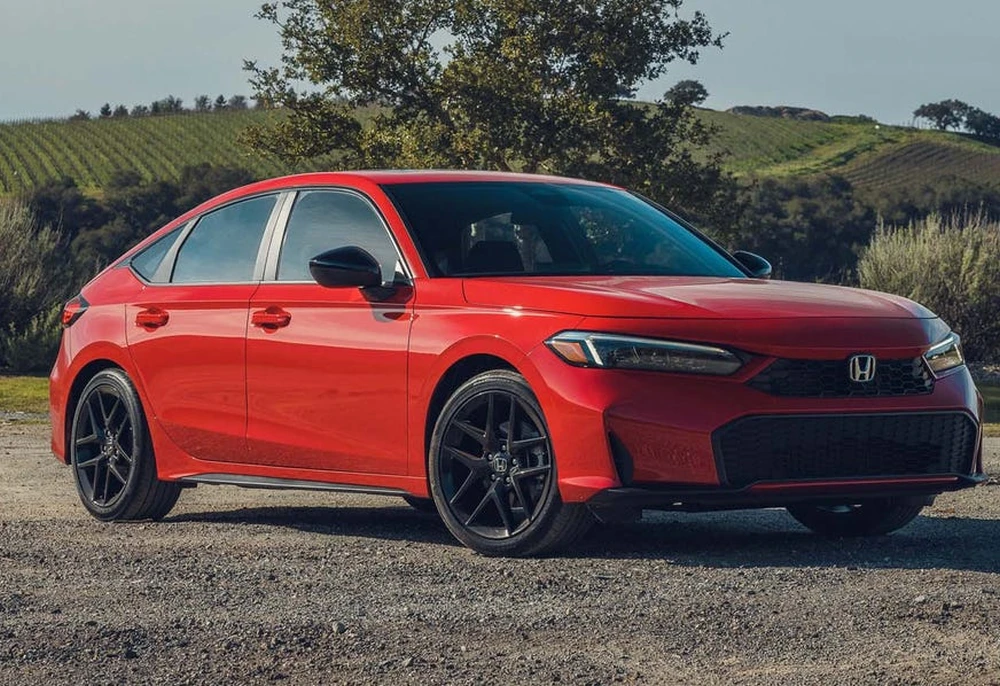
So Honda finally dropped the 2025 Civic Hybrid back in the US after a 10-year hiatus. And honestly? The spec sheet looks like fan fiction on paper: 200 ponies, 232 lb-ft of twist, 49 mpg combined for the sedan, and a 0-60 that allegedly humiliates the Si. But here’s the kicker — it actually delivers those numbers in the real world. No lab-optimized EPA fairy tales. Fuelly data, third-party road tests, and forum owner reports all cluster within a hair of the window sticker. That’s rare air for any hybrid, let alone in the compact segment.
Under the Hood — Ditching the L15B7 for a Two-Motor Setup
Honda ditched the turbo 1.5L (L15B7) in the hybrid and dropped in the fourth-gen two-motor system — same bones as the Accord and CR-V hybrids. It’s a 2.0-liter Atkinson-cycle four-banger working in series with a pair of electric motors (one generator, one driving the front wheels) through a direct-drive gearbox Honda calls an eCVT. And before you groan, this isn’t the rubber-band CVT from the base Civic. No belts, no pulleys, no fake stepped ratios. The engine mostly acts as a generator at low-to-mid speeds, with a mechanical lock-up clutch that directly couples it to the wheels on the highway for max efficiency.
Total system output? 200 hp at 6,000 RPM and a fat 232 lb-ft of torque that hits damn near off-idle thanks to instant e-motor response. This is a completely different animal than the 1.5T it replaces (180 hp, 177 lb-ft). The hybrid serves up more grunt at literally any speed, with zero turbo lag and zero CVT drone. Just linear, relentless shove.
| Specification | 2025 Civic Hybrid | 2024 Civic 1.5T CVT | 2025 Civic Si 6MT |
|---|---|---|---|
| Engine | 2.0L Atkinson + 2 motors | 1.5L turbo L15B7 | 1.5L turbo L15CA |
| Horsepower | 200 @ 6,000 RPM | 180 @ 6,000 RPM | 200 @ 6,000 RPM |
| Torque | 232 lb-ft | 177 lb-ft | 192 lb-ft |
| Transmission | Direct-drive eCVT | Belt CVT | 6-speed manual |
Sources: Car and Driver instrumented test (June 2024), Honda official specifications, Honda Newsroom.
EPA Numbers — What Honda Slapped on the Sticker
The 2025 Civic Hybrid lands in two flavors (Sport Hybrid and Sport Touring Hybrid) across sedan and hatchback bodystyles. EPA ratings shuffle slightly depending on weight and aero. Here’s the breakdown:
| Body Style / Trim | EPA City | EPA Highway | EPA Combined | Tank (gal) | Max Range (combined) |
|---|---|---|---|---|---|
| Sport Hybrid Sedan | 50 | 47 | 49 | 10.6 | 519 miles |
| Sport Touring Hybrid Sedan | 50 | 47 | 49 | 10.6 | 519 miles |
| Sport Hybrid Hatchback | 50 | 45 | 48 | 10.6 | 509 miles |
| Sport Touring Hybrid Hatchback | 50 | 45 | 48 | 10.6 | 509 miles |
Sources: EPA fueleconomy.gov, Honda Newsroom 2025 Civic Hatchback Feature Guide, Honda official EPA ratings.
The sedans edge out the hatches by 1 mpg combined (49 vs 48) thanks to less weight and better aero. Honestly though, that’s within measurement noise on a windy day. All hybrids get a 10.6-gallon tank — 1.8 gallons smaller than the gas-only cars — but the efficiency more than makes up for it. EPA combined range hits 519 miles for the sedan, 509 for the hatch.
Real-World MPG — What Daily Drivers Are Actually Seeing
Here’s the part that surprised everyone: the real-world fuel economy actually tracks the EPA ratings. Fuelly data from 212 verified 2025 Civic Hybrid owners (as of June 2026) shows a 46.7 mpg average, with the bulk of entries clustered between 44 and 50 mpg. That’s within 2 mpg of the sedan’s 49 mpg combined rating — well within the margin for driving habits and terrain.
Car and Driver’s 75-mph highway loop returned 47 mpg on the Sport Touring sedan — dead-on the EPA highway number. Their overall observed average was 42 mpg, but that includes drag-strip launches, WOT pulls, and track time that would never happen in a daily commute. Normal owners are seeing 44-50 mpg depending on climate and route.
Key real-world observations from CivicX, Reddit, and Fuelly logs:
- City driving (stop-and-go): 48-53 mpg. This is where the system shines — max regen, minimum engine runtime. EPA’s 50 mpg city rating is absolutely achievable in warm weather with a light right foot. A few guys on CivicX claim they’ve cracked 55 mpg on surface streets AT 35-40 mph.
- Highway cruising at 70-75 mph: 43-47 mpg. The hybrid loses its edge here because the engine stays locked in direct-drive mode continuously. EPA highway (47 sedan / 45 hatch) is doable at 65 mph, but expect a 2-3 mpg hit for every 5 mph over 70.
- Cold weather (below 30°F): 38-43 mpg. Winter range loss is a thing with all hybrids — the engine runs more often just to generate cabin heat, and cold batteries hate regen. The Civic Hybrid takes about a 20-25% hit in winter, which is par for the segment.
- Hot weather (90°F+ with A/C): 44-48 mpg. A/C draw cuts into EV mode time, but the hit is smaller than winter — roughly 8-12% loss. Still solid.
- Mixed commuting (suburban/back roads): 46-50 mpg. This is the sweet spot. Moderate speeds, frequent regen opportunities, moderate climate load. The daily driver’s dream.
The Performance Bombshell — It Gaps the Si
Car and Driver clicked off a 0-60 mph time of 6.2 seconds in the 2025 Civic Hybrid Sport Touring sedan. Let that sink in — that’s quicker than the 2025 Civic Si (6.6 seconds) and absolutely dusts the 1.5T CVT (7.2 seconds). The hatchback actually did 6.1 seconds, probably thanks to slightly better weight distribution. Quarter-mile? 14.9 seconds at 92 mph. That makes it the fastest non-Type-R Civic in the current lineup, period. Even the Si can’t touch that ET.
Braking from 70-0 mph is 180 feet, and skidpad grip registers 0.84 g. These numbers aren’t Si territory (111 feet, 0.90-0.92 g), but they’re competitive with the 1.5T CVT cars and perfectly adequate for a daily driver that sees occasional canyon runs.
The trade-off? Weight. The hybrid sedan tips the scales at roughly 3,208 lbs — about 130 lbs heavier than a 1.5T CVT sedan and 255 lbs porkier than the Si. That extra mass is over the rear axle (battery pack sits under the rear seat), which actually flattens the weight distribution a bit, but you’ll feel the inertia in tighter corners.
VS the Competition — Why the Civic Finally Wakes Up
The compact hybrid sedan segment in the US boils down to three players: the Civic Hybrid, the Toyota Corolla Hybrid, and the Hyundai Elantra Hybrid. Each takes a completely different approach to the powertrain. Here’s how they stack up:
| Specification | 2025 Civic Hybrid | 2025 Corolla Hybrid FWD | 2025 Elantra Hybrid Blue |
|---|---|---|---|
| Combined HP | 200 | 138 | 139 |
| EPA City | 50 | 53 | 51 |
| EPA Highway | 47 | 46 | 58 |
| EPA Combined | 49 | 50 | 54 |
| Tank (gal) | 10.6 | 11.3 | 11.0 |
| Max Range (combined) | 519 mi | 565 mi | 594 mi |
| 0-60 (Car and Driver) | 6.2 sec | ~8.5 sec* | ~7.5 sec* |
| Starting MSRP | $30,100 | $24,835 | $26,750 |
*Estimated from manufacturer figures and independent tests — Car and Driver hasn’t published instrumented results for the 2025 Corolla Hybrid or Elantra Hybrid as of June 2026.
Sources: EPA fueleconomy.gov (all three vehicles), Hyundai USA official specs (Elantra Hybrid 51/58/54), Toyota USA Newsroom (Corolla Hybrid 53/46/50), Honda Newsroom (Civic Hybrid 50/47/49), Car and Driver instrumented test (Civic Hybrid), Fuelly user data.
The Elantra Hybrid Blue wins the highway and combined MPG game — lighter curb weight, a six-speed DCT that locks up efficiently at cruise, and an Atkinson tune that’s hyper-miler friendly. But the Civic Hybrid absolutely spanks both in power. 200 HP vs 138/139 is not even a contest. The Civic’s 6.2-second 0-60 puts it in a completely different zip code than the Corolla (a glacial ~8.5 seconds) and even the Elantra (~7.5 seconds). And the Civic’s real-world fuel economy (46-47 mpg observed) is close enough that the performance gap becomes the deciding factor for anyone who actually enjoys driving.
Annual Fuel Cost — Crunching the Numbers
Using Fuelly real-world averages and the EPA combined ratings, here’s the annual fuel cost at 12,000 miles with regular unleaded at $3.50/gallon:
| Model | Observed MPG (Fuelly) | Gallons per Year | Annual Fuel Cost |
|---|---|---|---|
| 2025 Civic Hybrid | 46.7 | 257 | $899 |
| 2025 Corolla Hybrid FWD | ~48* | ~250 | ~$875 |
| 2025 Elantra Hybrid Blue | ~50* | ~240 | ~$840 |
*Limited Fuelly sample size for 2025 model year — estimated from EPA combined.
Sources: Fuelly (Civic Hybrid: 212 vehicles, 46.7 mpg avg), EPA fueleconomy.gov annual fuel cost estimates.
At 12,000 miles a year, the Civic Hybrid runs you about $899 in fuel. Compare that to a 2025 Civic Si on premium — that’s $1,640/year — and you’re saving over $700 annually. Against the 1.5T CVT ($1,236/year), you’re saving roughly $340. That hybrid price premium ($1,500-$2,000 over the equivalent gas trim) pays for itself in about three years just at the pump.
Real-World Range — Fewer Fuel Stops Than Any Gas Civic
Despite the smaller 10.6-gallon tank, the hybrid rolls further on a full load than any gas-only Civic. EPA combined range is 519 miles (sedan) or 509 miles (hatchback). In real-world mixed driving at 46.7 mpg, you’re looking at roughly 495 miles of usable range. A Los Angeles-to-San Francisco round trip (about 760 miles) takes about 1.5 fuel stops in the hybrid, versus 2 in a 1.5T CVT or Si.
The low-fuel light kicks on with about 1.3-1.6 gallons left — that’s 60-75 miles of reserve, standard Honda calibration.
The Catch — What the EPA Sticker Doesn’t Tell You
The Civic Hybrid’s efficiency is legit, but there are three things you need to know before you swipe the card:
- Winter range loss is real. All hybrids take a 20-30% hit in sustained sub-freezing temps. The gas engine runs more often just to generate cabin heat. Owners in Canada and the northern US are reporting 38-42 mpg in winter — range drops to around 400-445 miles. Still better than the 1.5T CVT (422 miles combined EPA), but the advantage shrinks fast.
- High-speed highway kills the advantage. At 80+ mph, the direct-drive lock-up keeps the engine coupled to the wheels continuously — no EV-mode cruising. Expect 40-43 mpg at 80 mph, compared to 47 mpg at 65 mph. If you’re a 75+ mph road-tripper, the hybrid premium makes less sense.
- No spare tire. The battery pack lives under the rear cargo floor, so you get a repair kit and inflator instead of a donut. Fine for around-town daily duty, but something to think about if you’re road-tripping through BFE.
Who Should Actually Buy This Thing
The 2025 Civic Hybrid is the most well-rounded powertrain in the entire Civic lineup — provided you don’t absolutely need three pedals. It matches the Si’s horsepower, crushes it in torque, and demolishes it in fuel economy by 18 mpg combined. The eCVT delivers seamless, rubber-band-free acceleration without the CVT drone, and the real-world MPG actually tracks the EPA ratings — something that’s damn near unheard of for any hybrid, let alone one that runs 0-60 in 6.2 seconds.
Buy it if: you want the lowest operating cost in the Civic lineup without giving up real-world stoplight performance. It’s the ultimate daily driver.
Skip it if: you need a manual transmission (Si or Type R), prioritize absolute highway MPG over power (the Elantra Hybrid Blue is more efficient on the interstate), or spend most of your time at 75+ mph where the hybrid’s advantage starts to fade.
☐ 2025 is the first US Civic Hybrid since 2015 — no 2024 model exists
☐ EPA ratings: sedan 50/47/49 mpg, hatchback 50/45/48 mpg
☐ Fuelly real-world average from 212 owners: 46.7 mpg — within 2 mpg of EPA combined
☐ 200 hp / 232 lb-ft — more torque than any Civic except the Type R
☐ 0-60 in 6.2 seconds (Car and Driver) — quicker than the Civic Si (6.6 seconds)
☐ 10.6-gallon tank delivers 495-519 miles of real-world range
☐ Annual fuel cost: $899 at 12,000 miles — $340 less than a 1.5T CVT, $740 less than an Si
☐ Winter penalty: 20-30% range loss; highway at 80+ mph: 40-43 mpg observed
☐ Starting MSRP: $30,100 (Sport Hybrid) to $33,100 (Sport Touring Hybrid)
☐ Beats Corolla Hybrid in power (200 vs 138 hp) and Elantra Hybrid in 0-60 (6.2 vs ~7.5 sec) — it’s not even close