

The 1.5-liter turbocharged L15B7 engine in the 10th and 11th generation Honda Civic is the most responsive engine to bolt-on modifications Honda has built in decades. From the factory, the 1.5T in non-Si trims makes 174–180 horsepower at the crank. The Si version makes 200–205. With a tuning device and four bolt-on parts, both versions consistently hit 240–255 wheel horsepower on a Dynojet. That is a 60–80 horsepower gain at the tires from parts that cost approximately $2,500 total.
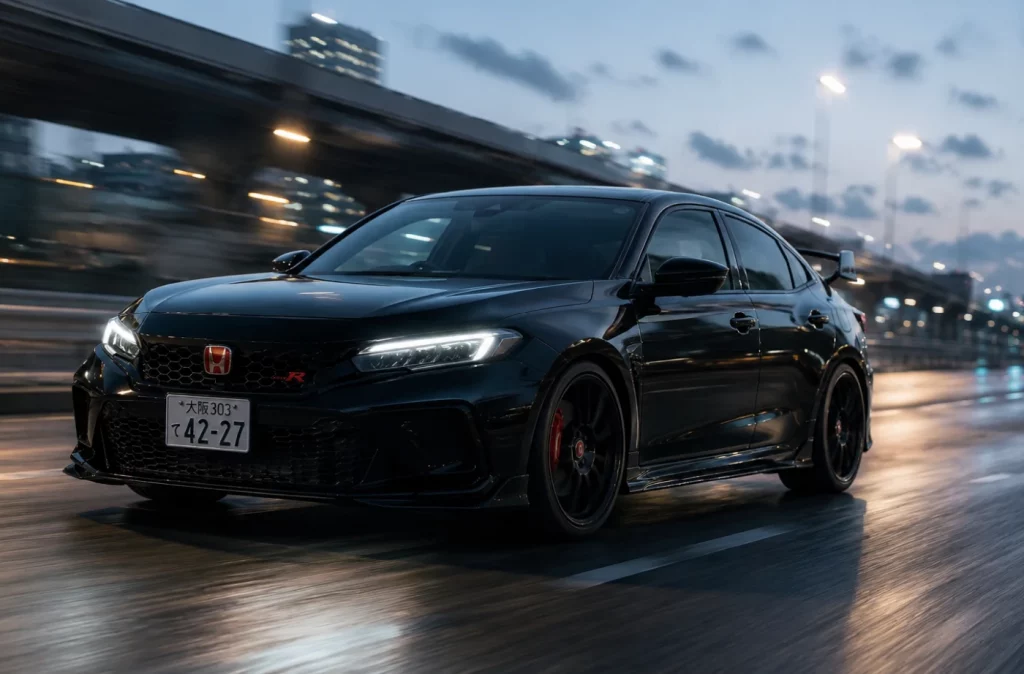
The reason the L15B7 responds so well is that Honda designed it for fuel economy, not performance. The factory Turbocharger is small and spools quickly, the intercooler is undersized for sustained boost, and the exhaust system is restrictive enough to keep noise and emissions in check. The engine has headroom. The turbo has headroom. The fuel system has moderate headroom. The limiting factor is almost never the engine itself — it is the parts bolted to it.
This guide covers the real power gains from each modification, the correct order to install them, known failure points, and what the CVT cars cannot do safely.
The L15B7 and L15CA: What You Are Working With
The L15B7 is the engine code for the 10th generation Civic 1.5T (2016–2021). It is an all-aluminum direct-injected turbocharged four-cylinder with an integrated exhaust manifold in the cylinder head. The block is open-deck design, and the connecting rods are powder-sintered metal — not forged. The L15CA is the 11th generation version (2022–present), which received a more rigid block structure, revised cooling passages, and a higher-capacity Oil Pump. Both engines share the same basic architecture and respond similarly to modifications.
The Si version of the engine uses a slightly different turbocharger compared to the non-Si 1.5T. The Si turbo (TD025) has a larger turbine wheel and a different compressor housing than the non-Si turbo (TD025 but with a smaller turbine). The difference is modest — the Si turbo flows enough to support approximately 260 wheel horsepower before becoming the bottleneck. The non-Si turbo runs out of steam around 230–240 wheel horsepower. For both, the small turbo is the ceiling on a bolt-on build, not the block.
The Tuning Platform: KTuner vs. Hondata FlashPro
You need one of two tuning devices to modify the L15B7 beyond basic intake and exhaust changes. Neither is optional for a bolt-on build. These devices plug into the OBD-II port and allow you to rewrite the ECU calibration.
KTuner V1.2 or V2 — The V1.2 is a dongle that connects to a laptop or the Ktuner mobile app. The V2 is a touchscreen display unit that doubles as a gauge display. Both use the same software and support the same features. KTuner comes with preloaded base maps for various bolt-on configurations (Stage 1, Stage 2, Stage 2 with Flex Fuel), which means you can load a calibrated tune without a professional dyno session. Price: $450–$650 depending on version and vendor-locked options.
Hondata FlashPro — The FlashPro is a single-unit device that connects to a laptop and the OBD-II port. Hondata’s software is more granular than KTuner’s for advanced users who want to adjust individual timing and fuel tables, but the out-of-box experience is less beginner-friendly. Hondata also offers unique features like flex fuel calibration support (adjusting timing and fueling automatically based on ethanol content when paired with a flex fuel sensor). Price: $695 (Civic Si), $595 (non-Si).
The community consensus on CivicX is that KTuner is the better choice for most owners because the base maps are well-calibrated, the mobile app makes data logging easy, and the price is lower. Hondata is preferred by owners who plan to run flex fuel or need detailed datalogging for custom tuning. Source: CivicX.com, “Civic Si/1.5T Resource List w/ Links” (December 2023).
A baseline tune on a stock car — no parts, just a KTuner Stage 1 or Hondata base map — adds approximately 25–35 wheel horsepower and 30–40 lb-ft of torque on 91 octane fuel. The gain comes entirely from higher boost pressure (approximately 20–21 psi vs. the factory 16–17 psi) and more aggressive ignition timing. The stock engine and clutch handle this safely. Source: Edge Autosport, “Tuning Project FC3 — No Parts, HUGE Gains” (October 2019).
The Parts: What Actually Makes Power
Intercooler — The factory intercooler on both 10th and 11th gen Civics is a bar-and-plate unit mounted in the lower front bumper opening. It is adequate for daily driving with occasional boost, but it heat-soaks within repeated pulls. Intercooler outlet temperatures on a stock 1.5T under sustained boost reach 140–160°F (60–71°C). A stepped-core aftermarket intercooler (PRL Motorsports, Mishimoto, Garrett) reduces outlet temperatures to 90–110°F (32–43°C) under the same conditions. Cooler air is denser air, and denser air means more oxygen per combustion event. The power gain from an intercooler alone with a tune is approximately 10–15 wheel horsepower, but the real benefit is consistency — the car does not lose power on the third pull. Price: $400–$600.
Intake — The stock intake system on the 1.5T is restrictive, particularly on the turbo inlet side. An aftermarket intake with a larger MAF housing and higher-flow filter reduces pressure drop between the filter and the turbo compressor inlet. The power gain is small (5–10 wheel horsepower) on a tuned car, but an intake with a larger MAF housing is required if you plan to exceed approximately 240 wheel horsepower. The stock MAF housing maxes out at approximately 260 g/s of airflow, which corresponds to roughly 240–250 wheel horsepower. Beyond that, the ECU cannot measure airflow accurately and the engine runs lean. A 3-inch or 3.5-inch MAF housing intake (PRL HVI, 27Won, Mishimoto) extends this limit to 320–350 g/s. Price: $250–$400.
Downpipe — The factory downpipe on the 1.5T contains a dense ceramic Catalytic Converter that restricts exhaust flow. Replacing it with a high-flow catted downpipe or a catless downpipe reduces backpressure and allows the turbo to spool faster and maintain boost longer at high rpm. The power gain is 10–15 wheel horsepower on a tuned car. A catless downpipe flows better but triggers a check-engine light on most calibrations unless the tune disables the catalyst efficiency monitor. A high-flow catted downpipe (RV6, Skunk2, PRL) flows significantly better than stock and does not cause a check-engine light on most quality tunes. Price: $350–$600 (catted), $250–$400 (catless).
Front pipe and exhaust — The front pipe connects the downpipe to the catalytic converter or mid-pipe. An aftermarket front pipe removes another restriction and adds a small power gain (3–5 wheel horsepower). The cat-back exhaust system adds sound and a minor power gain (3–8 wheel horsepower) but is the least impactful part on this engine. Edge Autosport notes that the exhaust is “a fun mod either way” but acknowledges that the downpipe and intercooler are where the real gains live. Price: $150–$250 (front pipe), $500–$1,200 (cat-back exhaust).
Flex Fuel / Ethanol — Ethanol (E30 to E50 blends) is the single largest power adder on the L15B7. Ethanol has approximately 30 percent less energy per volume than gasoline but 105–110 octane, which allows significantly more timing advance and higher boost pressure without knock. A flex fuel kit adds a sensor that reads ethanol content in the fuel line and reports it to the ECU, which adjusts timing and fueling in real-time. With a flex fuel tune and bolt-on parts, the Si reaches 250–270 wheel horsepower. Without flex fuel, the same parts reach 230–245 wheel horsepower on 93 octane. Price: $250–$400 (flex fuel kit), plus $50–$100 for a custom flex fuel tune file.
The power numbers from the existing aftermarket testing are as follows. These are wheel horsepower (whp) and wheel torque (wtq) figures from Dynojet dynamometers, which read approximately 10–12 percent lower than crank horsepower:
| Build Stage | Parts | Fuel | Whp (Si) | Wtq (Si) |
|---|---|---|---|---|
| Stock | Factory | 93 octane | 185–190 | 175–185 |
| Stage 1 | KTuner/Hondata (stock parts) | 93 octane | 210–220 | 215–225 |
| Stage 2 | + intercooler + intake | 93 octane | 230–240 | 240–255 |
| Stage 2+ | + downpipe + front pipe + exhaust | 93 octane | 240–250 | 255–270 |
| Stage 2+ Flex | + flex fuel kit + E30–E50 tune | E30–E50 | 255–270 | 270–290 |
All figures are wheel horsepower and torque on a Dynojet. Si turbo assumed. Non-Si 1.5T (non-Si turbo) sees approximately 10–15 less whp AT each stage. Sources: Edge Autosport Project FC3 dyno testing, CivicX owner dyno threads, TSP Stage 2 Flex Fuel kit page.
The Build Order: What to Buy First
The correct order matters with the L15B7 because each part requires a tune revision to extract the full benefit, and installing parts out of order means paying for multiple tune revisions.
Step 1: Tuning device (KTuner or Hondata). This is the starting point. A baseline tune on a stock car adds 25–35 wheel horsepower at the lowest cost-per-horsepower of any modification. It also makes the car respond to every subsequent part. Edge Autosport recommends buying the tuner before any parts: “You can instantly gain power by plugging something in. All the safety compensations and features are still active and a mildly more aggressive tune is an easy choice.” Source: Edge Autosport, “How to Make 250whp in Your Civic Si/1.5T” (February 2024).
Step 2: Intercooler. The factory intercooler is the biggest bottleneck for sustained power. Upgrade to a stepped-core intercooler, flash the Stage 2 base MAP, and gain 15–20 horsepower over the tune-only configuration. The intercooler also protects the engine from detonation under sustained boost. Edge Autosport puts the intercooler second for this reason: “For making power, the intercooler cools down the air, making it denser and sending a larger mass of air to the cylinder. For reliability, the cooler air helps prevent detonation and unsafe cylinder conditions.” Source: Same.
Step 3: Intake with larger MAF housing. If you plan to exceed 240 whp, buy an intake with a larger MAF housing now rather than buying a standard intake and needing to replace it later. The PRL HVI (High Volume Intake) with a 3-inch or 3.5-inch MAF housing is the most popular option on CivicX. If you plan to stay at Stage 1 power levels (210–220 whp), the stock intake is adequate.
Step 4: Downpipe and front pipe. A high-flow catted downpipe adds 10–15 whp on a tuned car and improves turbo spool response. The RV6 catted downpipe is the most common recommendation on CivicX for owners who want to keep emissions equipment intact. A catless downpipe adds another 3–5 whp but requires disabling catalyst monitoring, which is an inspection issue in most states.
Step 5: Flex fuel kit. This is the largest single power adder, adding 15–25 whp on top of a Stage 2+ build. The PRL Flex Fuel Kit is the standard option. It includes a GM flex fuel sensor that reads ethanol content and an interface module that translates the sensor signal for the ECU. Once installed and tuned, you can run any blend from E10 to E50 without reflashing. Source: CivicX.com, “Flex Fuel Kit for a 1.5T CVT” (April 2020).
The Budget: What Each Stage Actually Costs
| Stage | Parts Cost | Tune/Labor | Total | Whp Gain (Si) |
|---|---|---|---|---|
| Stage 1 | $0 | $450–650 (tuner) | $450–650 | +25–35 |
| Stage 2 | $650–1,000 | $0 (base map) | $1,100–1,650 | +45–55 |
| Stage 2+ | $1,350–2,100 | $0–200 (custom e-tune) | $1,350–2,300 | +55–65 |
| Stage 2+ Flex | $1,600–2,500 | $100–300 (flex tune) | $1,700–2,800 | +70–85 |
Prices are estimates based on current (2025–2026) retail pricing from Edge Autosport, Two Step Performance, and PRL Motorsports. Labor is DIY. Professional installation adds $200–$500 depending on parts.
Reliability: What Breaks and When
The L15B7 is a reliable engine within its designed power range. The consensus from CivicX build threads and Wunderladen Racing’s engineering analysis is that the stock bottom end is safe up to approximately 300 wheel horsepower with a good tune. Beyond that, the connecting rods become the weak link. The powder-sintered rods are not forged, and they bend under sustained detonation or excessive cylinder pressure. Source: Wunderladen Racing, “The Definitive Guide To Building a Honda L15B/C (1.5T) Engine” (July 2025).
The real reliability concerns at bolt-on power levels are:
Clutch (Si only). The factory Si clutch is designed for 192 lb-ft of crank torque. At Stage 2 power levels (240–260 wtq at the wheels, which is approximately 270–290 lb-ft at the crank), the factory clutch slips under hard acceleration in fourth gear or higher. Owners report clutch slip appearing between 5,000 and 15,000 miles after tuning, depending on driving style. A replacement clutch (ACT, South Bend, Competition Clutch) rated for 330–400 lb-ft costs $600–$1,000 for the kit plus $400–$800 for installation. This is the most common hidden cost of the Stage 2+ build. Source: Edge Autosport, “Turbo Honda Civic Clutch Blog” (December 2022); CivicX “Clutch Warning” thread.
CVT (non-Si only). The Honda CVT cannot handle the torque output of a tuned 1.5T. The steel CVT belt slips under sustained torque above approximately 220 lb-ft at the crank. Owners who tune 1.5T CVT cars report CVT shudder, belt wear, and in some cases complete transmission failure within a few thousand miles of tuning. Do not tune a CVT 1.5T beyond a conservative Stage 1 (approximately 200 whp). The transmission replacement cost ($5,000–$8,000) exceeds the value of the car in most cases. Source: CivicX.com, “CVT belt failure at 14k miles” (February 2019).
Fuel system (all 1.5T). The direct injection Fuel Pump and injectors are adequate up to approximately 270 wheel horsepower on ethanol blends. Beyond that, the high-pressure fuel pump (HPFP) cannot maintain rail pressure, and the injectors reach their duty cycle limit. To push past 280 whp, you need a Hondata fuel system upgrade with a larger HPFP and higher-flow injectors. Source: Hondata, “Hondata 1.5 Fuel System for E85” (May 2023).
Carbon buildup. The L15B7 is direct-injection only. There is no port injection to wash the intake valves. Intake valve carbon buildup occurs on every direct-injected engine and is not accelerated by tuning. The buildup becomes noticeable at approximately 60,000–80,000 miles on street-driven cars and causes rough idle, reduced power, and poor cold-start behavior. A walnut blasting service costs $400–$600 and restores performance.
What Not to Do
Do not install a catless downpipe without a tune revision. The ECU will detect the missing catalyst and trigger a check-engine light within 50 miles. The car will still run, but it will default to a safe fuel map that reduces performance.
Do not run a Stage 2 tune on a stock intercooler during summer. The stock intercooler heat-soaks after two consecutive pulls, intake temperatures rise past 150°F, and the ECU pulls timing aggressively. The car will feel slower than stock after the third pull.
Do not install a bigger turbo on a stock fuel system. The stock direct injection system runs out of capacity at approximately 270–280 whp. A bigger turbo (MHI TD03, Garrett GTX2860R) flows enough air for 330–380 whp, but the fuel system cannot keep up. You will need the Hondata fuel system upgrade (approximately $1,500) before the turbo installation is safe.
Do not race the car immediately after flashing a new tune. The ECU needs approximately 10–20 miles of mixed driving to learn fuel trims and adapt to the new calibration. Cold-start and idle quality improve significantly after the learning cycle completes.
Checklist for a Reliable Bolt-On Build
☐ Buy the tuning device first (KTuner V1.2 recommended for most owners, Hondata FlashPro for flex fuel or advanced tuning). The baseline tune alone is the best value in the entire build.
☐ Upgrade the intercooler before adding more boost. A stepped-core intercooler protects the engine and adds consistent power. This is the only non-negotiable cooling part.
☐ Choose an intake with a larger MAF housing (3.0″ or 3.5″) if you plan to exceed 240 whp. Buying a standard intake first means buying a second intake later.
☐ Downpipe and front pipe are worth the cost. The turbo response improvement is noticeable, and the power gain is real. Stay catted if you have emissions inspections.
☐ Flex fuel is the highest power-per-dollar addition at Stage 2+. Budget for it if E85 is available in your area.
☐ Si owners: budget for a clutch replacement. The factory clutch slips at Stage 2+ power levels. ACT or South Bend kits rated for 330+ lb-ft are the standard upgrade. Factor $1,200–$1,600 installed.
☐ CVT owners: do not exceed a mild Stage 1 tune. The transmission is not designed for the torque. Consider a manual swap or buy an Si if you want more power.
☐ Log your data on the first few pulls. Watch for knock control values above 0.55 (Hondata) or knock counts above 1–2 per pull (KTuner). If knock is present, reduce timing or increase fuel octane before driving hard.
☐ Plugs: gap the factory NGK 92265 (ILKAR8L8) spark plugs to 0.026″–0.028″ for tuned applications. The factory gap of 0.032″ can Misfire under higher boost pressure.
☐ Oil: use 5W-30 full synthetic (Mobil 1, Pennzoil, Liqui Moly) instead of the factory 0W-20 for tuned cars. The 0W-20 viscosity is too thin for sustained high rpm and elevated oil temperatures.
☐ Do not install a bigger turbo without a fuel system upgrade. The stock injectors and HPFP max out at approximately 270 whp. A turbo without fuel support is an unusable part.
☐ Do not skip the intercooler because it “won’t fit” or “costs too much.” Every experienced owner on CivicX, Edge Autosport, and Wunderladen Racing lists the intercooler as either the first or second modification. The engine needs it to survive repeated boost.