

Ask any Honda enthusiast what makes the brand special, and the answer is almost always the same: VTEC. It’s a word that carries decades of meaning—high-revving engines, screaming intake notes, and the unmistakable surge of power when the cam profile switches. But over the last twenty years, Honda has dramatically changed how this technology works. The “VTEC kicked in, yo” experience that defined the B-Series and early K-series era is no longer the standard across the lineup.
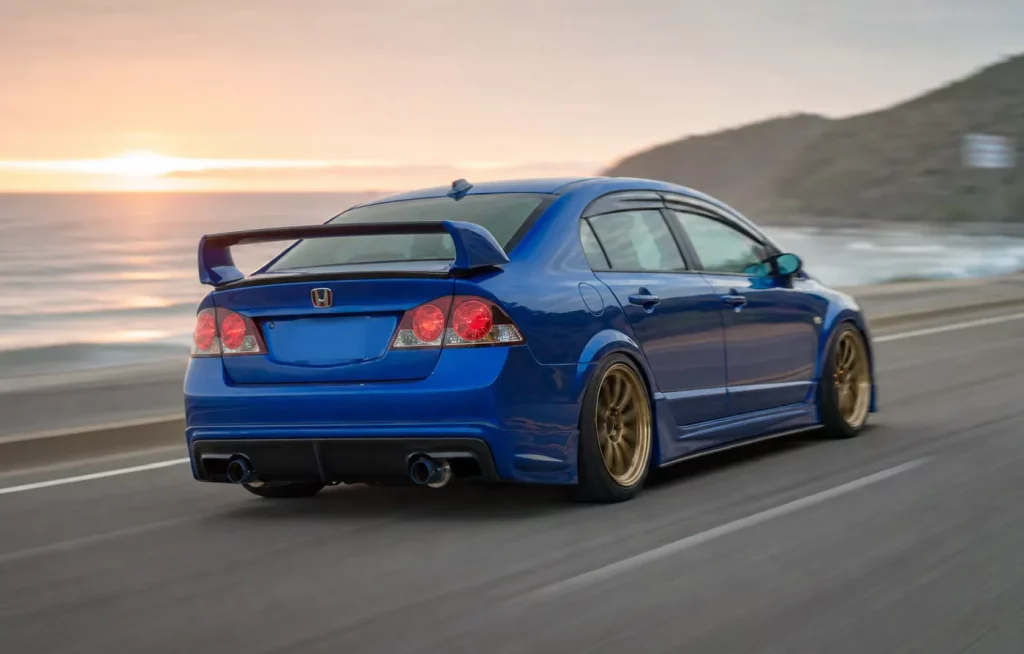
Three engines illustrate this evolution perfectly. The K20Z3 from the 8th Gen Civic Si is celebrated as the last “true” VTEC engine—a high-revving naturally aspirated motor with cam profile switching on both intake and exhaust cams. The K24Z7 from the 9th Gen Si represents a more restrained approach—VTEC on the intake side only, tuned for mid-range torque rather than top-end drama. And the L15B7 turbo from the 10th Gen Civic demonstrates a completely different philosophy where boost delivers the power and VTC (Variable Timing Control) handles the valve timing optimization.
This isn’t a comparison about which engine is faster. It’s a technical breakdown of how these engines actually work, why the K20Z3 feels so different from everything that came after, and what the terms “VTEC” and “VTC” really mean when you lift the Hood.
On Honda-Tech, CivicX, and Reddit, discussions about VTEC vs VTC are a regular occurrence. Enthusiasts routinely confuse these terms, and the debate over which engine has “real” VTEC is a recurring theme. This guide aims to settle that debate with technical accuracy.
VTEC changes how the valves open—switching between low-RPM and high-RPM cam profiles. VTC changes when the Camshaft operates—advancing or retarding cam timing continuously. The K20Z3 uses both systems on intake and exhaust cams, creating the classic VTEC “kick.” The K24Z7 has VTEC on intake only, making power more smoothly. The L15B7 relies primarily on VTC and turbo boost, with no traditional VTEC on the intake side. Each approach prioritizes different driving experiences.
The Biggest Honda Myth: Not Every i-VTEC Feels Like VTEC
VTEC isn’t just a word on a Valve Cover. There’s a fundamental difference between cam profile switching, variable cam timing, and combinations of both. Understanding this distinction is the key to understanding why these engines feel so different behind the wheel.
VTEC changes how the valves open. The system switches between two different camshaft profiles—a milder lobe for low RPM efficiency and a more aggressive lobe for high RPM power. This changes valve lift and duration, directly affecting how much air the engine can breathe AT high RPM.
VTC changes when the camshaft operates. This is a hydraulic system that continuously adjusts camshaft phasing relative to the Crankshaft, advancing or retarding valve timing based on engine load and RPM. It works smoothly and continuously, without the dramatic profile switch of VTEC.
Honda’s i-VTEC combines both systems—VTEC cam profile switching with VTC cam phasing. But not every i-VTEC engine uses the same implementation. Some use VTEC on both cams. Some use it only on the intake side. Some use a completely different mechanism altogether. And some engines with “i-VTEC” badging don’t use the classic VTEC mechanism at all.
The red lettering on the engine cover has become shorthand for the full performance i-VTEC system. Engines with red “i-VTEC” lettering typically have VTEC on both cams. Black lettering or no lettering often indicates the economy version with VTEC on intake only. This is a quick visual shortcut that many enthusiasts use to identify the engine’s performance orientation.
- Changes valve lift and duration
- Switches between two cam profiles
- Creates dramatic power transitions
- Characteristic VTEC “kick”
- Associated with high-RPM power
- Changes camshaft phasing/timing
- Continuously variable adjustment
- Smooth, seamless operation
- Optimizes torque across RPM range
- Works with VTEC or independently
VTEC vs VTC: What Is Actually Moving?
To understand these engines, it’s essential to understand what each system actually does inside the engine.
Traditional Performance VTEC:
- Low-RPM cam profile: Smaller lift, shorter duration, optimized for low-end response and fuel economy
- High-RPM cam profile: Larger lift, longer duration, optimized for high-end airflow and power
- Engagement: Hydraulic system locks the high-lift rocker arms at a specific RPM threshold
When VTEC engages, the engine switches from the mild cam lobe to the aggressive high-lift lobe. The intake valves open further and longer, allowing more air into the cylinders. In engines with exhaust VTEC, the exhaust valves also change their opening characteristics, improving scavenging at high RPM.
VTC — Variable Timing Control:
- What it does: Continuously adjusts camshaft position relative to the crankshaft
- How it works: Hydraulic actuators shift cam phasing based on engine load and RPM
- Effect: Advances or retards valve timing to optimize torque across the rev range
- Operation: Smooth, seamless, and continuously variable
VTC doesn’t change valve lift or duration. It changes when the valves open and close relative to the Piston position. This allows the ECU to optimize valve overlap, improving torque and efficiency across a broad RPM range.
In the community, some tuners use the terms “Type 1” and “Type 2” i-VTEC to describe different implementations—though this classification isn’t official Honda terminology. The hybrid-racing classification system is useful for enthusiasts but shouldn’t be mistaken for Honda’s own engineering documentation.
The K20Z3: Why Enthusiasts Call It “True VTEC”
The K20Z3 from the 8th Gen Civic Si (2006-2011) is widely regarded as the last great naturally aspirated VTEC engine. It produces 197 horsepower at 7,800 RPM with an 11.0:1 Compression Ratio and an 8,000 RPM redline. But the numbers don’t tell the whole story.
What makes the K20Z3 special is its valve train configuration. It uses the same VTEC mechanism as the legendary B-series engines, with cam profile switching on both the intake and exhaust cams. This is what enthusiasts mean when they say “true VTEC”—the engine has high-lift lobes on both sides of the cylinder head, not just the intake side.
The VTC system on the K20Z3 has approximately 50 degrees of adjustment range, allowing the ECU to significantly alter cam timing for optimal performance across the rev range. This is substantially more VTC authority than the K24Z7, which has roughly 25 degrees of adjustment. The broader VTC range contributes to the K20Z3’s dramatic character shift at high RPM.
At approximately 5,800 RPM, the engine’s character changes dramatically. The intake note hardens, the power delivery surges, and the car pulls with renewed urgency to the 8,000 RPM redline. The change is dramatic enough that Honda enthusiasts describe it as the engine “coming alive.” The difference between the low-cam and high-cam behavior is substantial, creating the signature VTEC experience that defined Honda’s performance reputation.
However, it’s important to understand that the VTEC crossover isn’t a simple on/off switch. Modern engine management makes the transition more sophisticated than the binary “switch” of earlier systems. The crossover point can be tuned, and the transition can be smoothed or sharpened depending on the calibration.
Why the K20Z3 Feels So Different
The K20Z3’s character comes from its combination of high compression, aggressive cam profiles, and the pronounced VTEC crossover. Below 5,800 RPM, the engine is responsive but relatively mild. Above that threshold, it transforms completely.
The high-lift intake cam increases valve lift and duration, allowing more air into the cylinders at high RPM. The exhaust cam VTEC improves exhaust scavenging, helping the engine breathe more efficiently at high revs. Together, these changes produce the characteristic surge that feels like the engine suddenly gaining 30 horsepower.
The K20Z3’s performance is best understood in the context of its era. This was the peak of Honda’s naturally aspirated performance philosophy. The engine was designed to reward revs, and the VTEC system was a key part of that design. Enthusiasts who grew up with B-series and early K-Series engines recognize the K20Z3 as a continuation of that tradition.
But the K20Z3’s VTC range is also critical to its character. Proper VTC mapping on K-series engines can dramatically change how the power feels, filling the torque hole below 4,000 RPM and smoothing the VTEC transition so it doesn’t feel like a light switch. The 50-degree VTC range gives tuners substantial flexibility in shaping the powerband.
The K24Z7: Is It Really “VTEC-Less”?
The short answer is no. The K24Z7 from the 9th Gen Civic Si (2012-2015) is absolutely an i-VTEC engine. It has VTEC cam profile switching. It has VTC. But the implementation is different from the K20Z3, and the driving experience is different as a result.
The K24Z7 has VTEC on the intake cam only. The exhaust cam does not have a high-lift profile. This is a significant difference from the K20Z3, which has VTEC on both intake and exhaust cams.
Why does this matter? Exhaust VTEC helps the engine breathe at high RPM by changing exhaust valve lift and duration. Without it, the engine’s top-end breathing is limited, which is why the K24Z7 doesn’t pull as hard to redline as the K20Z3.
The K24Z7’s VTC range is approximately 25 degrees—about half the K20Z3’s authority. This limits the engine’s ability to optimize valve timing across the rev range. Combined with the integrated exhaust manifold that restricts flow, the K24Z7’s top-end performance is compromised compared to the K20Z3.
Honda’s decision to use VTEC only on the intake side was partly driven by emissions regulations and fuel economy targets. The integrated exhaust manifold reduces weight and improves cold-start emissions, but it also restricts flow at high RPM. The K24Z7’s character is a deliberate compromise between performance and efficiency.
However, the 2.4-liter displacement provides more low-end and mid-range torque than the K20Z3, making the K24Z7 feel stronger in everyday driving. The VTEC transition is less dramatic because there’s only one cam profile switch—on the intake side. The engine builds power more smoothly, which some enthusiasts interpret as a lack of VTEC character.
This is where the terminology matters. The K24Z7 is not a “VTC only” engine. It has the full i-VTEC system—VTEC profile switching on the intake side with VTC on the intake cam. Some owners, however, have described the K24Z7’s character as feeling like a “coded R18“—a less exciting, more muted version of what a Honda performance engine should be. Whether this is a fair characterization depends on what you value in a driving experience.
Why the K24Z7 Feels Smoother
The K24Z7’s character is shaped by its displacement and its valve train configuration. The extra 0.4 liters of displacement provide more torque at lower RPM, reducing the need to rev the engine to access power. The VTEC crossover—on the intake side only—provides a more gradual transition.
At approximately 4,400 RPM, the engine’s peak torque arrives. The VTEC crossover happens higher in the rev range, but because the engine already has strong mid-range torque, the transition is less pronounced than in the K20Z3. The result is a smoother, more linear power delivery.
Enthusiasts who value the dramatic VTEC “kick” often criticize the K24Z7 for being too refined. But from a practical driving perspective, the K24Z7 is quicker in most everyday situations because the torque is available earlier and across a broader range.
The K24Z7 gives you the power earlier. The K20Z3 makes you chase the power.
The L15: When Turbo Torque Replaced VTEC Drama
The 10th generation Civic’s L15B7 turbo engine represents a fundamental shift in Honda’s engine philosophy. Instead of using high-compression and cam profile switching to make power, the L15 uses a small Turbocharger to deliver strong mid-range torque.
The L15B7 has VTC on both intake and exhaust cams, allowing the ECU to optimize valve timing for efficiency and response. But it does not have traditional VTEC cam profile switching on the intake side. The engine relies on VTC and turbo boost to deliver its character.
This is a crucial distinction. The L15B7’s valve lift is fixed—there’s no switch to a high-lift cam profile at high RPM. The power comes from the turbocharger, which provides strong torque from low RPM but runs out of flow at high RPM. The result is an engine that feels quick and responsive in everyday driving but lacks the top-end surge of the K20Z3.
Some L15 variants do have VTEC on the exhaust cam—the L15CA in the 11th Gen Si, for example. But the purpose is different. Instead of creating a dramatic power surge, exhaust VTEC helps spool the turbocharger faster, improving low-end response.
The L15 brings the power to you. The K20Z3 makes you chase it.
Does the L15 Have “Real VTEC”?
The answer depends on the specific L15 variant. The engine family has evolved significantly over its lifetime, and different versions use different valve train configurations.
L15B7 (10th Gen Civic 1.5T): This engine has no traditional VTEC cam profile switching. It uses VTC on both intake and exhaust cams for variable cam timing, with no change in valve lift or duration. The engine relies entirely on the turbocharger for its power character. Owners have described the L15B7’s character as “VTC only”—smooth, responsive, but lacking the dramatic VTEC kick that defined earlier performance Hondas.
L15CA (11th Gen Civic Si): This engine has VTEC on the exhaust cam only. The intake cam does not have a high-lift profile. The exhaust VTEC is designed primarily to improve turbocharger spool and low-end response, not to create a dramatic high-RPM power surge. This is a functional difference—the VTEC system is now a tool for turbo response rather than top-end power.
Other L15 variants: Depending on the application and market, some L15 engines use different combinations of VTC and VTEC. Honda has used this engine family across multiple platforms, and the valve train configuration varies accordingly.
Calling the L15 a “VTC only” engine is an oversimplification. Some variants do use VTEC, and the engine’s character is shaped primarily by its turbocharger rather than its valve train. But the L15 is fundamentally a different kind of engine from the naturally aspirated K-series.
Three Engines, Three Philosophies
Each of these engines represents a different era of Honda engineering and a different approach to making power.
| Engine | VTEC Configuration | VTC Range | Character | Redline |
|---|---|---|---|---|
| K20Z3 | Intake + Exhaust | ~50° | High-RPM screamer | 8,000 RPM |
| K24Z7 | Intake only | ~25° | Torque-focused | 7,100 RPM |
| L15B7 | VTC only | ~Varies | Turbo torque | 6,500 RPM |
The K20Z3 prioritizes high-RPM power at the expense of low-end torque. It rewards aggressive driving and demands that you work the gearbox to access its potential. The K24Z7 balances displacement and valve train technology to deliver strong mid-range torque with a more refined character. The L15B7 uses turbocharging and VTC to deliver strong torque from low RPM, sacrificing high-RPM drama for everyday usability.
Why Modern Engines Don’t Need a Dramatic VTEC Kick
Modern engines use a combination of technologies that make the dramatic VTEC crossover less necessary. The turbocharger provides strong torque across a broad RPM range. Direct injection improves cylinder filling and thermal efficiency. Electronic throttle and sophisticated ECU control allow for precise power delivery. VTC provides continuously variable cam timing optimization.
The disappearance of the VTEC kick does not mean valve technology disappeared. It means the engine is using different tools to achieve similar—or better—performance.
On turbocharged engines, the logic of VTEC shifts. Since the turbocharger already solves the problem of delivering more air at low RPM, the classic VTEC system—designed to improve high-RPM breathing—becomes less critical. VTEC on turbo engines is now used for specific purposes like improving turbo response, rather than creating a dramatic power surge.
The function of VTC is also different on turbo engines. Instead of filling a torque hole created by aggressive cam profiles, VTC helps optimize valve overlap for the turbocharger, improving spool and reducing lag.
True VTEC vs Marketing VTEC
Honda has used different implementations of i-VTEC depending on the engine’s intended purpose. Performance-oriented engines like the K20A2, K20Z1, and K20Z3 use the full system with VTEC on both intake and exhaust cams. Economy-oriented engines like the K20A3 and K24A8 use a different version focused on fuel efficiency and low-end torque.
The K24Z7 sits in the middle—VTEC on the intake side only, with VTC on the intake cam. This is the same configuration used in the K24Z3 from the Acura TSX and other applications. It’s a legitimate i-VTEC system, but it’s not the full performance version.
The red lettering on the engine cover has become shorthand for the full performance i-VTEC system. Engines with red “i-VTEC” lettering typically have VTEC on both cams. Black lettering or no lettering often indicates the economy version with VTEC on intake only. This visual cue is one way enthusiasts quickly identify an engine’s performance potential.
There’s a significant difference between a true performance VTEC implementation and an efficiency-oriented implementation. The K20Z3’s system is designed to maximize high-RPM power. The K24Z7’s system is designed to balance power and efficiency. The L15B7’s system is designed to support turbocharged operation.
None of these implementations are “fake” VTEC. They’re all legitimate Honda engineering. But they serve different purposes and deliver different driving experiences.
Why Enthusiasts Still Say “VTEC Just Hit”
In the Honda community, “VTEC just hit” has become a shorthand for the experience of a high-performance Honda engine coming alive at high RPM. It’s a cultural reference as much as a technical description.
But not every change in engine sound or acceleration is VTEC engagement. Sometimes it’s turbo spool. Sometimes it’s cam timing adjustment. Sometimes it’s the ECU managing torque delivery. The K20Z3’s VTEC crossover is unmistakable. The K24Z7’s is more subtle. The L15B7’s power delivery is shaped primarily by its turbocharger, not its valve train.
The tradition of the VTEC kick continues in enthusiast culture, but the technical reality has evolved. Understanding what’s actually happening inside the engine helps enthusiasts appreciate what they’re feeling behind the wheel.
Practical Value for Buyers
Understanding the technical differences between these engines helps explain why the subjective driving experience varies so much between generations of Civic Si. The K20Z3 feels dramatically different from the K24Z7, even though their peak power figures are close. The L15B7 feels completely different from both, despite sharing the Si badge.
For buyers choosing between used Si generations, this understanding is essential. A K20Z3 owner is chasing high-RPM engagement. A K24Z7 owner is prioritizing mid-range torque. An L15B7 owner is buying modern turbocharged performance.
For those considering a K20C1 swap or tuning a 1.5T, understanding where VTEC is used—and where it isn’t—helps explain why the tuning approach for modern turbo Hondas differs from classic naturally aspirated K-series tuning. The strategies that work on a K20Z3 don’t necessarily apply to an L15B7.
Final Thought
The K20Z3 makes you chase the power, rewarding drivers who keep the revs high and work the gearbox. The K24Z7 gives you the power earlier, delivering strong mid-range torque with a more refined character. The L15 brings the power to you, using turbocharging and VTC to deliver strong performance without requiring high RPM.
Each engine represents a different philosophy, and each has its strengths. The K20Z3 is the classic Honda experience. The K24Z7 is a balanced compromise. The L15 is the modern approach. Understanding the technical differences helps explain why these engines feel so different despite sharing the Honda badge.
VTEC is still there, in various forms, across Honda’s engine lineup. But what “VTEC” means, and how it feels, has changed dramatically over the last two decades.
FAQ — True VTEC vs VTC
Is the K24Z7 VTEC or VTC only?
The K24Z7 has i-VTEC with VTEC on the intake cam only, plus VTC on the intake side. It is not “VTC only”—it has cam profile switching, but only on the intake side. This is a legitimate i-VTEC implementation, just not the full performance version with VTEC on both cams.
Does the L15B7 have VTEC?
No—the L15B7 from the 10th Gen Civic does not have VTEC cam profile switching. It uses VTC on both intake and exhaust cams for variable cam timing, with no change in valve lift or duration. Some later L15 variants have VTEC on the exhaust cam only.
What does “true VTEC” mean?
“True VTEC” is enthusiast shorthand for an engine that uses cam profile switching on both intake and exhaust cams. Engines like the K20Z3, K20A2, and K20Z1 use this configuration, which is why enthusiasts call them “true VTEC” engines.
What is the difference between VTEC and VTC?
VTEC changes valve lift and duration by switching between different cam profiles at a specific RPM. VTC changes camshaft phasing continuously, advancing or retarding valve timing based on engine load and RPM. VTEC changes how the valves open; VTC changes when the camshaft operates.
Is the K20Z3 the last true VTEC engine?
The K20Z3 is widely regarded as the last naturally aspirated performance VTEC engine with cam profile switching on both intake and exhaust cams. While later engines like the K24Z7 have VTEC, they use it only on the intake side, which enthusiasts consider less dramatic.
Why doesn’t the K24Z7 have a VTEC kick?
The K24Z7 has VTEC on the intake cam only, not both cams. The 2.4-liter displacement also provides strong mid-range torque, making the VTEC transition less dramatic. The engine builds power more smoothly, which some enthusiasts interpret as a lack of VTEC character.
Does the L15 have a VTEC kick?
No—the L15B7 relies on turbocharger and VTC for its power delivery. The engine delivers strong torque from low RPM and doesn’t have the dramatic high-RPM surge associated with traditional VTEC engines. Some L15 variants have VTEC on the exhaust cam to improve turbo response, but this doesn’t create the same character.
Can VTC replace VTEC?
VTC cannot replace VTEC because they serve different functions. VTEC changes valve lift and duration—how much the valves open and for how long. VTC changes camshaft phasing—when the valves open relative to the crankshaft. VTC optimizes torque across the RPM range, while VTEC adds top-end power.
Why did Honda move away from true VTEC?
Honda moved toward turbocharging and refined VTC systems to improve fuel efficiency, reduce emissions, and deliver strong low-end torque. Modern engines prioritize driveability and efficiency over the dramatic power band of naturally aspirated VTEC engines.
Which engine sounds the most like a classic Honda?
The K20Z3 sounds the most like a classic Honda—high-revving intake roar, mechanical valvetrain noise, and the unmistakable VTEC crossover. The K24Z7 has a deeper, more subdued sound, while the L15B7 sounds more modern and turbocharged.