

The 8th-generation Honda Civic Si (2006–2011) is widely regarded as the spiritual high point of the modern Si line. Its K20Z3 engine — a 2.0-liter DOHC i-VTEC four-cylinder with VTEC on both intake and exhaust cams — revs to 8,000 rpm from the factory, produces its peak 197 horsepower at 7,800 rpm, and uses the same RBC intake manifold that 9th-gen Si owners pay hundreds to swap in. The tuning path for this engine is the most straightforward of any modern Si because every major bolt-on works the way it should: the header is a traditional replaceable component, the intake manifold flows well from the factory, and the dual-VTEC head responds aggressively to cam upgrades. This guide covers every step of the naturally aspirated tuning path — header selection, exhaust sizing, intake optimization, Camshaft upgrades, and tuning — with documented dyno results from actual owner builds. Sources: 8thCivic.com dyno threads, K20A.org build documentation, MotorTrend/Import Tuner magazine baseline testing, Hondata.com FlashPro dyno sheets, 8020 Automotive K20Z3 engine guide, Honda The Other Side K20Z3 specifications, Skunk2 Racing product data, IPS K-series camshaft documentation, TDC Tuning dyno results.
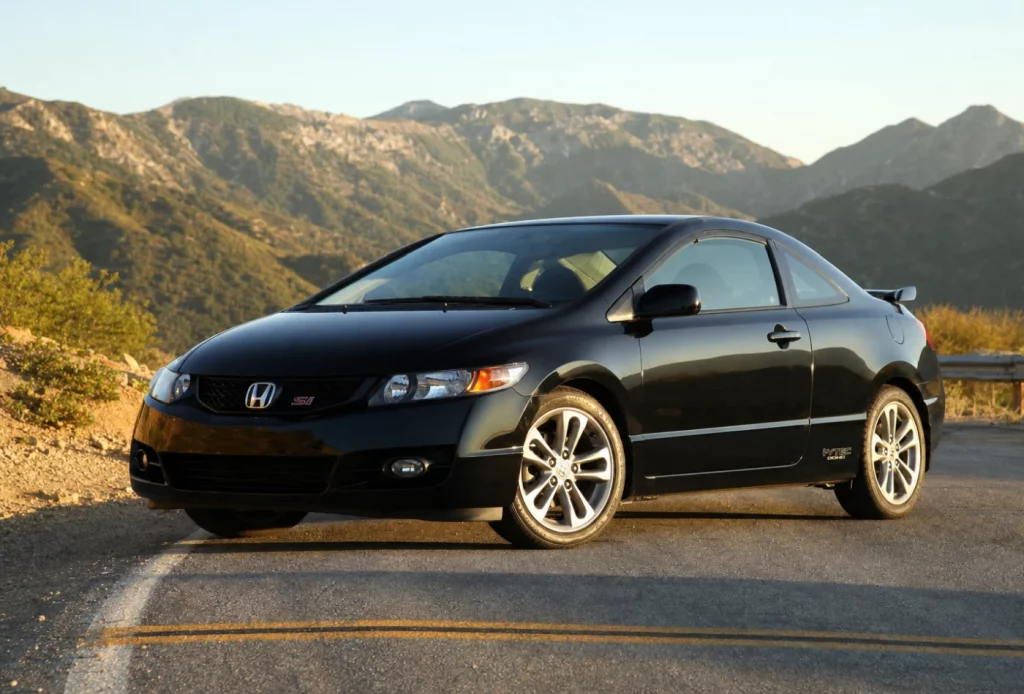
The K20Z3 Engine — What Made It Special
The K20Z3 is a 2.0-liter inline-four with a square 86.0 mm bore and 86.0 mm stroke, an 11.0:1 Compression Ratio, and a factory redline of 8,000 rpm with a fuel cut at 8,300 rpm. The factory claimed output is 197 hp at 7,800 rpm and 139 lb-ft of torque at 6,200 rpm (SAE Net Rev 8/04). The engine uses dual-overhead camshafts with Honda’s performance i-VTEC system — VTC (variable timing control) on both cams plus VTEC lobe switching on both intake and exhaust sides. This is the same VTEC architecture as the JDM K20A (Type R) engine, making the K20Z3 the most track-capable naturally aspirated K20 ever offered in a USDM Civic Si. Source: 8thCivic.com K20Z3 engine specs thread, Honda The Other Side K20Z3 specifications, 8020 Automotive K20Z3 guide.
Factory RBC intake manifold. The K20Z3 comes from the factory with the RBC intake manifold — the same cast aluminum single-piece manifold that 9th-gen Si owners swap onto their K24Z7 engines for a top-end power gain. The RBC manifold is widely considered one of the best flowing OEM intake manifolds Honda ever produced for the K-Series. This means 8th-gen owners do not need an intake manifold upgrade as a first bolt-on. Port matching the RBC and adding a larger throttle body are later-stage optimizations, not prerequisites. Source: 8thCivic.com RBC manifold discussion, 8020 Automotive K20Z3 guide.
Factory header is the primary restriction. Unlike the 9th-gen Si’s integrated exhaust manifold, the K20Z3 uses a traditional bolt-on exhaust manifold (header) with separate primary tubes, a collector, and a downstream Catalytic Converter. The factory header is a cast iron piece with restrictive primary dimensions. Replacing it with an aftermarket header is the single largest power-adding modification available on this engine — and the starting point of any serious build. Source: 8thCivic.com header comparison thread, K20A.org ASP header dyno test.
Stock wheel horsepower. A stock K20Z3 measures approximately 170–185 whp on a DynoJet, depending on ambient conditions and the specific dyno. MotorTrend’s Import Tuner magazine baseline tested a 2008 Civic Si sedan at 172.1 whp and 121.7 lb-ft of torque. The widely accepted “normal” stock range is 175–183 whp on a DynoJet and approximately 170–175 whp on a Dynapack. The Bisimoto baseline test of a 2012 Si (K24Z7) measured 171 whp — the K20Z3 tends to read slightly higher due to its higher redline and different power curve shape. Source: MotorTrend Import Tuner August 2008 dyno test, 8thCivic.com stock dyno thread, K20A.org baseline discussion.
FlashPro — The Tuning Foundation
The Hondata FlashPro is the only practical tuning solution for the 8th-gen Civic Si. The K-Pro (used on RSX-S and EP3 Si) is not compatible with the 2006+ Civic Si’s ECU architecture — a different processor and drive-by-wire system prevent it from working. Converting to a K-Pro requires swapping in an RSX-S ECU and converting to a cable throttle, a project that offers no advantage over FlashPro for naturally aspirated builds. Source: Hondata.com forum, 8thCivic.com K-Pro vs FlashPro thread.
FlashPro on a stock Si. Hondata‘s own dyno testing, published on their website, shows a FlashPro “Stock Tuned” calibration on a completely stock 2006–2011 Si producing an 11.3% maximum gain over the factory calibration on a Dynapack. The calibration lowers the VTEC engagement point from approximately 5,800 rpm to 4,350 rpm, removes rev hang completely, improves throttle response, raises the rev limit to 8,600 rpm, and smooths the torque dip at the VTEC crossover. The peak horsepower gain is modest — approximately 3–8 whp depending on the specific car — but the area under the curve improvement is significant, particularly through the midrange. Source: Hondata.com stock tuned vs stock dyno PDF, 8thCivic.com 2009 Si FlashPro dyno results thread.
FlashPro cost. A new FlashPro costs approximately $695 from Hondata or authorized dealers. Used units sell for $450–$550 on 8thCivic.com classifieds and Honda forums. The unit is VIN-locked but can be unlocked and resold. FlashPro Manager software is free and regularly updated by Hondata with new features and basemaps. Source: 8thCivic.com FlashPro pricing discussion.
Header — The Most Important Bolt-On
The header on the K20Z3 is where the majority of the bolt-on power gain comes from. Unlike the integrated manifold on the 9th-gen Si, the 8th-gen’s traditional header can be replaced with an aftermarket unit that improves exhaust flow from the cylinder head ports. The best aftermarket headers for the K20Z3 produce gains of 15–25 whp on a tuned car, making this the single most impactful modification available. Source: 8thCivic.com header shootout, ASP header dyno results, Skunk2 header reviews.
Skunk2 Megapower R Header. The Skunk2 Megapower R is widely considered the best off-the-shelf header for the K20Z3. It uses a 4-2-1 primary tube configuration with 2-inch primaries, a 2.5-inch collector, and a merge collector design that improves exhaust scavenging. The Megapower R is a race header — it deletes the primary catalytic converter and requires either a test pipe or a high-flow cat for street use. A dyno test posted on K20A.org showed a K20Z3 with Skunk2 header, Buddy Club exhaust, Injen CAI, and FlashPro tuning making 206 whp on a DynoJet — a gain of approximately 16–21 whp over the stock baseline of 185–190 whp on that dyno. An owner who switched from a PLM (cheap) header to the Skunk2 Megapower on his cammed K20Z3 saw a dramatic improvement in both power and drivability, with his eDyno reading jumping to significantly higher numbers. The Skunk2 header is manufactured with robotic TIG welding and a ceramic coating option. Cost: approximately $700–$850 new. Source: K20A.org Skunk2 header dyno thread, 8thCivic.com header comparison thread, K20A.org PLM vs Skunk2 comparison.
KiddRacing Dominator Header. The KiddRacing header was tested in a direct head-to-head dyno comparison against the Skunk2 Megapower. The test was performed on a Toroku Stage 1.5 cammed K20Z3 with a 3-inch exhaust and FlashPro tuning, with headers swapped on the same day without changing the tune. The KiddRacing made slightly more peak horsepower but ran significantly richer (almost a full point richer A/F ratio), meaning with proper tuning the difference would likely be negligible. The Skunk2 header was noted as having higher quality welds and a more polished finish. The tester (KiddRacing’s owner) recommended the owner keep the Skunk2 header despite his own product making slightly more power, citing the quality difference. Cost: approximately $450–$550. Source: Honda-Tech KiddRacing vs Skunk2 comparison, 8thCivic.com header thread.
ASP 4-1 Long Tube Header (Custom). ASP (Advanced Street Performance) builds custom long-tube 4-1 headers for the 8th-gen Si. A documented dyno test from 2009 showed an ASP 4-1 long tube header with a 2.5-inch exhaust (with test pipe and defouler) on an otherwise stock 2006 Si producing a gain of +21 whp and +15 lb-ft of torque — and this was without tuning. The ASP header preserves low-end torque unusually well for a 4-1 design, which typically favors top-end AT the expense of low-RPM power. This is the highest documented no-tune header gain on the K20Z3. ASP headers are custom-made to order based on the customer’s engine specs and power goals. Cost: approximately $800–$1,200 depending on specifications. Source: 8thCivic.com ASP header dyno thread, K20A.org ASP 06 Si header test.
Invidia Race Header. The Invidia race header (70mm collector) is a more affordable option. One owner who dyno’d with AEM CAI, Invidia header, and Q300 exhaust (no FlashPro) recorded 193 whp on a DynoJet. While this is below what a tuned car with the same parts would produce, it demonstrates that the Invidia header produces measurable gains even without tuning. The Invidia header is known for good fitment and stainless steel construction. Cost: approximately $500–$650. Source: 8thCivic.com Invidia header dyno thread.
Vibrant Race Header (with HFC). The Vibrant race header is available with a high-flow catalytic converter, making it one of the few header options that remains emissions-legal in states with visual inspections. The Vibrant header produces slightly less peak power than a catless race header (approximately 3–5 whp less) but eliminates the need to swap parts for emissions testing. One documented Mustang dyno test with Vibrant header, Vibrant cat-back, custom intake, and FlashPro dyno tune measured 203 whp — a gain of approximately 30 whp over the stock baseline on that low-reading dyno. Cost: approximately $550–$700. Source: K20A.org 09 Si FlashPro thread, 8thCivic.com Vibrant header reviews.
DC Race Header. The DC Sports race header is the budget option for the 8th-gen Si. It produces gains of approximately 10–15 whp on a tuned car, slightly less than the Skunk2 or KiddRacing headers. An owner with DC header, AEM SRI, and HKS exhaust recorded 183 whp on a no-tune dyno day. The DC header uses smaller primaries than the premium headers and does not have the same collector design. It is a functional entry-level option. Cost: approximately $350–$450. Source: 8thCivic.com Invidia header comparison thread, 8thCivic.com DC vs Skunk2 discussion.
| Header | Collector | Cat Option | Est. WHP Gain (Tuned) | Price (New) |
|---|---|---|---|---|
| Skunk2 Megapower R | 2.5″ | Catless / HFC | +15–20 whp | $700–$850 |
| ASP 4-1 Long Tube | 2.5″ | Catless | +20–25 whp | $800–$1,200 |
| KiddRacing Dominator | 2.5″ | Catless | +15–20 whp | $450–$550 |
| Vibrant Race (w/ HFC) | 2.5″ | High-flow cat | +12–17 whp | $550–$700 |
| Invidia Race | 70mm | Catless | +12–16 whp | $500–$650 |
| DC Race | 2.5″ | Catless | +10–15 whp | $350–$450 |
Exhaust — Pipe Diameter Matters
The cat-back exhaust on the K20Z3 is secondary to the header in terms of power gain, but the right exhaust enables the header and cams to perform at their full potential. The factory exhaust on the 8th-gen Si uses a 2.25-inch pipe diameter with a restrictive muffler and a small resonator. For a bolt-on car, a 2.5-inch or 3-inch cat-back provides measurable gains of 3–8 whp on a tuned car. For a cammed car with a stock bottom end making 220+ whp, a 3-inch exhaust is required to avoid choking the top end. Source: 8thCivic.com exhaust discussion, K20A.org exhaust sizing thread.
Skunk2 76mm (3-inch) MegaPower Exhaust. The Skunk2 76mm exhaust is the most popular high-performance option for the 8th-gen Si. It uses a full 3-inch pipe diameter from the downpipe back, with a straight-through muffler design. Multiple owners report that the 76mm exhaust produces the best top-end power of any off-the-shelf system for this platform. The tradeoff is noise — the 76mm is loud, with drone at highway speeds, and requires the included silencer for daily driving in some cases. One owner reported that the Skunk2 header paired with the Skunk2 76mm exhaust was “extremely loud” and recommended the Full Race or Go-Power exhaust for quieter operation. Cost: approximately $700–$900. Source: 8thCivic.com Skunk2 exhaust thread, K20A.org header comparison.
Full Race 3-inch Exhaust. The Full Race 3-inch cat-back is designed to be quieter than the Skunk2 while maintaining flow. It uses a larger resonator and a Helmholtz-style muffler that cancels drone frequencies. The Full Race system is commonly recommended by tuners for daily-driven K20Z3 builds. Several 220+ whp builds on 8thCivic.com and K20A.org use the Full Race exhaust. Cost: approximately $800–$1,000. Source: 8thCivic.com Full Race exhaust reviews, K20A.org FBO build threads.
Invidia Q300 (70mm/2.75-inch). The Invidia Q300 is the most popular “daily driver” exhaust for the 8th-gen Si. It uses a 70mm (2.75-inch) pipe diameter — a compromise between the stock 2.25-inch and a full 3-inch system. The Q300 is noticeably quieter than the Skunk2 76mm or Full Race systems, with minimal drone. Dyno results with the Q300 show it performs well up to approximately 210 whp, but becomes a restriction above that. One I/H/E car with AEM CAI, Invidia header, and Q300 exhaust made 193 whp without tuning. Cost: approximately $550–$700. Source: 8thCivic.com Invidia header dyno thread, 8thCivic.com Q300 reviews.
Buddy Club Spec II Exhaust. The Buddy Club Spec II is a 60mm (2.36-inch) exhaust that is noticeably louder than the Q300 but lighter. It was used in several early K20Z3 builds. The smaller diameter restricts top-end power on cammed cars. The owner of the 206 whp Skunk2 header build used a Buddy Club exhaust. Cost: approximately $500–$650. Source: K20A.org TDC Tuned Si thread.
Go-Power Quiet Exhaust. Go-Power offers a 3-inch exhaust with a “quiet” muffler option that is specifically designed for owners who want full 3-inch flow without drone. Multiple owners report that the Go-Power exhaust is one of the quietest 3-inch systems available for the platform. Go-Power also offers porting services for the RBC intake manifold and throttle body, making them a one-stop shop for N/A K-series builds. Cost: approximately $700–$900. Source: 8thCivic.com Go-Power exhaust thread, K20A.org Go-Power discussion.
Intake — Small Gains, Big Sound
The cold air intake on a tuned K20Z3 adds approximately 4–8 whp depending on the specific design. The factory intake is not as restrictive as the header or exhaust, but a well-designed CAI improves throttle response and intake sound significantly. The MAF sensor vanes in the factory intake housing are known to cause airflow turbulence. Aftermarket intakes that use a smooth tube and a larger filter reduce this restriction. Source: 8thCivic.com CAI comparison thread, K20A.org AEM vs Injen discussion.
AEM Cold Air Intake. The AEM CAI is the most common intake for the K20Z3. It places the filter behind the front bumper for cold air exposure. One owner reported that the AEM short ram gained 12 whp at 6,300 rpm and 6 whp at the peak compared to the factory intake with the AEM V2 MAF housing — a gain attributed primarily to the elimination of the factory MAF vane restriction. The AEM CAI uses a dry-flow filter. Cost: approximately $300–$400. Source: 8thCivic.com AEM intake discussion, K20A.org AEM CAI reviews.
Injen Cold Air Intake. The Injen CAI is the second most common option. It uses a polished aluminum tube and an oiled cotton filter. Some owners report that the Injen CAI causes the car to run rich when installed without a FlashPro tune, confirming what many tuners say: intakes on the K20Z3 require tuning to realize the full gain. The Injen CAI has a MAF sensor housing that is closer to the factory diameter, which reduces the need for MAF scaling compared to other intakes. Cost: approximately $250–$350. Source: 8thCivic.com Injen vs AEM comparison, K20A.org Injen dyno results.
Hybrid Racing 3.5-inch Intake. For cammed or full bolt-on cars, a 3.5-inch intake from Hybrid Racing or a custom 3.5-inch intake from PRL or K-Tuned provides the highest airflow potential. The larger MAF housing requires rescaling in FlashPro Manager. Most 220+ whp builds use a 3.5-inch intake. Cost: approximately $350–$500. Source: K20A.org FBO build threads, 8thCivic.com 3.5-inch intake discussion.
Important intake note. The K20Z3’s MAF sensor is sensitive to intake tube diameter. Installing an intake without tuning — particularly a larger-diameter intake — can cause the ECU to misread airflow and deliver incorrect fuel trims. Owners who dyno’d untuned cars with intakes often reported smaller gains than expected for this reason. The FlashPro tune corrects the MAF scaling and allows the intake to deliver its full gain. Source: 8thCivic.com intake tuning discussion.
Camshafts — The Step Change in Power
Camshafts are where the K20Z3 truly comes alive. The factory cams have 11.0 mm intake lift and 10.5 mm exhaust lift with 256 degrees intake duration and 246 degrees exhaust duration. Aftermarket camshafts increase both lift and duration, moving the powerband higher in the RPM range and significantly increasing peak output. This is the most expensive single modification short of forced induction, but it produces the largest per-modification gain. Source: 8thCivic.com IPS vs Skunk2 cam thread, 8020 Automotive K20Z3 cam specs.
Skunk2 Stage 1 Cams. The Skunk2 Stage 1 cams are the entry-level cam upgrade for the K20Z3. They are designed as a “drop-in” cam that does not require aftermarket valve springs or retainers — though Skunk2 recommends upgrading the valvetrain for safety, particularly if the rev limiter is raised. A documented Dynapack test of Skunk2 Stage 1 cams on a tuned K20Z3 showed a gain of +18 hp and +16 lb-ft at 4,500 rpm, with average gains of +9 hp / +11 lb-ft below VTEC and +7 hp / +4 lb-ft above VTEC. The Stage 1 cams improve midrange power and smooth the VTEC transition. The owner noted that the car sounded more aggressive at idle, with a noticeable diesel-like lope. Cost: approximately $550–$650. Source: 8thCivic.com Skunk2 Stage 1 dyno thread.
Skunk2 Stage 2 Cams. The Skunk2 Stage 2 cams are the most common performance cam for the K20Z3. They require aftermarket valve springs and retainers. The Stage 2 cams shift the powerband upward, sacrificing some low-end torque for significantly increased top-end power. The Stage 2 cams require a higher VTEC engagement point and more aggressive cam angle tuning in FlashPro Manager. A K20Z3 with Skunk2 Stage 2 cams, full bolt-ons, and tuning typically makes 220–230 whp on a DynoJet. The Skunk2 Stage 2 cams are available for approximately $800–$900. Source: 8thCivic.com Skunk2 Stage 2 discussion, K20A.org cam comparison thread.
IPS K2 MKII Cams. The IPS (Intrinsic Performance Solutions) K2 MKII cams are widely considered the best camshaft available for the stock-compression K20Z3. They are designed specifically for 11.0:1 compression (the MKIII version requires 12.5:1+) and produce excellent midrange and top-end power. The IPS K2s are the most expensive cam option at approximately $1,300. They require aftermarket valve springs and retainers. A K20A.org thread comparing IPS K2 against Skunk2 Stage 2 cams on a K20A2 motor (12.5:1 compression, RBC intake, Borla header, 3-inch exhaust) showed the IPS cams producing a smoother, broader power curve with stronger low-cam performance. The IPS cams are known to be sensitive to ignition timing — the base Hondata cam map for the IPS grind was reported to produce knock counts of 20–60 at idle, requiring careful custom tuning. Source: K20A.org IPS vs Skunk2 official results thread, 8thCivic.com IPS K2 thread.
BC Stage 2 (BC0042) Cams. BC Brian Crower Stage 2 camshafts are a popular mid-range option. A documented K20Z3 build on K20A.org with BC Stage 2 cams, Skunk2 Alpha header, Rev9 3-inch exhaust, K-Tuned 3.5-inch intake, port-matched RBC manifold, J37 70mm throttle body, RDX injectors, and Supertech valvetrain made 225 whp on a Dynapack with tuned FlashPro. The owner noted that stock injectors were at 85% duty cycle at this power level, confirming that injector upgrades become necessary above approximately 220 whp. Cost: approximately $600–$750. Source: K20A.org K20Z3 BC Stage 2 dyno thread.
Valvetrain requirements. Stage 1 cams can be run with stock valve springs and retainers, but Skunk2 recommends upgrading to their dual Valve Spring kit for reliability. Stage 2 cams and IPS K2 cams require aftermarket valve springs and titanium retainers. The standard recommendation is Supertech 1021D dual valve springs with titanium retainers. Cost: approximately $350–$500 for springs and retainers. Installation labor for cam swaps adds $400–$800 depending on the shop. Source: 8thCivic.com cam valvetrain discussion.
Intake Manifold and Throttle Body — Marginal Gains at Higher Cost
The K20Z3’s factory RBC intake manifold is already excellent. Porting the manifold runners and throttle body opening provides a small additional gain — typically 3–6 whp — but only becomes meaningful after cams are installed. Most cammed K20Z3 builds include port-matched RBC manifold and a larger throttle body as part of the final package. Source: 8thCivic.com RBC porting thread, K20A.org FBO build threads.
J37 70mm Throttle Body. The Acura J37 (3.7L V6) throttle body is a common upgrade for the RBC manifold. It has a 70mm outlet versus the K20Z3’s stock 64mm opening. The RBC manifold inlet is machined to match the 70mm opening. This upgrade improves throttle response at all RPMs and adds approximately 3–5 whp at the top end on a cammed car. The ZDX throttle body (also 70mm) serves the same purpose. Cost: approximately $150–$250 for the TB plus machining. Source: K20A.org RBC swap thread, 8thCivic.com ZDX TB discussion.
Skunk2 72mm Throttle Body. Skunk2 offers a 72mm DBW throttle body for the RBC manifold, requiring the manifold to be ported to 72mm. This is a maximum-effort N/A upgrade that only shows gains on cammed cars with full 3-inch exhaust and high-flow intake. The gain over the J37 70mm TB is approximately 1–3 whp. Cost: approximately $400–$500. Source: 8thCivic.com Skunk2 TB thread.
RBC port matching. Go-Power, RC Autoworks, and Maxbore offer RBC manifold porting services that match the manifold opening to the larger throttle body and smooth the transition between the runners and the cylinder head ports. This is typically combined with the throttle body upgrade. Cost: approximately $100–$200 for porting. Source: 8thCivic.com intake manifold discussion.
Realistic Power Levels — Bolt-Ons, Cams, and Maximum N/A
The K20Z3’s power ceiling on pump gas with a stock bottom end is approximately 230–240 whp on a DynoJet. Achieving this requires full bolt-ons, aggressive camshafts, port-matched intake manifold, larger throttle body, and a professional custom tune. Higher numbers are possible on Dynapack or eDyno readings but are not directly comparable.
| Build Stage | Modifications | Typical WHP (DynoJet) | Est. Crank HP | Notes |
|---|---|---|---|---|
| Stock | — | 172–183 whp | 197 hp | Varies significantly by dyno |
| FlashPro Only | FlashPro + OTS or custom tune | 178–190 whp | ~200–210 hp | Biggest improvement is drivability |
| Stage 1 (I/H/E + Tune) | Header, CAI, exhaust, FlashPro + tune | 200–210 whp | ~230–240 hp | Header adds the most power |
| Stage 2 (Cams + I/H/E + Tune) | Stage 1 + Stage 2 cams + valvetrain + tune | 220–230 whp | ~255–265 hp | Requires injectors >220 whp |
| Stage 3 (Max N/A Stock Block) | Stage 2 + ported RBC + 70mm TB + RDX injectors + custom tune | 225–240 whp | ~260–275 hp | Practical ceiling on pump gas |
Stage 1 documented results. A 2009 Si with Skunk2 header, Buddy Club exhaust, Injen CAI, and FlashPro tuning (TDC Auto) made 206 whp on a DynoJet — a gain of approximately 16–21 whp over the stock baseline of 185–190 whp on that dyno. Another owner with AEM CAI, Buddy Club race header, and Skunk2 70mm exhaust made 206 whp without tuning, and reported “actually lost peak HP with a tune but gained 30 hp at 4,800″ — demonstrating the FlashPro’s ability to reshape the power curve even when peak numbers do not increase dramatically. Source: K20A.org TDC Tuned Si thread, 8thCivic.com header dyno thread.
Stage 2 documented results. A K20Z3 on a Mustang dyno with Vibrant header (HFC), Vibrant cat-back, custom Cowl induction intake, IPS K2 cams, ID injectors, and FlashPro dyno tune made 203 whp on that low-reading dyno — but the owner noted the baseline stock Si makes only about 160–165 whp on that same Mustang dyno, making the real gain approximately 40 whp. A 8thCivic.com member with full bolt-ons (3.5-inch intake, Skunk2 Alpha header, 3-inch exhaust) and Vit eTune on 93 octane reported 220–223 whp on a DynoJet. Source: K20A.org K20Z3 IPS cam thread, 8thCivic.com FBO dyno thread.
Stage 3 documented results. One of the most documented Stage 3 builds combined Skunk2 Alpha header, 3-inch exhaust, 3.5-inch CAI, BC Stage 2 cams, port-matched RBC manifold, J37 70mm TB, RDX injectors, Supertech valvetrain, and custom FlashPro tuning, producing 225 whp on a Dynapack. The highest naturally aspirated K20Z3 numbers on a DynoJet are in the 230–240 whp range — a Hondata development car with CAI, Skunk2 header, 3-inch exhaust, IPS K2 cams, and custom tuning was reported to exceed 250 whp, though this is on a favorable dyno and represents the absolute upper limit of what is achievable on a stock bottom end with pump gas. Source: K20A.org K20Z3 BC Stage 2 thread, 8thCivic.com 210+ WHP discussion.
Injectors and Fuel System
Stock K20Z3 fuel injectors (310cc) are adequate up to approximately 215–220 whp. Above this power level, the injector duty cycle exceeds 85%, at which point fuel delivery becomes inconsistent and the injectors risk staying open too long relative to the available time at high RPM. The standard upgrade is RDX 410cc injectors, which are a direct-fit upgrade from the Acura RDX turbo engine. They provide adequate headroom for 230–250 whp. Grams 550cc injectors are an alternative that support higher power levels for owners planning forced induction in the future. The FlashPro calibration must be adjusted for the larger injectors, which is a standard part of any custom tune. Source: K20A.org K20Z3 injector discussion, 8thCivic.com RDX injector thread.
Reliability at Increased Power Levels
The K20Z3 bottom end is robust. The stock forged connecting rods, forged Crankshaft, and cast aluminum pistons are rated to approximately 350 whp before internal failure becomes a risk. At naturally aspirated power levels (200–240 whp), the bottom end is operating well within its design margins. The most common reliability concern with a cammed K20Z3 is valvetrain-related — floating valves at high RPM if the valve springs are not upgraded. This is why Skunk2 and IPS both recommend upgraded springs and retainers for their Stage 2 and K2 cams. Source: 8020 Automotive K20Z3 bottom end discussion, 8thCivic.com reliability thread, K20A.org K20Z3 failure discussion.
Oil pump. The stock K20Z3 Oil Pump is adequate for N/A power levels. Owners who raise the rev limit to 8,600+ RPM and track the car heavily may benefit from a 4Piston Racing RRC oil pump or a ported A2 pump for improved oiling at sustained high RPM. The stock pump is the most common failure point on high-mileage K20Z3 engines — the internal pressure relief valve can stick, causing low oil pressure. This is a preventative maintenance item to address during a cam swap on a higher-mileage engine. Source: K20A.org K20Z3 oil pump discussion.
Clutch. The stock clutch on the 8th-gen Si is adequate for approximately 210–220 whp. Above this power level, or on high-mileage clutches, slip becomes a concern. The standard upgrade is an Exedy Stage 1 organic clutch kit (rated to approximately 250 whp) for stage 2 builds, or an ACT heavy-duty clutch for Stage 3 builds. The stock flywheel can be reused with aftermarket clutches. Source: 8thCivic.com clutch upgrade thread.
The Forced Induction Alternative
The K20Z3 responds exceptionally well to forced induction because it starts with a high-flow head, forged rods, and a robust bottom end. A supercharger kit (CT Engineering C38 or KraftWerks) at 8–10 psi produces 300–330 whp on a stock block with injector and clutch upgrades. A turbo kit (Full Race, Go-Power, or custom) at similar boost levels produces 320–380 whp depending on turbo sizing. The forced induction path is significantly more expensive than N/A tuning — approximately $4,000–$7,000 for the complete system — but the power gain is transformative and the platform’s strength makes it a reliable option at those power levels. The high 11.0:1 compression ratio requires careful tuning and higher octane fuel for forced induction applications. Source: 8thCivic.com turbo build thread, K20A.org supercharger discussion.
Recommended Build Order
Step 1: FlashPro + custom tune on a stock car. This is the foundation. A Vit eTune or local dyno tune removes rev hang, smooths the VTEC transition, sharpens throttle response, and raises the rev limit to 8,600 rpm. Cost: approximately $695 (FlashPro used) + $150–$250 (tune). Gain: +5–10 whp, significant drivability improvement.
Step 2: Header. The Skunk2 Megapower R or KiddRacing Dominator header is the most effective bolt-on. Pair with a test pipe or high-flow cat. Cost: approximately $500–$850. Gain: +15–20 whp (requires tune).
Step 3: Cat-back exhaust. A 3-inch system (Skunk2 76mm, Full Race, or Go-Power) enables the header to flow freely. For daily drivers, the Full Race or Invidia Q300 is quieter. Cost: approximately $600–$1,000. Gain: +3–8 whp.
Step 4: Cold air intake. A 3.5-inch intake from Hybrid Racing or PRL is recommended for future cam compatibility. Cost: approximately $300–$500. Gain: +4–8 whp.
Step 5: Camshafts + valvetrain. Skunk2 Stage 2 or IPS K2 MKII cams with Supertech dual valve springs and titanium retainers. This is the step that transforms the car. Cost: approximately $1,500–$2,000 (cams + springs + retainers + labor + tune update). Gain: +20–30 whp over Stage 1.
Step 6: Injectors + intake manifold porting (optional). RDX 410cc injectors and port-matched RBC manifold with J37 70mm throttle body. Only necessary if pursuing maximum N/A power. Cost: approximately $500–$800. Gain: +5–10 whp over Stage 2.
Summary
The 8th-gen Civic Si K20Z3 is the most rewarding naturally aspirated tuning platform in the modern Civic lineup. The engine responds to modifications in the traditional way — a quality header produces 15–20 whp, cams add 20–30 whp, and the factory RBC manifold means no intake manifold swap is required. The FlashPro is the essential tuning tool, and custom tuning from a specialist like VitViper or a local dyno tuner who knows FlashPro Manager is the key to extracting safe, reliable power. A Stage 1 build (I/H/E + tune) produces approximately 200–210 whp — roughly 30 whp over stock, with a significantly broader power curve. A Stage 2 build with camshafts reaches 220–230 whp, transforming the car into a genuinely quick naturally aspirated machine that rewards revving to 8,600 rpm. The maximum naturally aspirated ceiling on the stock bottom end is approximately 230–240 whp, achievable with full bolt-ons, aggressive cams, ported intake, larger throttle body, and injector upgrades. Beyond that, forced induction is the only path to significantly more power — and the K20Z3 handles it well. For an owner who values the high-RPM VTEC experience and wants to build a car that rewards driver engagement over peak numbers, the K20Z3 is the best naturally aspirated Si engine Honda has offered in the US market.
8th Gen Si K20Z3 Tuning — Quick Reference:
☐ The K20Z3 (2.0L, 11.0:1 compression, 197 hp @ 7,800 rpm) has VTEC on both intake and exhaust cams — the same architecture as the JDM K20A Type R engine.
☐ Stock wheel horsepower is approximately 172–183 whp on a DynoJet. An 8,000 rpm redline and factory RBC intake manifold are significant advantages over the 9th-gen K24Z7.
☐ Hondata FlashPro ($695 new, $450–$550 used) is the only tuning solution for the 8th-gen Si. K-Pro is not compatible with the 2006+ ECU architecture. FlashPro on a stock car provides +5–10 whp and removes rev hang.
☐ The header is the most impactful bolt-on. Skunk2 Megapower R ($700–$850) produces +15–20 whp on a tuned car. ASP 4-1 long tube headers can produce +21 whp even without tuning.
☐ A 3-inch cat-back exhaust (Skunk2 76mm, Full Race, or Go-Power) is recommended for header and cam compatibility. The Invidia Q300 (2.75-inch) is quieter but becomes a restriction above 210 whp.
☐ Stage 1 (I/H/E + FlashPro tune) produces 200–210 whp on a DynoJet — approximately 30 whp over stock with a significantly broader, smoother power curve.
☐ Camshafts (Skunk2 Stage 2 at ~$800–$900 or IPS K2 MKII at ~$1,300) require upgraded valve springs and titanium retainers (~$400–$500). Stage 2 cams + I/H/E + tune produces 220–230 whp.
☐ The maximum naturally aspirated output on stock K20Z3 bottom end is approximately 230–240 whp. This requires cams, ported RBC manifold, 70mm throttle body, RDX 410cc injectors, 3.5-inch intake, 3-inch exhaust, and a professional custom tune.
☐ Stock fuel injectors are adequate to approximately 215–220 whp. RDX 410cc injectors are the standard upgrade for cammed cars and support up to 250 whp.
☐ The K20Z3 bottom end (forged rods, forged crank) is rated to approximately 350 whp before internal failure risk increases. At N/A power levels, reliability is excellent with proper tuning and maintenance.
☐ For owners who want significantly more power than Stage 3 N/A, forced induction (supercharger at 300–330 whp or turbo at 320–380 whp) is the practical path. The K20Z3 handles boost well with injector and clutch upgrades.