

Honda Sensing, the company’s bundle of driver-assistance features, debuted on the 2018 Honda Accord and spread across the lineup through the 10th gen Civic’s 2019 mid-cycle refresh. The 2020 Civic Type R was the last Civic variant to receive it. By 2022, Honda Sensing was standard on every Civic trim. The system combines adaptive cruise control (ACC), lane-keeping assist (LKAS), collision mitigation braking (CMBS), road departure mitigation (RDM), and traffic sign recognition. How well it works depends heavily on which generation you’re driving — because the hardware changed between the 10th and 11th gen, and the experience changed with it. Sources: CivicX forum (2018–2025), Civic11 forum (2022–2025), CarProblemZoo / NHTSA complaint database, NHTSA Engineering Analysis EA23003 (December 2023), Lemberg Law analysis.
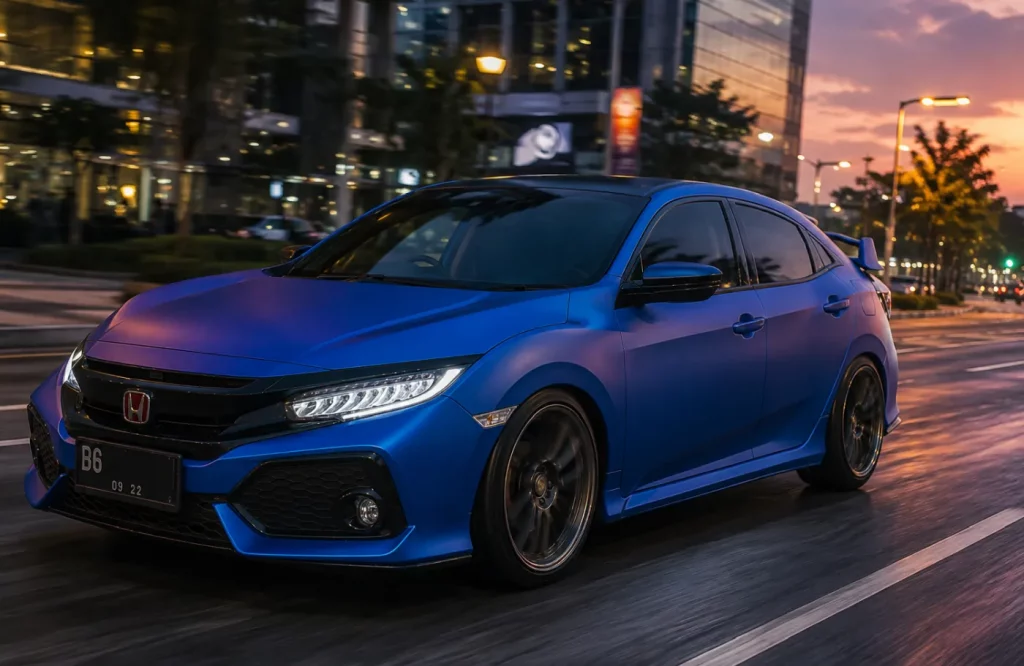
10th Generation (2019–2021) — Radar + Camera, Mostly Favorable
The 10th gen Civic used a dual-sensor approach: a forward-facing radar mounted behind the front grille Honda emblem and a single camera behind the windshield. This combination was generally well-received by owners. A CivicX forum thread started in September 2018 captured feedback from 11 owners across multiple years of 10th gen ownership, and the overall sentiment was positive.
Adaptive cruise control was the most praised feature. Owners called it “fantastic,” “super well,” and “works almost flawlessly.” The low-speed follow mode for stop-and-go traffic was specifically highlighted as useful in commuting. One owner said, “If you said I could only keep one of them, the ACC would be my choice.” Source: CivicX “Is Honda Sensing reliable?” thread.
Lane-keeping assist worked 90 to 95 percent of the time on well-marked highways. Owners valued it for long road trips, noting it “lessens the stress on the body because it helps keep the vehicle centered especially when negotiating curves.” It struggled on roads with faint or worn markings, in construction zones, and where multiple lane lines were present. Source: Same CivicX thread.
Collision mitigation braking had a mixed reception. Multiple owners reported it prevented real rear-end collisions — one was saved from three potential accidents, another from two. The system augments braking pressure if the driver isn’t braking hard enough. However, false activations were common: the system would brake aggressively when passing a car that had already turned out of the lane, because the radar detected it as an obstacle. Owners described this as “driving you nuts” and noted they had to anticipate false triggers. Source: CivicX thread, owner reports.
Road departure mitigation and lane departure warning were the features most frequently turned off. Owners found RDM excessive — one reported it “freaked and tried to stop the car” when approaching a divider stripe. LDW triggered false alarms on confusing road layouts. Source: Same CivicX thread.
11th Generation (2022+) — Single Camera, More Problems
Honda made a significant hardware change for the 11th gen Civic: it removed the forward radar and moved to a single-camera system. This decision is documented in NHTSA complaints from owners who specifically noted the absence of radar compared to their prior Hondas. The change appears to have caused a measurable regression in system reliability.
Phantom braking became much more common. The 2022 Honda Civic generated 51 NHTSA-reported adaptive cruise control problems in its first two model years. The dominant complaint pattern is the vehicle braking suddenly with no obstacle present. One owner described it as collision mitigation braking “randomly with nothing around.” Another provided video evidence to Honda showing emergency braking on an empty highway. Honda was unable to replicate or fix it. A mechanical inspection and OBD2 logs confirmed the system failed to detect a stopped vehicle merging, leading to an actual rear-end collision. Source: CarProblemZoo / NHTSA complaint database, complaints #3, #11, #22, #24, #25, #31.
ACC disengagement without re-engagement. This is the most frequently reported issue on the 11th gen: the ACC randomly shuts off with a beep and refuses to re-engage until the car is stopped and the engine is restarted. This affected AT least 20 of the 35 complaints analyzed on the first page of 2022 data alone. Multiple owners reported near-collisions from following vehicles when their Civic suddenly decelerated with no cruise control and no ability to resume. Source: CarProblemZoo / NHTSA, complaints #1, #2, #6, #7, #12, #14, #15, #16, #17, #19, #20, #22, #23, #27, #28, #29, #30, #32, #33, #34, #35.
Poor performance in rain and darkness. A 2024 owner report described the system failing to track a flatbed semi-truck in dark, rainy conditions. The ACC lost the target, accelerated toward the truck, then initiated automated emergency braking at the last moment — and repeated this cycle. The owner noted the single-camera system did not disable itself in conditions where any camera-based system would struggle. Source: CarProblemZoo / NHTSA, complaint #3.
Lane centering pulling. Several owners on Civic11Forum reported that lane centering pulls the car to one side rather than keeping it centered. One owner performed a factory reset on the infotainment system and reported that centering improved afterward, suggesting the issue may be partially calibration or software-based. However, the continued posts through mid-2025 indicate no definitive fix from Honda. A separate 2023 thread described simultaneous failures of lane keep, cruise control, and collision mitigation — all systems going offline together, which suggests a shared sensor or module fault rather than individual component failures. Source: Civic11Forum, threads from June 2022, November 2023, June 2025.
Detection failures with large trucks. Multiple owners across both generations noted that ACC sometimes fails to detect semi-trailers with tall rear ends, particularly when the trailer height exceeds the camera’s or radar’s effective zone. This is a known limitation of both the 10th gen radar + camera and 11th gen camera-only systems. Source: CivicX thread, owner reports.
The Steering Correlation
NHTSA opened Engineering Analysis EA23003 in December 2023 after receiving 523 reports of momentary increased steering effort in 2022–2023 Honda Civics. While not a direct Sensing failure, multiple ACC complaints on the 11th gen link sticky or notchy steering to simultaneous ACC disengagement. Owners report that the steering effort issue and ACC warnings appeared together, and some Honda dealers diagnosed a Steering Rack problem with a related TSB. The two systems share electronic control modules, and a voltage or communication fault can produce symptoms in both. Source: NHTSA EA23003, CarProblemZoo complaints.
| Feature | 10th Gen (2019–2021) Radar + Camera | 11th Gen (2022+) Camera Only |
|---|---|---|
| ACC highway performance | Highly praised. Smooth, reliable on open roads | More phantom braking. 51 NHTSA ACC complaints in 2022 alone |
| ACC stop-and-go | Works well. Owners use it daily in traffic | Random disengagement requiring restart reported |
| LKAS lane centering | 90–95% effective on good roads | Pulling to one side reported by multiple owners |
| CMBS false activations | Common during lane changes past turned vehicles. Annoying but predictable | Random emergency braking with no object. Higher severity |
| Rain / darkness performance | Radar helps maintain detection. Camera affected but system usable | Camera-only fails to track vehicles. Should self-disable, often doesn’t |
| LDW / RDM | Often turned off. Excessive false alarms | Similar sensitivity. Many owners disable |
| Large truck detection | Can miss tall trailers. Known limitation | Can miss tall trailers. Same limitation, possibly worse without radar |
| Overall owner sentiment | Mostly positive. ACC praised. CMBS mixed but appreciated | More negative. Some owners revert to conventional cruise control |
Common Fixes and Dealer Responses
The range of issues and fixes tells a story of a system where owners and dealers are still learning what works. On the 10th gen, a loose brake pedal connector behind the dashboard was identified as the root cause for intermittent ACC, CMBS, and lane departure errors on at least one 2020 Civic. Reconnecting the brown brake socket solved it immediately. The same owner noted that a dealer had replaced a brake sensor on another car with the same symptoms, which also resolved the issue. Source: CivicX “Collection of Honda Sensing issues” thread.
On the 11th gen, some dealers applied system updates or replaced radar sensors (on cars that still had them). In one case, a radar sensor replacement and system update resolved simultaneous ADAS failures. However, the majority of 11th gen owners report that dealers cannot replicate the issue, cannot find diagnostic codes, and send the car back with no fix. Source: CarProblemZoo / NHTSA complaints, Civic11Forum.
Aftermarket modifications that interfere with Sensing include: windshield tint (blocks the camera), bumper swaps without radar recalibration, remote starters, brake pedal locks, and radar detectors placed near the camera housing. Any modification that changes the angle of the windshield or the front grille area can cause Sensing errors. Source: CivicX forum, owner experiences.
NHTSA Safety Recall Context
It is important to separate Honda Sensing issues from the NHTSA steering investigation. The 2022–2023 Civic steering rack problem (EA23003, 523 complaints of momentary increased steering effort) is a separate defect involving the worm gear and electric power steering reduction gear. However, because ACC and LKAS use electric power steering to make steering corrections, a steering rack fault can cause LKAS to pull or vibrate. Some owners who reported their car “pulling to one side” during lane centering may have had a steering rack issue rather than a camera calibration problem. Source: NHTSA EA23003, owner reports.
The 11th gen steering recall (NHTSA 24V-225, March 2024) addressed the gearbox issue but did not fix the camera-based Sensing complaints. Owners who had the steering recall performed reported that ACC phantom braking and LKAS pulling sometimes improved but sometimes remained unchanged — evidence that the two problems are related in symptoms but separate in root cause.
The Verdict
Honda Sensing on the 10th gen Civic with radar-plus-camera is a competent driver-assistance package. ACC is genuinely useful for highway commuting and road trips. LKAS reduces fatigue on well-marked roads. CMBS has prevented real accidents. The known limitations — false braking during lane changes, poor performance on unmarked roads, occasional LDW false alarms — are predictable and manageable once the driver understands them.
Honda Sensing on the 11th gen Civic with camera-only is a step backward. Phantom braking is more frequent and less predictable. ACC disengagement without re-engagement is a documented safety concern. The camera-only system performs poorly in rain and darkness. Some owners have reverted to conventional cruise control. The hardware cost reduction (eliminating the radar) appears to have measurably reduced system reliability based on NHTSA complaint volume and owner satisfaction.
Quick Reference
☐ 10th gen (2019–2021): forward radar behind Honda emblem + windshield camera. ACC is the standout feature. LKAS effective 90–95% on good roads
☐ 11th gen (2022+): camera-only. Phantom braking, ACC disengagement, lane centering pulling are the top complaints
☐ 2022 Civic alone generated 51 NHTSA ACC complaints. Owners report emergency braking with no obstacle, ACC refusing to re-engage without restart
☐ The 10th gen radar+camera combination handles rain and darkness measurably better than the 11th gen camera-only system
☐ CMBS on both generations has prevented real accidents. False activations are more common and less predictable on the 11th gen
☐ LKAS pulls to one side on some 11th gen cars. A factory reset of the infotainment system improved centering in at least one reported case
☐ Large semi-trucks with tall trailers are a blind spot for both radar and camera systems. The driver must monitor ACC targets
☐ LDW and RDM are commonly turned off on both generations. False alarms on confusing road layouts are the main reason
☐ Aftermarket windshield tint, bumper modifications, and remote starters can interfere with Sensing and produce error messages
☐ A loose brake pedal connector is a known cause of intermittent Sensing errors on 10th gen cars. Check the brown socket behind the steering column
☐ Steering rack issues on 2022–2023 Civics (NHTSA EA23003, recall 24V-225) can mimic LKAS pulling. The steering fix may not solve camera-based problems
☐ 11th gen owners with persistent ACC issues should file a complaint with NHTSA if the dealer cannot replicate or fix the problem. The complaint volume is what triggers an engineering analysis