

Honda Sensing — the automaker’s suite of driver-assistance technologies including Collision Mitigation Braking (CMBS), Adaptive Cruise Control with Low-Speed Follow, Lane Keeping Assist, and Road Departure Mitigation — did not arrive on the Civic all at once. It rolled out incrementally across trims, body styles, and model years over a five-year period, then underwent a fundamental hardware change with the 11th generation. This timeline covers exactly when each Civic variant got Honda Sensing, what was included at each stage, and how the system evolved from camera-plus-radar fusion to a single-camera architecture. Sources: Honda Newsroom press releases (2015–2022), Honda official specifications and trim walk documents, PR Newswire releases, Repairer Driven News (single-camera deep dive), NHTSA safety ratings database.
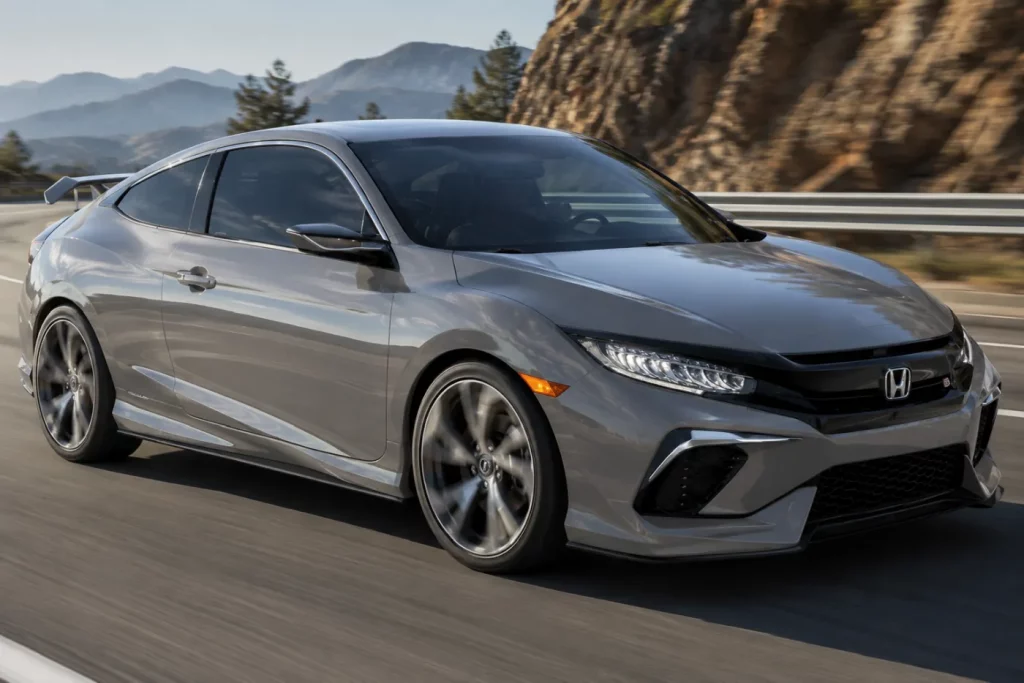
The Pre-Civic History — Where Honda Sensing Came From
Honda’s ADAS story started earlier than most buyers realize. In 2006, American Honda introduced the industry’s first automatic emergency braking system on a mass-produced consumer vehicle — the 2006 Acura RL with Collision Mitigation Braking System. That system used millimeter-wave radar alone. The full Honda Sensing suite, combining radar with a monocular camera through sensor fusion, debuted on the 2015 Honda CR-V Touring. The Civic, as Honda’s best-selling nameplate, received the system the following year, but not on every car in the showroom. Sources: Honda Newsroom Honda Sensing history press release (Feb 7, 2022).
2016 Civic (10th Generation) — Optional on Most, Standard Only on Touring
The 10th generation Civic sedan and coupe launched for the 2016 model year with Honda Sensing available as an option on the LX, EX, EX-T, and EX-L trims. Only the top Touring trim had it as standard equipment. The package included the full suite: CMBS with Forward Collision Warning, Adaptive Cruise Control with Low-Speed Follow (capable of stop-and-go traffic down to 0 mph), Lane Keeping Assist, Lane Departure Warning, and Road Departure Mitigation. The system relied on sensor fusion — a millimeter-wave radar mounted behind the front grille combined with a monocular camera at the top of the windshield. Sources: Honda 2016 Civic Sedan specifications and highlights document, Honda Newsroom January 2016 Sensing video release.
The 2016 Civic coupe followed the same availability pattern. The four-cylinder LX and EX used the 2.0-liter naturally aspirated engine; the EX-T, EX-L, and Touring used the 1.5-liter turbo. Honda Sensing availability did not depend on powertrain — it was a trim-level package decision.
2017 Civic Hatchback and Si — Sensing Skips the Sporty Variants
The 2017 Civic hatchback, which joined the lineup as a new body style for the 10th generation, followed the same Sensing pattern as the sedan: available on LX, Sport, EX, and EX-L trims, standard only on the top Sport Touring trim. The hatchback’s Sensing package included the same features — CMBS, ACC with Low-Speed Follow, LKAS, RDM with LDW.
The 2017 Civic Si, however, launched without Honda Sensing entirely. The Si focused on performance equipment — adaptive dampers, helical limited-slip differential, 205-horsepower turbo engine — and Honda did not offer any advanced driver-assistance package on it, even as an option. The 2017 Si press release lists standard safety equipment as ABS, Vehicle Stability Assist, and Agile Handling Assist, with no mention of CMBS, ACC, or LKAS. Sources: Honda Newsroom August 2016 Civic Hatchback debut release, PR Newswire May 2017 Civic Si on-sale release.
2018 Civic — Carry-Forward Year
For the 2018 model year, the Civic lineup carried forward the same Sensing availability pattern from 2016–2017. No trim or body style saw a change in Sensing standard or optional status. The Si and Type R remained without the package.
2019 Civic — The Tipping Point: Standard on Every Sedan and Coupe
August 2018 marked the biggest single change in Honda Sensing availability on the Civic. With the 2019 mid-cycle refresh, Honda made Sensing standard on every sedan and coupe trim — including the newly added Sport trim. The 2019 Civic Sedan and Coupe were the first Civics where you could not buy a car without the full suite, regardless of trim level.
The standard package included CMBS with FCW, ACC with Low-Speed Follow, LKAS, RDM with LDW, and Auto High-Beam headlights. The SLR (straight-line road) camera-plus-radar system remained unchanged from the 2016 hardware. The Si and Type R trims, which were not refreshed for 2019, continued without Sensing — the 2019 Si sedan and coupe still did not offer the package. Sources: Honda Newsroom August 2018 press release “2019 Civic Sedan and Coupe gains Sport trim, standard Honda Sensing,” PR Newswire September 2018 release.
2020 Civic — The Last Piece: Hatchback and Si Go Standard
The 2020 model year closed the remaining gaps. The refreshed 2020 Civic Hatchback, announced August 2019, made Honda Sensing standard across all hatchback trims — LX, Sport, EX, EX-L, and Sport Touring. The hatchback had been the last body style where Sensing was still optional on lower trims.
More notably, the 2020 Civic Si became the first Si to include Honda Sensing as standard equipment. Both the Si Sedan and Si Coupe received the full package — CMBS, ACC, LKAS, RDM — along with Auto High-Beam headlights. The 2020 Si also received a styling refresh, revised transmission gearing, and active sound control, making the Sensing addition part of a broader update. Sources: Honda Newsroom August 2019 Civic Hatchback refresh release, Honda Newsroom August 2019 Civic Si refresh release.
The 10th generation Civic Type R never received Honda Sensing. From 2017 through its final 2021 model year, the Type R offered no version of CMBS, ACC, or LKAS — even as an option.
The 10th Generation Sensing Hardware — Camera + Radar Fusion
Throughout the 10th gen run (2016–2021), Honda Sensing used a two-sensor approach: a millimeter-wave radar unit behind the Honda emblem in the grille and a monocular camera AT the top of the windshield. The radar handled distance measurement and relative speed of objects ahead. The camera handled lane marking detection, road sign recognition, and object classification. The system fused data from both sensors to decide when to alert, steer, or brake.
This architecture was shared with other Honda models — the CR-V, Accord, and Pilot used the same radar-plus-camera combination. The radar gave the system redundancy in low-visibility conditions (fog, heavy rain, direct sun glare) where a camera-only system might struggle. The trade-off was cost, packaging complexity, and calibration requirements after front-end repairs. Sources: Repairer Driven News Feb 2022 — “Honda offers ADAS on all models, eliminates radar unit on new Civic.”
2022 Civic (11th Generation) — Single-Camera Architecture and New Features
The 11th generation Civic, launched for the 2022 model year, made two significant changes to Honda Sensing. First, it eliminated the millimeter-wave radar entirely, moving to a single wide-angle camera mounted behind the windshield. Second, it added Traffic Sign Recognition and a Driver Attention Monitor to the standard suite.
The single-camera system uses a faster processor and wider field of view than the previous camera-plus-radar combination. Honda claimed the new software could identify pedestrians, bicyclists, other vehicles, road markings, and traffic signs more quickly and accurately. In practice, the system delivered smoother ACC braking and less intrusive LKAS tracking — the radar-less architecture eliminated the sometimes-abrupt ACC deceleration that 10th gen owners reported.
The 11th gen also made Honda Sensing standard across the entire Civic lineup from day one — no trims without it. This included the 11th gen Si (2022–present), which launched with the single-camera Sensing system standard. The 11th gen Civic Type R (2023–present) also includes the full single-camera Sensing suite as standard equipment — a first for the Type R. Features: CMBS with pedestrian detection, ACC with Low-Speed Follow, LKAS, RDM with LDW, Traffic Sign Recognition, Auto High-Beam, and Driver Attention Monitor. Sources: Honda Newsroom April 2021 11th gen Civic reveal release, Repairer Driven News Feb 2022 single-camera analysis, Honda 2022 Civic Sensing owner’s manual.
Complete Model-Year Reference Table
| Model Year | Sedan | Coupe | Hatchback | Si | Type R | Notes |
|---|---|---|---|---|---|---|
| 2016 | Opt / Std Touring | Opt / Std Touring | — | — | — | Radar + camera. First year |
| 2017 | Opt / Std Touring | Opt / Std Touring | Opt / Std Sport Touring | Not available | — | Hatchback added. Si without Sensing |
| 2018 | Opt / Std Touring | Opt / Std Touring | Opt / Std Sport Touring | Not available | Not available | Carry-over year |
| 2019 | Standard all trims | Standard all trims | Opt / Std Sport Touring | Not available | Not available | Sedan/coupe refresh. Sensing standard |
| 2020 | Standard all trims | Standard all trims | Standard all trims | Standard | Not available | Si gets Sensing. Hatchback standard |
| 2021 | Standard all trims | Standard all trims | Standard all trims | Standard | Not available | Final 10th gen year |
| 2022 | Standard all trims | — (discontinued) | Standard all trims | Standard | — | 11th gen. Single-camera. TSR added |
| 2023–25 | Standard all trims | — | Standard all trims | Standard | Standard | Type R gets Sensing for first time |
What Changed Between Generations — Feature Comparison
| Feature | 10th Gen (2016–21) | 11th Gen (2022–25) |
|---|---|---|
| Sensor hardware | Radar + camera fusion | Single wide-angle camera |
| CMBS with pedestrian detection | Yes | Yes — wider detection field |
| ACC with Low-Speed Follow | Yes | Yes — smoother braking profile |
| LKAS | Yes (45–90 mph range) | Yes — smoother tracking |
| RDM with LDW | Yes | Yes |
| Traffic Sign Recognition | Not available | Standard |
| Driver Attention Monitor | Not available | Standard (steering input based) |
| Auto High-Beam | Yes (by 2019 refresh) | Standard |
Why It Matters for Used Buyers
The rollout timeline creates clear used-market recommendations:
2016–2018 Civics are the most common used examples with Sensing, but only on trims where it was optioned or on Touring models. A base LX from these years without the option package has no CMBS, ACC, or LKAS. Buyers shopping these model years need to check the windshield area for the camera housing and the grille for the radar module — if neither is present, the car does not have Sensing.
2019 sedan and coupe, 2020 hatchback: These are the earliest Civics where every trim level includes Sensing. No need to check options. The Si joined this category in 2020.
2022 and later: Single-camera system with Traffic Sign Recognition. The radar elimination means simpler front-end repairs and no radar calibration needed after windshield replacement. The trade-off is reduced redundancy in low-visibility conditions where radar would have operated when the camera could not see.
Type R: The 10th gen (2017–2021) has no Honda Sensing at all. The 11th gen (2023–present) has the full single-camera suite standard. If Sensing matters, only the 2023+ Type R has it.
Quick Reference
☐ 2016–2018: Sensing optional on LX through EX-L, standard on Touring sedan/coupe. Hatchback optional on LX–EX-L, standard on Sport Touring. Si and Type R — no Sensing.
☐ 2019: Sensing standard on every sedan and coupe trim (including new Sport trim). Hatchback still optional on lower trims. Si and Type R still without Sensing.
☐ 2020: Sensing standard on every Civic — sedan, coupe, hatchback, and Si. Only the Type R remained without it.
☐ 2022 (11th gen debut): Sensing standard across all trims including Si. Radar eliminated — single-camera architecture. Traffic Sign Recognition added. Coupe discontinued.
☐ 2023+: Type R receives Sensing for the first time — single-camera system with full suite.
☐ The 10th gen system used radar + camera fusion (two sensors). The 11th gen uses a single wide-angle camera with a faster processor. Both provide Level 2 semi-autonomous capability, but the 11th gen system delivers smoother ACC and LKAS behavior.
☐ Used buyers: a 2016–2018 Civic LX with no camera housing behind the windshield does not have Sensing. A 2019 sedan or 2020 hatchback always does, regardless of trim.
☐ The 10th gen Type R (2017–2021) has zero Honda Sensing features — no forward collision warning, no automatic braking, no adaptive cruise, no lane keeping. This is the only modern Civic without any portion of the suite.
☐ Traffic Sign Recognition is exclusive to the 11th gen (2022+). It cannot be retrofitted to 10th gen cars — the hardware architecture is different.