

Honda Civic brakes are shared across more generations than most owners realize. The caliper mounting bolt spacing — 140mm center-to-center — has not changed since 1992. That means an 11th gen Civic can run brakes from a 5th gen aftermarket catalog in some cases, and a 10th gen owner can bolt on Acura TL-S Brembo Calipers with minor drilling. But rotor diameters changed by generation, and pad shapes shifted at a few critical points. This article covers every Civic generation from the 5th (1992) through the 11th (2025), with rotor dimensions, pad part numbers, upgrade paths, and cost data.
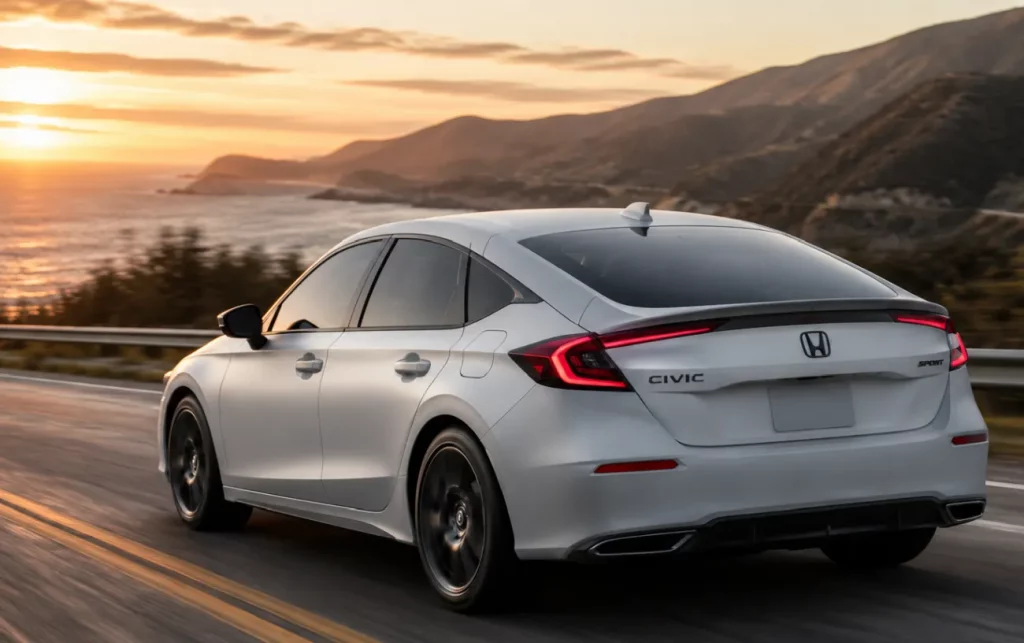
5th Generation (1992-1995)
Front rotors on all 5th gen Civics (EG/EH/EJ chassis) are 262mm × 18mm solid discs. Rear brakes are drum on DX and LX trims. The EX and Si have 260mm × 9mm solid rear discs. Pad shape is the common “EG/DC2” pattern used across 1992-2000 Honda models. The 262mm front rotor is undersized for any kind of performance driving — hard stops from 60 mph cause fade within two to three stops. The standard upgrade is an 11.1-inch (282mm) rotor from an Integra or 1994-2001 Acura Integra GSR Caliper Bracket swap, which bolts on without any modification. The steering knuckle bolt pattern is identical between the 5th gen Civic and the DC2 Integra.
Cost ranges for 5th gen: Front pads $20-40, front rotors $25-50 per pair. Rear drums $40-60 each. A full brake job DIY runs $70-120. The factory drum rear brakes cannot be converted to discs without swapping the entire Trailing Arm assembly from an EX, Si, or Integra, which typically runs $300-500 used. Source: Honda-Tech (brake rotor size reference), Honda Service Manual (EG/EH chassis).
6th Generation (1996-2000)
Front rotors are 262mm × 18mm solid discs on all trims except the Si (EM1) and the Canadian SiR. The Si uses 282mm × 23mm ventilated front rotors, which required the bigger caliper bracket from the Integra GSR. The 262mm non-Si front Rotor remained the same size as the 5th generation, but Honda moved to a different pad shape (the common “96-00 Civic” pattern that changed the inner pad tab design). Rear brakes are drums on DX/LX and solid discs (260mm × 9mm) on EX and Si. The 262mm front rotors on the base 6th gen are the weakest point — the 8.2-second 0-60 Civic had a 60-0 braking distance of approximately 135-145 feet depending on model year (Car and Driver, 1996 Civic DX).
Upgrade path for 6th gen non-Si: 282mm Integra GSR front rotors and caliper brackets bolt directly on. The dust shield must be trimmed or removed. Pad shape changes to the Integra pattern. Total conversion cost: approximately $150-200 for used caliper brackets and new rotors. Source: Honda-Tech (brake rotor size database), Honda Service Manual (EK chassis).
7th Generation (2001-2005)
Front rotors on the D17-equipped trims (DX, LX, EX) are 262mm × 18mm solid discs. The EP3 Si (K20A3) uses 282mm × 23mm ventilated front rotors with larger Nissin calipers. Rear brakes are drums on DX/LX, solid discs on EX (260mm × 9mm) and Si (self-adjusting drum on EP3 — a cost-cutting decision that owners consistently complain about). The 7th gen changed the front pad shape again to a wider, taller pad that does not interchange with 5th/6th generation pads. The Si front pad is different from the base pad and uses a separate part number.
The EP3 Si is also known for a sticky caliper Piston issue. The Nissin single-piston front calipers have a rubber dust boot that tears at approximately 80,000-100,000 miles, allowing moisture into the piston bore and causing the piston to seize partially retracted. This produces a dragging brake, uneven rotor wear, and a 2-3 mpg fuel economy penalty. The fix is a caliper rebuild or replacement (approximately $120-180 per caliper for a remanufactured unit). Source: 8thCivic.com (caliper failure thread), Honda Service Manual (ES/EP chassis).
8th Generation (2006-2011)
This generation saw the first significant rotor size change in 15 years. Non-Si Civics (R18 engine, all trims) received 262mm × 22mm ventilated front rotors — the same diameter as the 5th gen but thicker and now standard-issue ventilated rather than solid. The Si (FG2/FA5, K20Z3 engine) received 300mm × 25mm ventilated front rotors, a substantial upgrade over the EP3 Si’s 282mm. Rear rotors are 259mm × 9mm solid discs on all trims (no drum brakes on 8th gen Civics at all). The pad shape changed again on the non-Si models — a new narrower pad design with different inner clip placement. The Si pad remained a separate pattern shared with the 2007-2011 Acura TSX (CU2).
Si brakes do not bolt onto non-Si 8th gen Civics without swapping the steering Knuckle. The caliper mounting ears on the knuckle are positioned differently for the 300mm rotor. This is a common misconception — the 140mm bolt spacing is the same, but the caliper bracket sits further from the hub center, and the knuckle itself is different. A full Si brake conversion requires: Si knuckles, Si calipers, Si caliper brackets, Si rotors, and Si brake hoses. Cost: approximately $400-600 for used parts. Source: 8thCivic.com (2012 Si pads/rotors on 2011 thread), Honda Newsroom (2006 Civic specs).
9th Generation (2012-2015)
Front rotors on the R18 base models remained at 262mm × 22mm. The Si (K24Z7) kept the same 300mm × 25mm front rotor size as the 8th gen Si. Rear rotors on all trims stayed at 259mm × 9mm. The calipers are the same units as the 8th generation — an 8th gen Si caliper bolts directly onto a 9th gen Si and vice versa. The non-Si calipers are also interchangeable between 8th and 9th gen. Pad shapes are identical between 8th and 9th gen for matching trims. Source: 9thCivic.com (8th gen brake pads on 9th gen thread), Honda Service Manual (FB chassis).
10th Generation (2016-2021)
This is where Civic brakes changed significantly. Honda moved to three distinct brake sizes depending on trim, and the pattern applies to 11th gen as well.
| Model | Front Rotor | Front Caliper | Rear Rotor | 70-0 (C&D) |
|---|---|---|---|---|
| LX / EX / Sport (2.0L) | 282mm × 23mm vented | Akebono 57mm single piston | 260mm × 9mm solid | 170 ft |
| Si (1.5T) | 312mm × 25mm vented | Nissin 57mm single piston | 282mm × 10mm solid | 172 ft* |
| Type R (FK8) | 350mm × 32mm vented | Brembo 4-piston (40mm × 4) | 304mm × 11mm solid | 149 ft |
| EDM Sedan/Hatch | 293mm × 25mm vented | ATE 57mm single piston | 282mm × 9mm solid | N/A |
Compatibility note for 10th gen: The caliper mounting bolt spacing is 140mm on all front calipers, including the Type R. Si calipers, brackets, and rotors bolt directly onto non-Si models. The only interference is the dust shield — Si rotors are 30mm larger in diameter, so the non-Si dust shield must be trimmed or removed. Rear Si brakes (282mm) can be swapped using Accord rear brake brackets (stamped “282”). This is the most common brake upgrade path for 10th gen non-Si owners, costing approximately $200-350 for used Si calipers and new rotors. Source: CivicX.com (Brake Info Thread, Si brakes on LX thread).
11th Generation (2022-2025)
Honda carried the 10th gen brake specifications forward with minor changes. Non-Si trims (LX, Sport, EX, Sport Touring) use 282mm × 23mm ventilated front rotors and 260mm × 9mm solid rear rotors — unchanged from the 10th gen non-Si. The Si retains 312mm × 25mm ventilated front rotors and 282mm × 10mm rear rotors. The Type R (FL5) kept the 350mm × 32mm front Brembo setup. The pad shapes and caliper designs are identical to the 10th generation for equivalent trims. The Si brakes are physically larger than the Sport/Touring brakes (confirmed by Civic11Forum discussions), which means a Sport Touring owner looking for more braking power without going aftermarket can swap to Si front calipers and rotors using the same knuckle — the mounting spacing is unchanged. Source: Honda Canada (2022 Civic Sedan specifications), CivicX.com brake thread (applicable to 11th gen).
Pad and Rotor Replacement Cost by Generation
| Generation | Front Pads (DIY) | Front Rotors (DIY) | Dealer Full Axle | Aftermarket Performance |
|---|---|---|---|---|
| 5th-6th gen non-Si | $20-35 | $25-40/pair | $300-450 | Hawk HPS $50, Centric rotors $60 |
| 6th gen Si / EP3 Si | $35-50 | $45-70/pair | $400-550 | Hawk HP+ $75, StopTech slotted $110 |
| 7th gen non-Si | $25-40 | $30-50/pair | $350-500 | Power Stop Z17 kit $130 |
| 8th-9th gen non-Si | $25-40 | $35-55/pair | $350-500 | Power Stop Z23 kit $150 |
| 8th-9th gen Si | $45-65 | $60-100/pair | $500-700 | Hawk HPS 5.0 $70, StopTech slotted $140 |
| 10th-11th gen non-Si | $35-55 | $50-80/pair | $400-600 | Power Stop Z23 $170, Akebono ceramic $80 |
| 10th-11th gen Si | $50-75 | $80-130/pair | $500-750 | EBC Redstuff $120, StopTech slotted $160 |
| Type R (FK8/FL5) | $120-200 | $200-350/pair | $1,000-1,500 | Pagid RS29 $280, OEM Brembo $220 |
Prices approximate as of mid-2026. Source: RockAuto, Summit Racing, Honda Parts Direct, Tire Rack. Dealer prices assume pad and rotor replacement on one axle, no caliper replacement.
Caliper Wear Points by Generation
Three caliper design issues repeat across Civic generations:
Frozen slider pins (all generations). The single-piston floating caliper design relies on two lubricated slider pins. When the rubber boots tear (typically at 60,000-80,000 miles), moisture and road salt enter the pin Bore and the pin freezes. One pad wears faster than the other, and the rotor develops a thickness variation. The fix is to replace the slider pins and boots ($15-25 per axle) at every second pad change. This is the single most common brake problem on every Civic from 1992 to 2025.
7th gen EP3 Si stuck caliper pistons. The Nissin front caliper on the EP3 uses a single large piston that has no internal return spring — retraction depends entirely on the square-cut seal. When the dust boot fails, corrosion builds up and the piston does not retract. The pads drag continuously. The fix is a remanufactured caliper ($120-180). Source: Honda Civic Forum (7th gen mechanical database).
10th gen rear caliper parking brake mechanism. The electronic Parking Brake actuator (integrated into the rear caliper) on 2016+ Civics has a plastic gear mechanism that can strip if the parking brake is repeatedly applied while the rear brakes are hot from a hard stop. A stripped gear requires a full rear caliper replacement and actuator module at approximately $350-500 per side. The service manual requires the parking brake to be put into maintenance mode (via the diagnostic menu) before retracting the piston for pad replacement — using a piston wind-back tool without entering maintenance mode will strip the internal gears. Source: Honda Service Manual (2016 Civic), CivicX.com rear caliper failure threads.
Brake Pad Materials — What to Use
Ceramic pads (daily driving): Low dust, quiet, consistent cold bite. Brands: Akebono ProACT (OEM on most Civics since 2006), Power Stop Z23, Bosch QuietCast. Good for 30,000-50,000 miles of normal commuting. Do not use on track days — ceramic pads fade past 600°F rotor surface temperature.
Semi-metallic pads (performance/autocross): Higher friction coefficient when hot, more dust, some noise on cold stops. Brands: Hawk HPS 5.0, EBC Yellowstuff, StopTech Sport. Good for daily driving with occasional hard driving. Rotor wear is 30-50% faster than ceramic.
Full race pads (track only): No cold bite, high dust, loud, require bed-in procedure above 800°F. Brands: Pagid RS29, Hawk DTC-60, Ferodo DS2500. Not street-legal in practice — the pads will not stop the car effectively below 200°F rotor temperature.
Quick Reference — Brake Pads and Rotors by Generation
☐ 5th-6th gen non-Si: 262mm front, 140mm bolt spacing. Integra GSR brake swap is the standard upgrade
☐ 6th gen Si (EM1): 282mm front with Integra GSR caliper brackets. Shares pads with 1994-2001 Integra GSR
☐ 7th gen non-Si: 262mm front. New pad shape unique to 2001-2005. Does not interchange with earlier cars
☐ 7th gen Si (EP3): 282mm front with Nissin calipers. Known for seized caliper pistons AT 80-100K miles
☐ 8th-9th gen non-Si: 262mm × 22mm vented front. Base pads interchangeable between 8th and 9th gen
☐ 8th-9th gen Si: 300mm × 25mm front. Knuckle is different — Si brakes are not a bolt-on upgrade for non-Si
☐ 10th-11th gen non-Si: 282mm × 23mm front. Si brakes (312mm) bolt directly onto non-Si knuckles
☐ 10th-11th gen Si: 312mm × 25mm front, 282mm × 10mm rear. Shares front caliper bolt pattern with non-Si
☐ All Type R (FK8/FL5): 350mm × 32mm front (Brembo 4-piston), 304mm × 11mm rear
☐ Caliper bolt spacing (140mm) is the same on ALL Civics from 1992 to 2025 — including the Type R
☐ Frozen slider pins are the #1 brake problem across all generations. Replace pins and boots every second pad change
☐ 10th/11th gen rear calipers: always put parking brake in maintenance mode before retracting piston
☐ Ceramic pads for daily driving, semi-metallic for mixed use, race pads for track only
☐ Electronic parking brake actuator (10th/11th gen): $350-500 per side if the plastic gear strips
☐ 70-0 braking distances (C&D): non-Si ~170 ft, Si ~172 ft, Type R ~149 ft. Tires matter as much as rotor size